
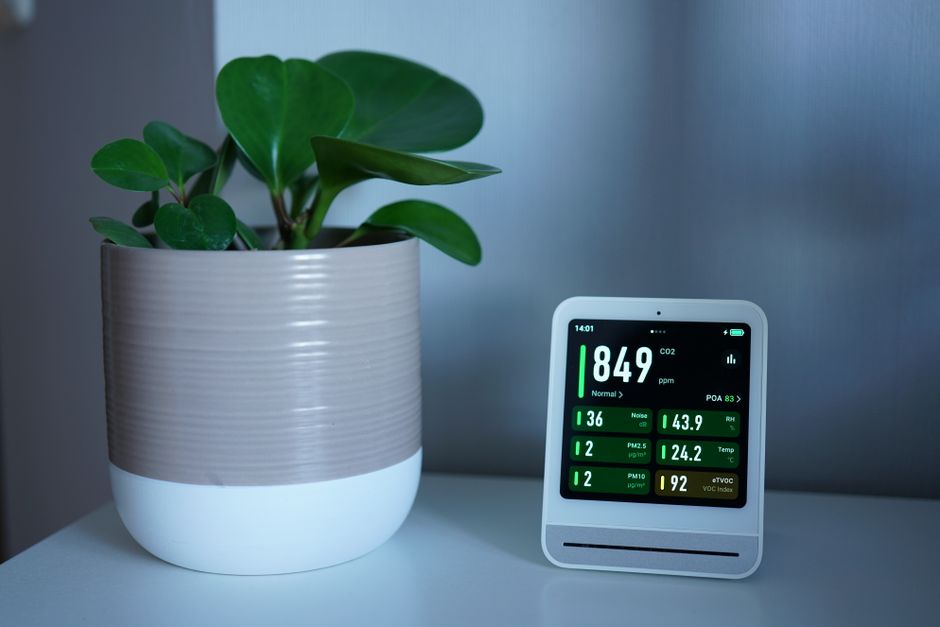
Air purifiers do not remove radon from your home. Not the HEPA kind, not the activated carbon kind, not the ones with fancy sensors. Radon is a radioactive gas that comes from soil and rock beneath your house, and it seeps in through cracks, gaps, and sump pumps. No filter-based air purifier is designed to capture a gas that enters continuously from the ground. The fix is a different technology entirely — one that vents radon from below your foundation before it ever gets inside.
This matters because radon is the second leading cause of lung cancer in the United States after smoking, according to the U.S. Environmental Protection Agency. It kills an estimated 21,000 people a year. If you have a radon problem, an air purifier will give you a false sense of security while the actual risk stays exactly the same.
What Is Radon and Why Is It Dangerous?
Radon is a naturally occurring radioactive gas. It forms when uranium in soil, rock, and water breaks down. You cannot see it, smell it, or taste it. It rises from the ground and enters buildings through any opening that touches soil.
The danger comes from what happens after you breathe it in. Radon decays into radioactive particles that can get trapped in your lungs. Over years of exposure, those particles emit small bursts of radiation that can damage lung tissue and eventually lead to cancer. The risk is cumulative. The longer you breathe it and the higher the concentration, the greater the danger.
Radon is measured in picocuries per liter (pCi/L). The EPA recommends taking action if your home tests at 4 pCi/L or higher. But here is something many people do not realize: there is no completely safe level of radon. The EPA also notes that radon levels below 4 pCi/L still pose some risk. The 4 pCi/L threshold is a practical action level, not a safety guarantee.
The average outdoor radon level is about 0.4 pCi/L. The average indoor level is about 1.3 pCi/L. If your home sits at 4 pCi/L or above, you have a problem worth fixing.
Do Air Purifiers Remove Radon What Actually Works?
No air purifier removes radon from indoor air. This is not a matter of buying a better model or spending more money. It is a matter of physics.
HEPA filters capture particles. They trap things like dust, pollen, pet dander, and smoke particles. Radon is a gas — its molecules are thousands of times smaller than the particles HEPA filters are designed to catch. The gas passes straight through.
Activated carbon filters can adsorb some gases. They are used in some air purifiers to reduce odors and volatile organic compounds. But radon is a noble gas. It does not readily bind to carbon the way many other chemicals do. Even if a carbon filter captured some radon atoms, the radon would continue to decay and release radioactive particles. And the constant flow of new radon entering from the ground would overwhelm any limited adsorption capacity almost immediately.
Some companies market air purifiers as radon solutions. No study has confirmed that any consumer air purifier meaningfully reduces indoor radon levels. If a product claims to remove radon, treat that claim with serious skepticism.
What Actually Removes Radon From a Home?
The only proven method for reducing indoor radon is a system that stops radon from entering in the first place. This is called a soil depressurization system, or more commonly, a radon mitigation system.
Here is how it works. A pipe is installed through the foundation floor or slab and extends into the soil beneath the home. A fan connected to that pipe pulls soil gas — including radon — from below the house and vents it safely above the roofline. This creates a negative pressure zone under the foundation, which prevents radon from being drawn into the living space.
The EPA recognizes soil depressurization as the most effective and reliable radon reduction method. A properly installed system can reduce indoor radon levels by up to 99%, according to EPA data. Most homes can be brought below 2 pCi/L with a well-designed system.
Cost varies by home type and region, but typical installation runs between $800 and $2,500. That is a one-time cost, not a recurring subscription. The system runs on a small fan that uses roughly the same electricity as a 75-watt light bulb.
Other approaches exist but are less common or less effective on their own:
- Sub-slab depressurization — the standard approach for homes with basements or slab-on-grade foundations
- Drain tile depressurization — uses existing drain tile systems to vent soil gas
- Sump pit depressurization — seals and vents a sump pump pit to prevent radon entry
- Crawl space depressurization — used when a home has a crawl space rather than a basement
- Block wall depressurization — vents hollow block foundation walls
In some cases, sealing cracks and openings in the foundation can help. But sealing alone is not considered a standalone solution by the EPA. It is usually done alongside a depressurization system to improve its performance, not instead of one.





Can Anything Else Help Reduce Radon Levels?
Increasing ventilation can dilute radon concentrations somewhat. Opening windows and using exhaust fans can lower indoor radon levels temporarily. But this only works while the ventilation is happening. Once you close the windows, radon levels rise again. It is not a practical or reliable long-term solution, especially in cold or hot climates where windows stay closed.
Some people ask about air exchangers or heat recovery ventilators (HRVs). These systems bring in fresh outdoor air while exhausting stale indoor air. They can reduce radon concentrations by diluting the indoor air. But they do not stop radon from entering. In homes with high radon levels, an HRV alone is not enough. It may help as a supplemental measure, but it does not replace a mitigation system.
There is also the question of radon in water. If your home has a private well, radon can dissolve into the water supply and be released into the air when you shower or run faucets. This is a smaller contributor to indoor radon than soil gas in most cases, but it can matter in some homes. Point-of-entry treatment systems using aeration can remove radon from water. Activated carbon filters can also remove radon from water, but they accumulate radioactive material and require careful disposal.
How Do You Know If You Have a Radon Problem?
You test. There is no other way to know. Radon levels vary widely from home to home, even on the same street. Your neighbor’s test result tells you nothing about yours.
The EPA recommends testing all homes below the third floor, regardless of where you live. Radon problems have been found in every state. While some regions have higher average levels — parts of the Midwest, Appalachia, and the Rocky Mountain states tend to have more radon — elevated levels can occur almost anywhere.
You can buy a short-term test kit from a hardware store or online retailer for $10 to $30. Short-term tests take two to seven days. For a more accurate picture of your year-round exposure, a long-term test lasting 90 days or more is better. Radon levels fluctuate with weather, season, and soil conditions.
If your short-term test reads 4 pCi/L or higher, the EPA recommends a follow-up test — either another short-term test or a long-term test — to confirm the result before you invest in mitigation. If the follow-up also reads 4 pCi/L or higher, you should mitigate. If your result is between 2 and 4 pCi/L, consider mitigation as well, since there is no completely safe level.
Professional radon testers are also available. If you are buying or selling a home, a professional test is often part of the transaction.
Why Do Some Air Purifier Companies Claim They Remove Radon?
Some air purifier manufacturers use language that implies their products address radon. They may say things like “reduces airborne contaminants” or “improves indoor air quality” without specifically claiming radon removal. Others make more direct claims that are not supported by evidence.
The confusion often comes from mixing up different types of air quality issues. An air purifier that removes smoke, dust, and allergens is genuinely useful for those purposes. But radon is a different category of problem entirely. It is a gas that enters continuously from below, not a particle that circulates in the air.
There is also the matter of radioactive decay products. When radon decays, it produces solid radioactive particles called radon progeny. These particles can attach to dust and other airborne particles. In theory, a HEPA filter could capture some of those attached particles. But this does not solve the radon problem. The radon gas itself continues to enter and decay, producing new progeny particles continuously. Filtering a fraction of the decay products while the source keeps producing more is not a solution.
No clinical evidence currently confirms that any consumer air purifier reduces lung cancer risk from radon.
The Bottom Line on Radon and Air Purifiers
If you are worried about radon, test your home. If your level is elevated, call a certified radon mitigation professional. The EPA maintains a list of qualified professionals, and many states have their own certification programs.
An air purifier is not a radon solution. It never was. It cannot be. The problem is in the ground beneath your home, and the solution has to start there too.
Frequently Asked Questions
Can a HEPA air purifier remove radon gas?
No. HEPA filters capture particles, not gases, and radon is a gas. The molecules pass straight through the filter.
Do activated carbon filters remove radon?
Activated carbon can adsorb some gases, but radon is a noble gas that does not bind readily to carbon. No study has confirmed that carbon filters meaningfully reduce indoor radon levels.
What is the only proven way to reduce radon in a home?
Soil depressurization systems, also called radon mitigation systems, are the only proven method. They vent radon from beneath the foundation before it enters the home.
How much does a radon mitigation system cost?
Typical installation runs between $800 and $2,500, depending on home type and region. This is a one-time cost, and the system uses about as much electricity as a 75-watt light bulb.
