
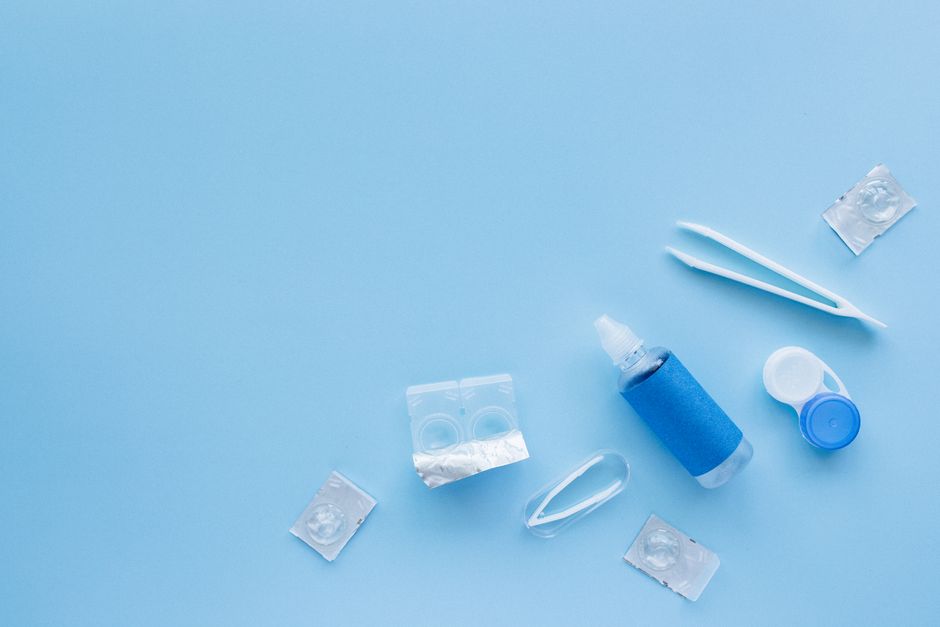
No, you cannot use eye drops as contact lens solution. Eye drops are made to moisten the surface of your eye, not to clean, rinse, or store contact lenses. Using them this way will not remove protein deposits, debris, or bacteria from the lens surface, and it will not disinfect the lens.
What Is the Difference Between Eye Drops and Contact Lens Solution?
Eye drops and contact lens solutions serve completely different jobs. Eye drops are designed to add moisture to the eye. They are sterile liquids that mimic natural tears or deliver medication. They do not contain cleaning agents or disinfectants.
Contact lens solution is a multi-purpose product. It cleans the lens, rinses off loose debris, disinfects to kill germs, and stores the lens in a sterile environment. Some solutions also include a protein remover to break down deposits that build up from your natural tears.
Think of it this way: eye drops are like a glass of water for your eye. Contact lens solution is like a washing machine, dryer, and storage container all in one. They are not interchangeable.
What Happens If You Put Eye Drops on Contacts?
If you place a contact lens in eye drops instead of solution, the lens will not be properly cleaned or disinfected. Protein deposits and germs that were on the lens will stay there. When you put that lens back in your eye, you are putting those deposits and germs directly onto your cornea.
There is also a practical problem. Most eye drops do not contain the preservatives or buffering agents needed to keep a contact lens hydrated and comfortable for long periods. The lens can dry out, warp, or become uncomfortable.
Some eye drops are marketed as “contact lens rewetting drops.” These are safe to use while the lens is in your eye to add moisture. But they still cannot clean or disinfect a lens. They are a temporary comfort measure, not a cleaning product.
Can You Store Contacts in Eye Drops Overnight?
No. Storing contact lenses in eye drops overnight is unsafe. The lens will not be disinfected, and bacteria can multiply on the lens surface while it sits in the container.
Contact lens solution contains preservatives that keep the storage environment sterile. Eye drops do not have the same antimicrobial properties. Even if the eye drops were sterile when opened, they cannot keep the lens clean over hours of storage.
If you store lenses in eye drops overnight, you risk developing a corneal infection when you wear them the next day. Some of these infections can be serious and cause lasting damage to your vision.





What Should You Do If You Run Out of Contact Lens Solution?
If you run out of solution, the safest option is to discard the lenses and wear glasses until you can get more. This is especially true for monthly or bi-weekly lenses. Wearing a lens that was not properly cleaned and stored is not worth the risk to your eye.
For daily disposable lenses, the answer is simple: throw the lens away and open a fresh pair. Daily disposables are not meant to be stored at all.
Some people try to use saline solution as a substitute. Saline is a step up from eye drops because it rinses the lens, but it does not disinfect. Saline alone is not an approved storage method for contact lenses. It will not kill bacteria or remove protein deposits.
There is no safe homemade substitute for contact lens solution. Water, saliva, and homemade salt mixtures have all been tried, and all of them carry infection risk. Tap water can contain microorganisms that cause severe eye infections, including a type of amoeba that is very difficult to treat.
Why Is Proper Contact Lens Care So Important?
Your cornea does not have blood vessels. That means it relies on the tear film and the surface of the eye for oxygen and nutrients. When a contact lens sits on the cornea, it can trap bacteria against the eye and limit oxygen flow.
If a lens is not properly cleaned, bacteria and proteins build up on its surface. This creates a perfect environment for infection. The most common contact lens-related complication is microbial keratitis, an infection of the cornea that can cause pain, redness, blurred vision, and sensitivity to light.
In severe cases, corneal infections can leave permanent scars that affect vision. Some require corneal transplants. These outcomes are rare, but they are entirely preventable with proper lens care.
Studies consistently show that people who do not follow proper lens care routines have a significantly higher risk of eye infections. The most common mistakes are sleeping in lenses, using tap water, and reusing old solution instead of replacing it.
What Is the Correct Way to Care for Contact Lenses?
The basic routine is simple and well established. Wash your hands with soap and water, then dry them with a lint-free towel before handling your lenses. Remove the lens, place it in the palm of your hand, and apply fresh solution to both sides. Rub the lens gently for about 20 seconds per side. Rinse it with more solution, then place it in a clean case filled with fresh solution.
Always empty the old solution from your lens case and replace it with fresh solution each time. Never “top off” old solution. Old solution loses its disinfecting power over time.
Replace your lens case regularly. Most eye care professionals recommend replacing the case every one to three months. Cases can harbor bacteria even when they look clean.
Follow the replacement schedule for your lenses. If your lenses are meant to be replaced every two weeks, do not stretch them to a month. The material degrades over time and becomes more difficult to clean.
Can You Use Eye Drops As Solution For Contacts in an Emergency?
No. Even in an emergency, eye drops cannot substitute for contact lens solution. The risk of infection is simply too high.
If you are traveling and forget your solution, your best options are to wear glasses, use daily disposable lenses, or buy a new pair of lenses. Many optical stores and some pharmacies sell contact lens solution and travel-size cases.
If you find yourself without solution and no way to get more, discard the lenses. It is always safer to lose a pair of lenses than to risk a corneal infection.
Some people wonder if rewetting drops can be used to rehydrate a lens that has dried out. If a lens has dried out, it has likely changed shape. Putting it back in your eye can cause discomfort and corneal abrasions. Discard dried-out lenses.
What Does the Evidence Say About Contact Lens Solution Substitutes?
Clinical guidance is clear on this topic. Contact lens solutions are formulated and tested specifically for cleaning, disinfecting, and storing lenses. No eye drop, saline solution, or homemade mixture has been shown to provide the same level of safety.
Research on contact lens hygiene consistently finds that improper storage and cleaning practices are among the leading causes of contact lens-related infections. The evidence does not support any alternative to approved contact lens solutions.
Some products claim to be “all-in-one” or “multi-purpose” solutions. These are still contact lens solutions, not eye drops. They have been tested and approved for lens care. The distinction matters because the testing and regulatory approval process for contact lens solutions is different from that for eye drops.
How to Choose the Right Contact Lens Solution
Most contact lens solutions on the market are multi-purpose solutions. They clean, rinse, disinfect, and store lenses in one product. This is the most convenient option for most people.
Some solutions are specifically designed for certain lens types. For example, some are formulated for silicone hydrogel lenses, while others work better with rigid gas permeable lenses. Check the label to make sure the solution is compatible with your lenses.
If you have sensitive eyes, look for a solution labeled preservative-free. These come in single-dose vials and are more expensive, but they may be more comfortable for people who react to preservatives.
Peroxide-based solutions are another option. These use hydrogen peroxide to disinfect lenses and require a neutralizer before the lenses can be worn. They are very effective at cleaning but require a specific case and a longer processing time. They are not appropriate for everyone, so talk to your eye care professional if you are considering one.
Whatever solution you choose, follow the instructions on the bottle. Different solutions have different soaking times and care requirements.
Frequently Asked Questions
Can you use eye drops to clean contact lenses?
No. Eye drops do not contain cleaning agents or disinfectants and will not remove protein deposits or bacteria from the lens surface.
What can I use instead of contact lens solution?
Nothing is a safe substitute. Saline solution can rinse a lens but does not disinfect it. Your safest option is to discard the lenses and wear glasses until you can get proper solution.
Can I store my contacts in water overnight?
No. Water can contain microorganisms that cause severe eye infections, including a type of amoeba that is very difficult to treat.
Is it okay to put rewetting drops on contacts?
Yes, rewetting drops are safe to use while the lens is in your eye to add moisture, but they cannot clean or disinfect the lens.
