

Can you take your blood pressure on your forearm? Yes, but only with a monitor and cuff specifically designed for forearm use. Standard upper-arm monitors are not validated for the forearm, and placing a regular cuff there will give you a reading that may be significantly off. If you own a standard home monitor, the upper arm is the only correct place to put it.
The confusion is understandable. Forearm monitors exist. They look almost identical to upper-arm models. The difference is in the cuff geometry and the algorithm inside the device. Using the wrong monitor on the wrong limb is not a minor technicality. It can produce a reading that is high enough or low enough to change a treatment decision.
Why Does Cuff Position Change a Blood Pressure Reading?
Blood pressure is measured in millimeters of mercury (mmHg), and the number you get depends on where the cuff sits relative to your heart. The standard reference point is the level of the right atrium. When a cuff is at heart level, the reading reflects the pressure the heart is actually generating.
Move the cuff below heart level, and gravity adds pressure to the column of blood in the artery beneath it. Move it above, and gravity subtracts. This is not a small effect. A cuff that sits several inches below heart level can read meaningfully higher than the true value. A cuff held above heart level reads lower.
The upper arm sits close to heart level in most seated positions, which is one reason it became the standard. The forearm hangs lower when your arm rests on a desk or your lap. That position alone introduces error before you even account for the cuff design.
Are Forearm Monitors Accurate?
Some forearm monitors have been validated for accuracy, but the evidence base is much thinner than it is for upper-arm devices. Validation protocols, such as those from the Association for the Advancement of Medical Instrumentation and the European Society of Hypertension, are widely applied to upper-arm monitors. Far fewer forearm models have passed them.
There is also a physiological reason for caution. The forearm arteries are smaller and sit deeper relative to the surface than the brachial artery in the upper arm. The brachial artery is the vessel the standard measurement is built around. Cuff design, inflation pressure, and the detection algorithm are all calibrated to that specific anatomy.
When a device is designed for the forearm, the manufacturer adjusts for these differences. When a device is designed for the upper arm and used on the forearm, no such adjustment exists. The result is unpredictable. It may read high, low, or roughly correct — and you have no way to know which without comparing it to a validated measurement.
Some studies suggest forearm readings can differ from upper-arm readings by a clinically meaningful margin. The direction and size of the difference vary between people and between devices. That variability is the problem. A consistent offset could be corrected for. An unpredictable one cannot.
When Might a Forearm Monitor Be Used?
Forearm monitors are sometimes recommended when the upper arm cannot be used. This includes people with very large upper arms where a standard cuff does not fit, or people who have had certain surgeries or conditions affecting the upper arm.
In these situations, a clinician may recommend a forearm monitor as a practical alternative. The key word is clinician. The choice should be made with medical input, not by picking up a forearm device at a pharmacy because it seemed easier to use.
If a forearm monitor is used, it should be one that has been validated for forearm measurement. Not every device marketed for the forearm has passed independent validation. The packaging may not make this clear. A clinician or pharmacist can help identify which models have documented validation.

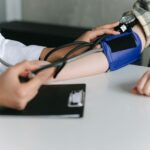


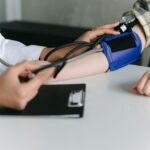
What Happens If You Use the Wrong Cuff Position?
If you place a standard upper-arm cuff on your forearm, the reading you get is not a valid blood pressure measurement. It is a number, but it does not reliably reflect your actual blood pressure.
The practical risk is straightforward. A falsely high reading might lead to unnecessary concern or, in some cases, unnecessary medication changes if a clinician acts on it. A falsely low reading might hide hypertension that needs treatment. Either way, the measurement loses its value.
Home blood pressure monitoring is only useful if the numbers are trustworthy. A reading that cannot be compared to a clinical standard is not useful data. It is noise that looks like data.
How Should You Measure Blood Pressure at Home?
Use a validated upper-arm monitor with a cuff that fits your arm circumference. Cuff size matters. A cuff that is too small will read high. A cuff that is too large may read low. Most manufacturers print the correct arm circumference range on the cuff or in the manual.
Sit quietly for a few minutes before measuring. Keep your back supported, feet flat on the floor, and your arm resting on a surface so the cuff is at heart level. Do not talk during the measurement. Take two or three readings a minute apart and average them.
Measure at the same times each day. Morning and evening readings are common. Record the numbers so you and your clinician can see the pattern over time, not just a single reading.
If your monitor has not been validated, you can check it against a reading taken at your doctor’s office. Bring your monitor to an appointment and compare. If the numbers are close, your monitor is likely reliable enough for home use. If they are not, replace it.
Can You Take Your Blood Pressure On Your Forearm With a Wrist Monitor?
No. A wrist monitor is a different device again. It is designed for the wrist, not the forearm, and it has its own set of accuracy concerns. Wrist monitors are more sensitive to position than upper-arm monitors. Even a small change in wrist height relative to the heart can shift the reading.
Wrist monitors are sometimes used when upper-arm measurement is not possible, but they are generally considered less reliable than upper-arm devices. They are not a substitute for a forearm monitor, and a forearm monitor is not a substitute for them. Each device is built for a specific location.
What Does the Evidence Say About Forearm Measurement?
The evidence is limited and mixed. Some studies have found that forearm measurements correlate reasonably well with upper-arm measurements in certain populations. Others have found clinically significant differences. The variation between studies likely reflects differences in devices, populations, and measurement technique.
What is clear is that upper-arm measurement remains the standard. It has the most validation data, the most consistent methodology, and the widest clinical acceptance. Forearm measurement is a fallback option, not a preferred one.
If you are considering a forearm monitor for any reason, the decision should involve a clinician who understands your specific situation. Self-selecting a forearm device based on convenience is not a reliable approach.
Key Points to Remember
- Standard upper-arm monitors are not validated for forearm use.
- Forearm monitors exist but have less validation data than upper-arm devices.
- Cuff position relative to heart level affects readings significantly.
- Forearm measurement may be appropriate when the upper arm cannot be used, but this should be a clinical decision.
- Wrist monitors are a separate category with their own accuracy concerns.
- Home monitoring is only useful if the device and technique are correct.
Frequently Asked Questions
Can you take your blood pressure on your forearm with a regular upper-arm monitor?
No. A standard upper-arm monitor is not designed or validated for forearm use. Placing the cuff on your forearm will give you a reading that may be significantly inaccurate.
Are forearm blood pressure monitors as accurate as upper-arm monitors?
Generally, no. Upper-arm monitors have far more validation data and are considered the standard. Some forearm monitors have been validated, but the evidence base is much smaller and results vary.
When would a doctor recommend a forearm blood pressure monitor?
When the upper arm cannot be used — for example, due to arm size, surgery, or certain medical conditions. This should be a clinical decision, not a personal preference.
Can I use a wrist monitor on my forearm instead?
No. Wrist monitors are designed for the wrist and have their own accuracy limitations. They are not a substitute for a forearm monitor or an upper-arm monitor.
