
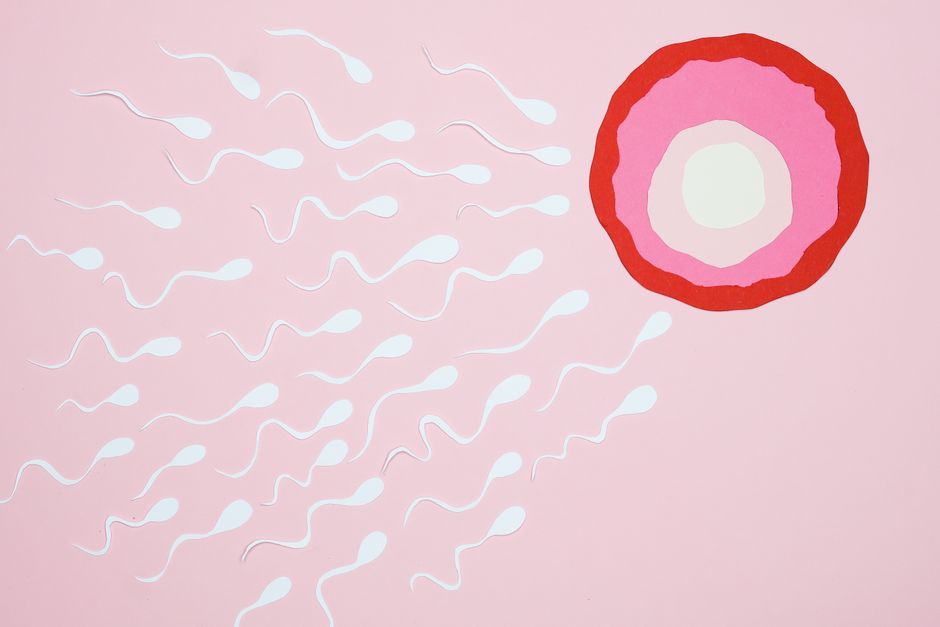
Can you ovulate while you are pregnant? No. Pregnancy shuts down the monthly cycle that leads to ovulation. Once a fertilized egg implants in the uterus, the body releases hormones that stop the ovaries from releasing new eggs. This is why a pregnant person does not have a period and cannot ovulate at the same time.
That answer surprises some people. After all, stories circulate about women who “had periods” through pregnancy or conceived again while already pregnant. Those stories usually confuse bleeding with a period, or they describe something else entirely. Understanding the biology makes the whole picture clearer.
What Actually Happens to Ovulation During Pregnancy
Ovulation depends on a precise chain of hormonal signals. In a normal cycle, the brain’s pituitary gland releases follicle-stimulating hormone (FSH), which prompts an egg to mature in the ovary. A surge of luteinizing hormone (LH) then triggers the egg’s release. That whole sequence requires the hormonal environment of a non-pregnant cycle.
Pregnancy changes that environment almost immediately. After implantation, the developing tissue that will become the placenta begins producing human chorionic gonadotropin (hCG). This is the same hormone that pregnancy tests detect. hCG tells the ovary’s corpus luteum to keep making progesterone instead of breaking down.
Progesterone is the key player here. High, sustained progesterone sends a strong signal back to the brain: no more FSH, no more LH surge. Without those signals, no egg matures and no egg is released. The ovaries essentially go quiet.
This is not a coincidence or a side effect. It is the design. The body is preventing a second pregnancy from competing with the one already underway.
Why Some Women Bleed and Think They Ovulated
Bleeding during early pregnancy is common, and it is the main reason people believe they had a period while pregnant. But pregnancy bleeding is not a period, and it is not a sign of ovulation.
A true menstrual period happens only after ovulation, when progesterone falls and the uterine lining sheds. During pregnancy, progesterone stays high. The lining does not shed. So any bleeding has a different cause.
Possible reasons for first-trimester bleeding include:
- Implantation bleeding — light spotting when the fertilized egg attaches to the uterine wall
- Hormonal shifts — changing hormone levels can irritate the cervix
- Cervical sensitivity — the cervix has more blood flow and can bleed easily
- Subchorionic bleeding — a small collection of blood near the placenta
- Infection or other causes — which a clinician should evaluate
Some people also mistake early pregnancy spotting for a light period, especially if it happens around the time their period would have been due. This timing coincidence fuels the myth.
Any bleeding during pregnancy is worth mentioning to a healthcare provider. Most early bleeding is not dangerous, but some causes need attention. This is not a situation for self-diagnosis.
Can You Get Pregnant Again While Already Pregnant?
Yes, but it is extraordinarily rare, and it does not involve normal ovulation during an established pregnancy. The phenomenon is called superfetation.
Superfetation means a second pregnancy begins while a first pregnancy is already in progress. For this to happen, a person would need to release another egg and conceive again after already being pregnant. Given that pregnancy suppresses ovulation, this is a rare exception rather than a normal event.
Documented cases exist in the medical literature, but they are few. Some researchers question whether all reported cases were true superfetation or whether other explanations fit better. The evidence is limited, and the condition is not something most people need to worry about.
There is a related and more common situation worth separating out: superfecundation. This is when two eggs are released in the same cycle and fertilized by sperm from different acts of intercourse. Both eggs are conceived around the same time, not at different stages of pregnancy. This can produce fraternal twins with different fathers, and it does not require ovulation during pregnancy.
The distinction matters. Superfecundation fits within a single normal cycle. Superfetation would require ovulation after pregnancy is already established, which the body actively prevents.





How Do You Know You Are Not Ovulating?
You do not need to track ovulation during pregnancy, because it is not happening. But some people try to use ovulation tests and get confusing results.
Ovulation predictor kits work by detecting a rise in luteinizing hormone (LH) in urine. During pregnancy, hCG is present at high levels. hCG and LH are chemically similar — similar enough that pregnancy hCG can sometimes trigger a false positive on an ovulation test.
So an ovulation test during pregnancy may show a positive result even though no egg is being released. The test is not measuring what you think it is measuring. This is one of those non-obvious details that trips people up.
If you are pregnant and wondering about your cycle, the more useful conversation is with your prenatal care provider. They can explain what is normal for your stage of pregnancy and address any bleeding or symptoms directly.
What About People Who Say They Ovulated While Pregnant?
When someone says they ovulated or had a period during pregnancy, a few explanations are more likely than true ovulation.
The most common is mistaking pregnancy bleeding for a period. Early pregnancy spotting can look like a light period, especially when it lines up with the expected date. Without a test, it is easy to misread.
Another possibility is that the pregnancy was not yet established when they thought they ovulated. Conception and implantation take time. A person could ovulate, conceive, and then experience bleeding that they later attribute to a period during pregnancy — when in fact the timeline was different.
Rarely, a hormonal condition could cause unusual bleeding patterns that get misinterpreted. This is why clinicians rely on ultrasound and hormone testing rather than symptoms alone.
The bottom line: a claim of ovulation during confirmed pregnancy does not match how the reproductive system works. When it seems to happen, the explanation is almost always about timing, bleeding, or testing rather than true ovulation.
Why the Body Blocks Ovulation in Pregnancy
The suppression of ovulation is not a flaw. It is a protective mechanism, and it makes biological sense.
Carrying one pregnancy already places significant demands on the body. A second, separate pregnancy starting at a different time would create serious risks — for the pregnant person and for both developing fetuses. The hormonal block prevents that competition.
The same system that regulates the monthly cycle is the system that pauses it. When progesterone stays high, the brain stops sending the signals that start a new cycle. This is why pregnancy is sometimes described as a natural pause in the menstrual cycle, though “pause” undersells how active the hormonal signaling really is.
Understanding this helps separate fact from myth. The body is not passively waiting. It is actively maintaining conditions that prevent another egg from being released.
When to Talk to a Healthcare Provider
If you are pregnant and experience bleeding, cramping, or any symptom that concerns you, contact your provider. Do not wait to see if it resolves on its own.
Bleeding in pregnancy has many possible causes, and most are not emergencies. But some require evaluation. A provider can check hormone levels, perform an ultrasound, and determine what is actually happening.
If you are trying to conceive and tracking ovulation, know that ovulation tests can be unreliable in certain situations, including early pregnancy. If you get unexpected results, a pregnancy test and a conversation with a clinician will give you clearer answers than an ovulation kit alone.
The question of whether you can ovulate while pregnant has a clear answer. The body prevents it, and the rare exceptions are just that — rare. For almost everyone, pregnancy means no ovulation and no true periods until after delivery.
Frequently Asked Questions
Can you ovulate while you are pregnant?
No, ovulation does not happen during pregnancy. High progesterone levels stop the hormonal signals that would otherwise trigger an egg’s release.
Can you have a period while pregnant?
No, a true menstrual period cannot occur during pregnancy because the uterine lining does not shed. Bleeding during pregnancy has other causes and should be checked by a provider.
Can an ovulation test be positive during pregnancy?
Yes, it can. Ovulation tests detect luteinizing hormone, which is chemically similar to the pregnancy hormone hCG, so pregnancy can cause a false positive.
What is superfetation?
Superfetation is an extremely rare event in which a second pregnancy begins while a first is already underway. Documented cases exist, but the evidence is limited and it does not reflect normal reproductive function.
