
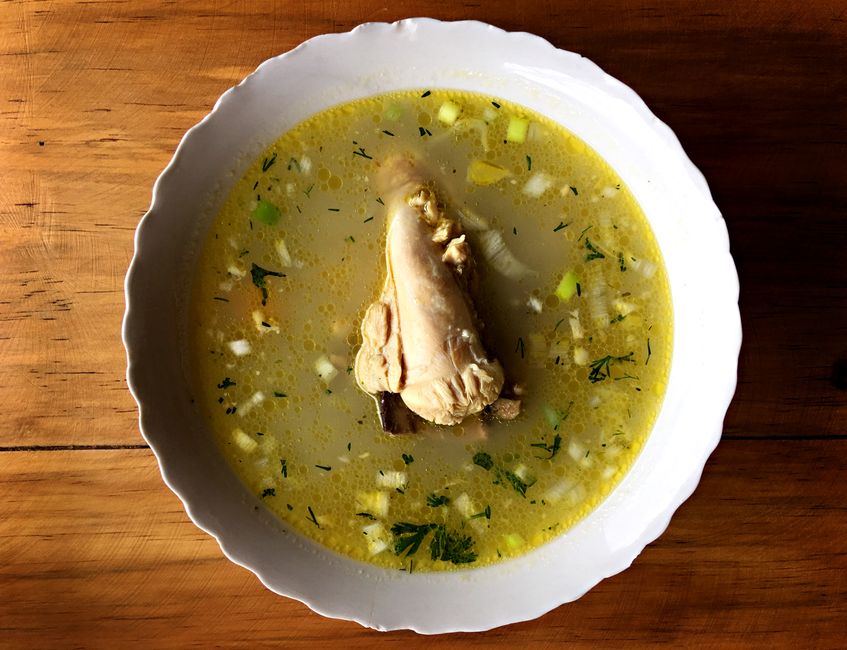
Yes, you can make a liquid that resembles chicken broth using chicken bouillon. But it is not the same thing. Real chicken broth is made by simmering chicken bones, meat, and vegetables in water. Bouillon is a highly processed, concentrated cube or powder. When you dissolve it in water, you get a salty, flavored liquid. It works in a pinch. But calling it chicken broth is a stretch. The difference matters for taste, nutrition, and how your recipe turns out.
This article explains what bouillon broth actually is, how it compares to real broth, and when it is fine to use. You will also learn what the evidence says about nutrition, how to make it taste better, and which common claims about bouillon are not true.
What Is the Difference Between Chicken Broth and Chicken Bouillon?
Chicken broth is a simple food. You simmer chicken parts — usually bones with some meat — in water for a few hours. You can add carrots, celery, onion, and herbs. The result is a mild, savory liquid with some protein, collagen, and minerals from the bones. The flavor comes from the chicken itself.
Chicken bouillon is a manufactured product. It is made from dehydrated chicken stock, salt, fat, MSG, sugar, and artificial flavors. The main ingredient by weight is almost always salt. The second is often MSG or yeast extract. Bouillon cubes and powders are designed to dissolve quickly in water and produce a strong, salty, savory taste. They are not a whole food.
The United States Department of Agriculture (USDA) defines broth as a product made from meat and bones. Bouillon does not meet that standard. The FDA allows bouillon to be labeled as “broth” in some cases because the terms are not tightly regulated for shelf-stable products. That can confuse shoppers.
So the short answer is: bouillon is a broth substitute, not broth itself. It can work as a replacement in many recipes, but you should know what you are giving up.
Can You Make Chicken Broth With Chicken Bouillon for Cooking?
Yes, you can use bouillon to make a liquid for cooking. Many home cooks and even some chefs do this. The question is whether the result is good enough for your specific dish.
For soups, stews, and braises where broth is one ingredient among many, bouillon works fine. The strong flavor of bouillon can actually help in dishes with many other strong tastes, like chili or curry. A 2018 survey by the International Food Information Council found that about 40 percent of US households use bouillon cubes or powders regularly.
For recipes where broth is the star — like a clear chicken soup, a risotto, or a simple broth-based sauce — bouillon can fall short. The flavor is one-dimensional. It lacks the subtle sweetness and richness that comes from actual chicken bones and vegetables. The salt content is also very high, which can throw off the seasoning of your dish.
Here is a simple rule: if your recipe has fewer than five main ingredients and broth is one of them, use real broth. If the dish has many ingredients and strong spices, bouillon is an acceptable shortcut.
What Does the Research Say About Can You Make Chicken Broth With Chicken Bouillon Nutrition?
This is where the difference matters most. Real chicken broth has nutritional value that bouillon does not. Research published in the journal Food & Nutrition Research in 2017 found that chicken broth made from bones contains measurable amounts of calcium, magnesium, and phosphorus. It also contains collagen, which breaks down into gelatin during cooking.
Bouillon has almost none of these nutrients. A typical chicken bouillon cube contains less than one gram of protein per serving. The same volume of real chicken broth contains about 4 to 6 grams of protein. The main nutritional contribution of bouillon is sodium. One teaspoon of bouillon powder can contain 800 to 1,000 milligrams of sodium. The American Heart Association recommends no more than 2,300 milligrams per day for most adults.
Some bouillon products claim to be low-sodium or organic. These options are slightly better, but they still lack the protein and minerals found in real broth. The flavor also changes when manufacturers remove salt and MSG, which are the main sources of taste in bouillon.
If you are drinking broth for health reasons — such as bone broth for gut health or joint support — bouillon will not give you the same benefits. The collagen and gelatin content is essentially zero. The minerals are negligible. You are mostly consuming salt water with artificial flavoring.
-
 Can Intermittent Fasting Cause Constipation? Benefits, Pros & Cons
 -
Pulmo Balance Reviews 2026: Legit Lung Support Or Not?
-
Constipation Relief During Pregnancy: Why It happens & Tips
-
How To Reduce Neuropathy Pain Naturally. 7 Remedies Methods.
-
VisiFlora Reviews 2026: Does The Gut-Eye Formula Really Work?





How Does the Taste of Bouillon Broth Compare to Real Broth?
Real chicken broth has a mild, clean taste. It is savory but not overpowering. The flavor comes from the chicken, the bones, and the vegetables. It has depth. You can taste the difference between a broth made from a roasted chicken and one made from a raw chicken.
Bouillon broth tastes like salt and MSG. That is not necessarily bad. MSG is a safe flavor enhancer that the FDA classifies as generally recognized as safe. But it creates a specific taste that some people describe as artificial or harsh. The flavor is also very consistent. Every cube of the same brand tastes identical, because it is a factory product, not a natural food.
In a blind taste test conducted by Cook’s Illustrated in 2019, tasters could easily distinguish between real chicken broth and broth made from bouillon. Most preferred the real broth for sipping and simple soups. But in highly seasoned dishes, some tasters did not notice a difference.
If you want to improve the taste of bouillon broth, try adding fresh or dried herbs, a bay leaf, black pepper, and a splash of lemon juice or vinegar. These additions help cover the artificial taste and add complexity. You can also sauté onions and garlic in a pot before adding the bouillon and water. That small step makes a noticeable difference.
| Characteristic | Real Chicken Broth | Bouillon Broth |
|---|---|---|
| Protein per cup | 4-6 grams | Less than 1 gram |
| Sodium per cup | 70-200 mg (homemade) | 800-1,000 mg |
| Collagen content | Moderate to high | None |
| Minerals | Calcium, magnesium, phosphorus | Trace amounts only |
| Flavor complexity | Mild, natural, layered | Strong, salty, one-note |
| Cost per cup | $0.20-$0.50 (homemade) | $0.05-$0.15 |
| Shelf life | 3-5 days refrigerated | Years in pantry |
What Are the Common Misconceptions About Bouillon Broth?
One common belief is that bouillon is just concentrated broth. That is not true. Bouillon is a dehydrated product that includes many additives. The manufacturing process involves spray-drying a thin stock with salt, fat, and flavor enhancers. The result is a powder or cube that is chemically different from broth.
Another misconception is that bouillon is unhealthy because of MSG. MSG is safe for most people. The FDA, the World Health Organization, and the European Food Safety Authority all consider MSG safe. Some people report sensitivity to MSG, but large controlled studies have not found consistent evidence of adverse reactions. The bigger concern with bouillon is the sodium content, not the MSG.
Some people also believe that all bouillon is vegetarian or vegan. That is not always true. Many bouillon cubes and powders contain chicken fat or chicken flavoring that comes from actual chicken. If you need a vegetarian or vegan option, look for products specifically labeled as vegetable bouillon or vegan chicken-flavored bouillon.
Finally, there is a claim that bouillon broth has the same health benefits as bone broth. As of 2026, there is no clinical evidence to support that. Bone broth is rich in collagen, gelatin, and minerals because it is simmered for 12 to 24 hours. Bouillon is not simmered at all. It is simply dissolved in hot water.
When Should You Avoid Using Bouillon as a Broth Substitute?
There are a few situations where bouillon is a poor choice. If you are on a low-sodium diet for high blood pressure, heart disease, or kidney disease, bouillon can quickly push you over your daily limit. One cup of bouillon broth can contain almost half the daily recommended sodium intake.
If you are making a dish that relies on broth for its body and texture, like a gelatin-rich soup or a sauce that needs to thicken naturally, bouillon will not work. Real broth contains gelatin from the bones, which gives it a slight thickness and a silky mouthfeel. Bouillon broth is thin and watery.
If you are following a whole-foods diet or trying to eat minimally processed foods, bouillon does not fit. It is a highly processed product with a long list of ingredients you would not find in a home kitchen. Real broth has two or three ingredients: chicken, water, and maybe some vegetables.
If you are cooking for someone with a food allergy, check the bouillon label carefully. Many bouillon products contain soy, wheat, dairy, or celery. These are common allergens that are not always obvious from the product name.
- Low-sodium diet: Bouillon is very high in salt. Look for low-sodium versions or use real broth.
- Allergies: Bouillon often contains soy, wheat, or dairy. Read the ingredient list every time.
- Gelatin need: If your recipe needs body from collagen, bouillon will not provide it.
- Whole foods: Bouillon is processed. Real broth is a whole food.
- Clear broth dishes: Bouillon can taste artificial in simple soups or sipping broths.
Frequently Asked Questions
Can you use chicken bouillon instead of chicken broth in any recipe?
Yes, in most recipes you can substitute bouillon dissolved in water for broth. But the higher salt content and different flavor may change the result.
How much bouillon do you use to replace one cup of broth?
Check the package instructions. For most brands, one teaspoon of bouillon powder or one cube dissolved in one cup of water replaces one cup of broth.
Is bouillon broth as healthy as homemade chicken broth?
No. Bouillon broth has far less protein, collagen, and minerals. It is also much higher in sodium and contains artificial additives.
Can you make bone broth from bouillon?
No. Bouillon does not contain bones, collagen, or gelatin. It cannot produce the nutritional profile of bone broth no matter how long you simmer it.
