
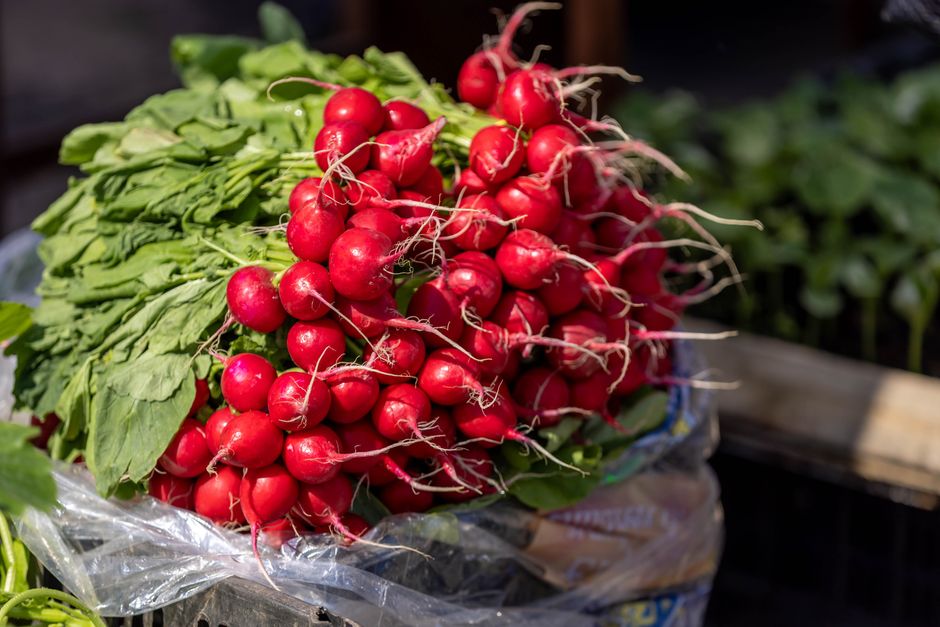
Yes, you can eat radish leaves. The green tops of radishes are edible, nutritious, and commonly used in cooking around the world. They are not poisonous, and eating them is perfectly safe for most people.
Are Radish Leaves Safe to Eat?
Radish leaves are safe to eat. They belong to the same plant family as broccoli, kale, and cabbage — the Brassicaceae family. These greens have been eaten for centuries in many cultures. No evidence suggests they are toxic or harmful.
Like any leafy vegetable, wash them well before eating. Radish leaves grow close to the ground and can carry soil, dirt, or small insects. A good rinse under running water removes most of this. If you are buying radishes with the tops still attached, check that the leaves are fresh and not wilted or slimy. Discard any yellowed or damaged leaves.
Some people worry that radish leaves contain compounds that could be harmful in large amounts. Every leafy green contains naturally occurring substances like oxalates and goitrogens. These are present in spinach, kale, and Swiss chard as well. For a person eating a normal diet, the amounts in radish leaves are not a concern. However, if you have a history of kidney stones or a thyroid condition, it is reasonable to eat them in moderation — the same advice that applies to many other greens.
What Nutrients Do Radish Leaves Provide?
Radish leaves are surprisingly nutritious. They contain more vitamin C than the radish root itself. They are also a good source of calcium, iron, magnesium, and vitamin A in the form of beta-carotene. Like other dark leafy greens, they provide fiber and antioxidants.
One notable nutrient is vitamin K. Radish leaves, like spinach and kale, are high in vitamin K, which supports blood clotting and bone health. If you take a blood thinner such as warfarin, it is important to keep your vitamin K intake consistent. Eating radish leaves in moderation is fine, but a sudden large increase could affect your medication. Talk to your doctor if you have concerns.
Because radish leaves are low in calories and high in nutrients, they fit well into a balanced diet. They add color, texture, and a mild peppery flavor that is less intense than the root.
How Do Radish Leaves Taste?
Radish leaves have a mild peppery taste similar to the radish root but much less sharp. They are earthier than arugula and not as bitter as mature kale. The texture depends on the age of the leaf. Young, tender leaves are soft and pleasant raw. Older, larger leaves can be tougher and more fibrous — similar to mature spinach or collard greens.
Cooking softens the texture and mellows the flavor. Many people compare cooked radish leaves to turnip greens or mustard greens. The peppery bite fades with heat, leaving a mild green taste that works well in many dishes.





Can You Eat Radish Leaves Raw?
Yes, you can eat radish leaves raw. Young leaves are best for salads because they are tender. They add a peppery kick similar to watercress or arugula. Chop them finely and mix with other greens, or use them as a garnish.
Older leaves can be eaten raw too, but they may be tough or fuzzy. Most people prefer to cook them. If you want to eat larger leaves raw, remove the stems and slice the leaves into thin strips.
How to Prepare and Cook Radish Leaves
Start by separating the leaves from the stems. The stems are edible but fibrous, especially on older plants. You can chop the stems finely and cook them along with the leaves, or discard them if they are very thick.
Wash the leaves thoroughly in cold water. Dry them in a salad spinner or pat them dry with a clean towel. From here, you can use radish leaves in many of the same ways you use spinach, kale, chard, or beet greens.
Popular cooking methods include:
- Sautéed. Heat olive oil or butter in a pan. Add garlic or onion, then add the leaves. Cook for 2–3 minutes until wilted. Season with salt and pepper.
- Steamed. Steam the leaves for about 3–5 minutes until tender. Serve as a side dish.
- Added to soups and stews. Throw chopped leaves into broth-based soups, lentil stews, or bean dishes during the last 5 minutes of cooking.
- Blended into pesto. Replace basil with radish leaves for a peppery pesto. Combine with nuts, garlic, parmesan, and olive oil.
- In stir-fries. Add radish leaves to vegetable stir-fries near the end of cooking.
You can also dry radish leaves and crumble them into powders for seasoning. The leaves freeze well after blanching, just like spinach.
Do Radish Leaves Have Any Risks or Side Effects?
For most healthy adults, radish leaves present no risks. A few situations deserve attention:
Oxalates. Radish leaves contain oxalates, though less than spinach or beet greens. In very large amounts, oxalates can contribute to kidney stone formation in people prone to calcium oxalate stones. If you have a history of kidney stones, you do not need to avoid radish leaves entirely, but do not eat them by the pound each day. Cooking reduces oxalate content slightly.
Goitrogens. Radish leaves contain goitrogenic compounds, which can interfere with thyroid function if consumed in extremely large raw amounts. This is not a real concern for people with a healthy thyroid who eat a balanced diet. Even for those with hypothyroidism, moderate cooked portions are fine. Cooking deactivates most goitrogenic substances.
Vitamin K. As mentioned, radish leaves are high in vitamin K. If you take warfarin, keep your intake consistent. Eating a serving of radish leaves a few times a week is fine, but do not suddenly start eating large salads of them daily without consulting your doctor.
Pesticides. Radish leaves can carry pesticide residues if conventionally grown. Washing helps, but if you are concerned, choose organic radishes with tops attached. However, the health benefits of eating vegetables likely outweigh the risks of trace residues for most people.
No evidence suggests that radish leaves are unsafe during pregnancy or breastfeeding when eaten as part of a normal diet. As with any new food, introduce them in reasonable amounts.
How Do Radish Leaves Compare to Other Greens?
Radish leaves are nutritionally similar to turnip greens, mustard greens, and collard greens. They are slightly lower in some nutrients than kale but higher in vitamin C than many other leafy greens. Their flavor is milder than mustard greens but more peppery than spinach.
One advantage of radish leaves is that they are often free. Many people throw them away without realizing they are edible. Using them reduces food waste and adds variety to your meals. They grow quickly and are available whenever radishes are in season.
Compared to beet greens, radish leaves are less earthy and more delicate. Compared to arugula, they are less pungent. Compared to kale, they are more tender when young and require less cooking time.
How to Select and Store Radish Leaves
Look for radishes with bright, crisp leaves. Avoid bunches with yellowing, wilting, or slimy leaves. Once home, separate the leaves from the roots. The roots stay fresh longer if the tops are removed — the leaves pull moisture from the root.
Store radish leaves in a plastic bag or container with a damp paper towel in the refrigerator. They last about 2–3 days. Do not wash them before storage; wash just before use. For longer storage, blanch the leaves for 2 minutes, plunge into ice water, drain, and freeze in sealed bags. Frozen radish leaves keep for several months.
If the leaves are wilted, revive them by placing the stems in a glass of cold water for 15–30 minutes. This works best with younger leaves.
Can You Eat the Stems of Radish Greens?
Yes, the stems are edible. They are crunchier than the leaves and have a mild radish flavor. Young stems are tender enough to eat raw or lightly cooked. Older stems can be tough and stringy. If they feel very fibrous, chop them finely or remove them. You can pickle radish stems or add them to stir-fries for extra texture.
Frequently Asked Questions
Can you eat radish leaves raw?
Yes, young radish leaves are tender and have a mild peppery taste that works well in salads and as garnish. Older leaves are better cooked because they can be tough.
Are radish leaves poisonous?
No, radish leaves are not poisonous. They are safe to eat and have been used in cooking for centuries in many parts of the world.
How do you cook radish leaves?
You can sauté, steam, or stir-fry them like spinach or kale, or add them to soups and stews. They cook quickly, usually in 2–5 minutes.
Do radish leaves have oxalates?
Yes, radish leaves contain oxalates, but the amount is lower than in spinach or beet greens. Cooking reduces oxalate levels slightly.
