
Yes, you can eat scallops while pregnant, but only if they are fully cooked. Scallops are a lean source of protein and provide important nutrients like vitamin B12 and omega-3 fatty acids. The key is avoiding raw or undercooked scallops, which can carry bacteria or viruses that are risky during pregnancy. This guide explains how to prepare them safely, which types to avoid, and how much is reasonable to eat.
Are Scallops Safe to Eat During Pregnancy?
Scallops are safe when they reach an internal temperature of 145°F (63°C). At this temperature, harmful bacteria and viruses are killed. Fully cooked scallops have a firm, opaque texture. They should not look translucent or glassy in the center.
The main concern with scallops is not mercury — it is foodborne illness. Raw shellfish is a known source of bacteria like Vibrio and viruses like norovirus. These infections can cause severe vomiting and diarrhea, which is more dangerous during pregnancy because of dehydration risk.
Pregnancy naturally weakens parts of the immune system. This makes it harder to fight off infections that a healthy adult might handle easily. That is why food safety rules are stricter during pregnancy, not because the food itself is toxic.
Can You Eat Raw Scallops or Seared Scallops While Pregnant?
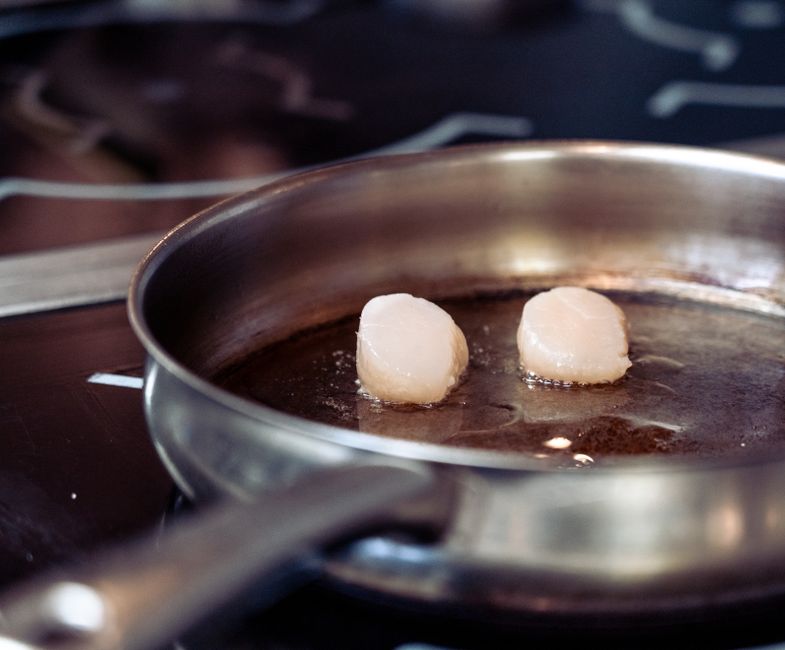
No. Raw scallops, including those served as crudo, ceviche, or sashimi, are not safe during pregnancy. Seared scallops are also risky unless the center is fully cooked through. A quick sear that leaves the middle rare does not reach the temperature needed to kill bacteria.
Many restaurants serve scallops “lightly seared” or “medium rare.” If you order scallops at a restaurant, ask for them well done. You have the right to request extra cooking time. If the scallop is still soft or translucent in the middle, send it back.
Frozen scallops are not automatically safe to eat raw either. Freezing kills some parasites but does not reliably kill all bacteria. Only cooking destroys the full range of harmful organisms.
What About Mercury Levels in Scallops?
Scallops are low in mercury. They are a small shellfish that does not accumulate high levels of mercury like large predatory fish do. This makes them a good seafood choice during pregnancy from a mercury standpoint.
Health authorities generally group scallops with other low-mercury seafood. They are not on the “avoid” list that includes shark, swordfish, king mackerel, and tilefish. You do not need to limit scallops for mercury reasons.
The bigger concern is always how the scallop is prepared and whether it is fully cooked. A low-mercury food that causes food poisoning is still a problem. Cooking method matters more than mercury content for scallops.





How Many Scallops Can You Eat Per Week While Pregnant?
Most guidance suggests pregnant women can eat 8 to 12 ounces of low-mercury seafood per week. That is roughly two to three servings. Scallops fit into this category.
You do not need to count scallops separately from other low-mercury fish. A serving of scallops can replace a serving of salmon, shrimp, or cod in your weekly total. Variety is good, but you do not need to overthink the math.
If you eat scallops several times a week, that is fine as long as they are fully cooked. There is no evidence that scallops themselves cause harm in pregnancy at normal serving sizes.
Nutritional Benefits of Scallops for Pregnancy
Scallops are nutrient-dense. A 3-ounce serving of cooked scallops provides about 20 grams of protein. Protein is essential for fetal growth and development, particularly in the second and third trimesters.
Scallops are also a good source of vitamin B12, which supports nerve development and red blood cell formation. They contain magnesium, potassium, and zinc. These minerals support muscle function, fluid balance, and immune health.
Scallops are naturally low in saturated fat and calories. This makes them a lean protein option compared to fattier cuts of meat. They also provide some omega-3 fatty acids, though less than fatty fish like salmon.
One thing to watch is how scallops are prepared. Scallops cooked in heavy butter, cream sauces, or breaded and fried add extra fat and calories. The scallop itself is healthy — the preparation method can change that.
How to Tell If Scallops Are Fully Cooked
Fully cooked scallops have a consistent white or slightly golden color throughout. They should be firm to the touch. If you cut into one, the center should not be translucent or glossy.
Use a food thermometer when cooking scallops at home. Insert the thermometer into the thickest part of the scallop. It should read 145°F (63°C) or higher. This is the same temperature guideline used for other fish and shellfish.
Do not rely on visual cues alone. Some scallops brown quickly on the outside while the center stays undercooked. A thermometer removes the guesswork.
Buying and Storing Scallops Safely
Buy scallops from a reputable source. They should smell mild and fresh, not fishy or sour. Scallops should be kept cold from the store to your home refrigerator. Do not leave them at room temperature for more than two hours.
Fresh scallops should be cooked within one to two days of purchase. If you are not cooking them right away, store them in the coldest part of the refrigerator. You can also freeze scallops for later use.
Thaw frozen scallops in the refrigerator, not on the counter. Never refreeze scallops that have been thawed. Each thaw-refreeze cycle increases the risk of bacterial growth.
If scallops smell strongly of ammonia or sulfur, discard them. That smell indicates spoilage. Do not taste raw scallops to check freshness — that defeats the purpose of cooking them safely.
Scallops in Restaurants: What to Ask For
When ordering scallops at a restaurant, tell your server you are pregnant and need them cooked well done. Ask that the center is no longer translucent. Most kitchens will accommodate this request.
Avoid buffets where scallops may sit at unsafe temperatures. Avoid dishes where scallops are mixed into cold preparations like seafood salads, unless you can confirm they were cooked and then chilled properly.
If your scallops arrive undercooked, send them back. It is not rude — it is a health decision. Ask for a fresh plate, not just the same scallops reheated, because the undercooked portion may have already been touched by your utensils.
Signs of Food Poisoning to Watch For
If you eat scallops and later develop nausea, vomiting, diarrhea, or fever, contact your healthcare provider. These symptoms can appear within hours or up to a few days after eating contaminated food.
Dehydration is the main risk from food poisoning during pregnancy. Watch for signs like dark urine, dizziness, or reduced urination. If you cannot keep fluids down, seek medical care promptly.
Most cases of shellfish food poisoning resolve on their own, but pregnancy changes the risk calculation. Your doctor may want to monitor you more closely. Do not wait to call if symptoms are severe or persistent.
Frequently Asked Questions
Can I eat scallops if I am allergic to shellfish?
No. If you have a shellfish allergy, avoid scallops entirely. Shellfish allergies can cause severe reactions, and pregnancy does not reduce that risk.
Are bay scallops safer than sea scallops during pregnancy?
No. Bay scallops and sea scallops carry the same food safety risks. Both must be fully cooked to 145°F before eating.
Can I eat scallops in a seafood chowder while pregnant?
Yes, if the chowder is hot and the scallops are fully cooked. Steaming or simmering in soup reaches safe temperatures if the dish is heated thoroughly.
Is it safe to eat scallops from a sushi restaurant while pregnant?
Only if you specifically request fully cooked scallops. Sushi restaurants often serve raw scallops, so you must clarify your order and confirm they will cook it completely.
