
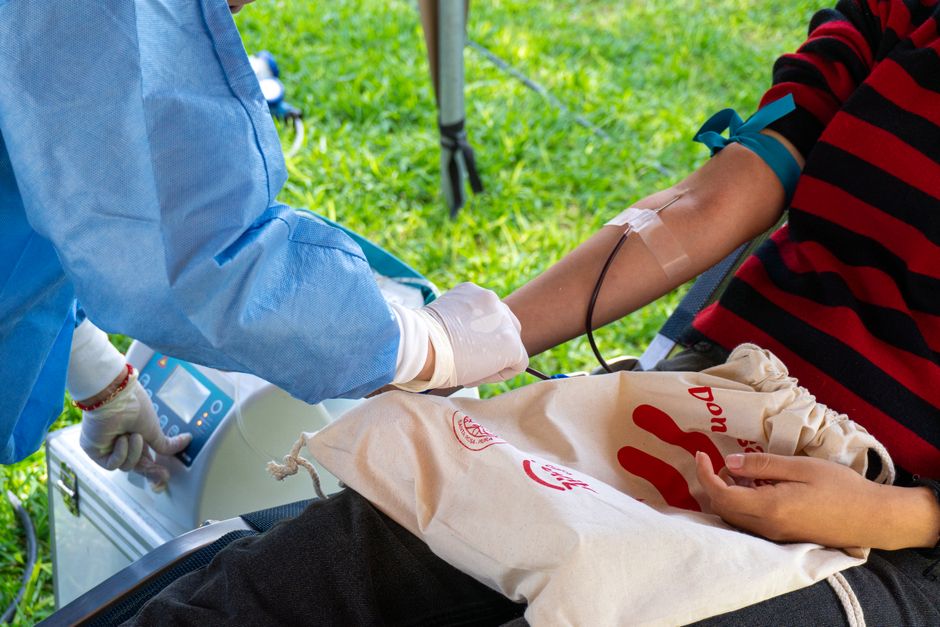
Yes, you can usually donate plasma if you have tattoos. Most plasma collection centers in the United States accept donors with tattoos, but the rules depend on where and when the tattoo was done. A fresh tattoo means a waiting period. An older, fully healed tattoo usually means no delay at all.
The key question is not whether you have ink. It is whether that ink was applied under conditions that could have exposed you to a bloodborne infection. That is what collection centers are screening for, and it is why the rules are more specific than most people expect.
Why Do Plasma Centers Care About Tattoos?
Tattooing breaks the skin, and any procedure that breaks the skin can transmit bloodborne viruses if equipment is not properly sterilized. Plasma centers screen for tattoos for the same reason they screen for recent piercings, surgery, and certain travel: to reduce the chance that a donor is in the “window period” of an infection.
The window period is the stretch of time after exposure when a virus is present in the blood but standard screening tests may not detect it yet. Modern nucleic acid testing has shortened these windows considerably for viruses like HIV and hepatitis C, but no test is perfect at every moment. Donor screening rules exist to cover that gap.
This is a risk-reduction system, not a judgment about tattoos. A healed tattoo from a licensed shop carries a very low concern. The rules are built to be simple and enforceable across thousands of donors rather than to assess each tattoo individually.
Can You Donate Plasma If You Have Tattoos?
In most cases, yes. The Plasma Protein Therapeutics Association, which sets voluntary standards many US collection centers follow, does not permanently bar donors with tattoos. Instead, centers apply a deferral period after new tattoos and piercings.
That deferral is commonly several months. The exact length is set by each center and by the standards it follows, so it can vary. Some centers use a shorter window than others. If you were tattooed years ago and the site is fully healed, you will usually be cleared to donate right away.
Two details decide your situation:
- When the tattoo was done. A recent tattoo triggers a waiting period. An old one usually does not.
- Where it was done. A state-licensed or regulated parlor is treated differently from an unregulated setting in many centers’ policies.
Call your specific center before you go. Policies differ between companies, and the person at the front desk can tell you exactly what applies to you.
Does It Matter Where You Got the Tattoo?
Yes. Location and regulation matter more than most donors realize. Many collection centers ask whether your tattoo was applied at a state-regulated facility. If it was, and the tattoo is healed, you are often cleared without a deferral.
If the tattoo was done somewhere unregulated — a friend’s home, an unlicensed shop, or in a state or country without tattoo facility oversight — some centers apply a longer waiting period or defer you. The reasoning is straightforward. Regulated facilities are subject to inspection and sterilization requirements. Unregulated settings are not, so the infection risk is harder to estimate.
This is also why the rules can feel inconsistent from one center to the next. Regulation of tattoo facilities varies by state, and centers build their policies around what they can verify. A tattoo that is fine at one center may prompt questions at another.





How Long After a Tattoo Can You Donate Plasma?
Expect a waiting period of several months after a new tattoo, though the exact length depends on the center and the standards it follows. This deferral is temporary, not permanent. Once it passes, you can usually donate as normal.
The deferral exists because a new tattoo is a fresh break in the skin. Even with sterile technique, the body is healing, and the center cannot fully rule out a recent exposure during the window period. Waiting covers that gap.
If you are planning a tattoo and also planning to donate, the practical move is to donate before the tattoo, not after. That avoids the waiting period entirely. If you have already been tattooed, ask the center how they count the deferral — from the date of the tattoo, not the date you call.
What Else Can Disqualify You From Donating Plasma?
Tattoos are one small part of a much larger screening process. Plasma donation has more requirements than most people expect, and a tattoo is rarely the deciding factor on its own.
Common reasons for deferral include:
- Recent piercing, especially in the mouth or nose
- Certain recent vaccinations or travel to areas with specific disease risk
- Recent surgery or a current infection
- Low body weight or low protein levels
- Certain medications, medical conditions, or a history of specific illnesses
Donors also need to meet basic health criteria. Centers check blood pressure, pulse, temperature, and hemoglobin or protein levels before each donation. A normal resting heart rate is generally 60 to 100 beats per minute, and blood pressure around 120/80 is considered normal — though centers set their own acceptable ranges, which are often broader than that.
The screening is there to protect both you and the people who receive plasma-derived medicines. Plasma from donors is used to make treatments for immune disorders, bleeding disorders, and other serious conditions. The standards reflect how important that supply is.
Does a Tattoo Affect the Plasma Itself?
No. Tattoo ink does not enter the plasma in any meaningful way, and having a tattoo does not make your plasma lower quality. The concern is entirely about infection screening, not about the ink or the artwork.
This is a useful distinction. People sometimes assume a tattoo disqualifies them because of the ink itself. That is not how the screening works. The question is whether the tattooing process could have exposed you to a transmissible infection, and whether enough time has passed to be confident it did not.
Once a tattoo is healed and the deferral period has passed, the tattoo has no bearing on your eligibility or on the plasma you donate.
What Should You Do Before You Go?
Call the collection center and ask directly. Tell them when the tattoo was done and whether the facility was licensed or regulated. That is the information they need to give you a clear answer.
Bring identification and be ready for a health screening on your first visit. Eat a meal and drink water beforehand, since hydration and nutrition affect how well a donation goes. Plasma donation takes longer than whole blood donation and removes fluid, so being well hydrated matters.
If you are deferred because of a recent tattoo, ask for the specific date you will be eligible. Write it down. The deferral is temporary, and knowing the date turns an uncertain wait into a plan.
Frequently Asked Questions
Can you donate plasma if you have tattoos?
Yes, in most cases. Tattoos do not permanently disqualify you, though a recent tattoo usually triggers a temporary waiting period of several months.
How long do you have to wait to donate plasma after getting a tattoo?
Many centers apply a deferral of several months after a new tattoo. The exact length varies by center, so confirm the specific window with the location where you plan to donate.
Can you donate plasma if your tattoo was done in a licensed shop?
Often yes, especially if the tattoo is fully healed. Many centers treat tattoos from state-regulated facilities differently from unregulated ones, but policies vary.
Do tattoos affect the quality of your plasma?
No. Tattoo ink does not meaningfully enter the plasma, and the screening concern is about infection risk during healing, not the ink itself.
