
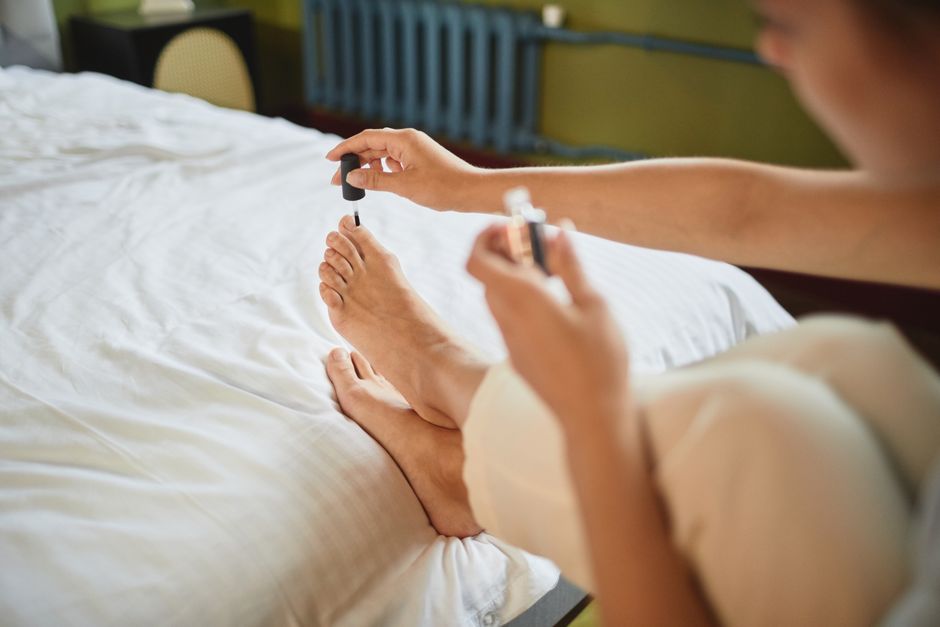
Toenail fungus can survive inside a bottle of nail polish, but the polish itself does not feed it or help it grow. The organisms that cause most toenail infections can persist on surfaces and in liquids for a long time. That means a shared bottle of polish can, in theory, carry fungal cells from one person to another.
This is a question about survival and transfer, not about polish causing infection. Understanding the difference matters, because it changes what you actually need to worry about and what you can safely ignore.
Can Toenail Fungus Live In Nail Polish?
Yes, fungal cells can survive in nail polish. The organisms that cause most nail infections are hardy. They can sit in a liquid, on a brush, or inside a bottle for weeks or longer without dying.
Survival is not the same as growth. Nail polish is not a food source for fungi. It does not give them what they need to multiply. So the polish does not become a breeding ground. It becomes a holding place.
The fungus that causes most toenail infections is a group of organisms called dermatophytes. These are the same types that cause athlete’s foot and ringworm. They feed on keratin, the protein that makes up nails and skin. Nail polish contains no keratin, so it offers nothing to eat.
What it can offer is a place to wait. Some fungi form hardy structures that resist drying and harsh conditions. In that state they can stay alive until they reach a surface they can actually use — like a nail.
How Does Fungus Get Into A Nail Polish Bottle?
The brush is the main route. When you paint an infected nail, the brush picks up fungal cells along with polish. Then you put that brush back in the bottle. Now the cells are in the liquid.
This is why sharing polish is the real concern. If one person has an active infection and uses a bottle, the next person who dips that same brush could pick up cells.
The risk is not equal for everyone. Fungus needs an opening or a weakened nail to take hold. A healthy, intact nail is a strong barrier. A nail that is cracked, dry, or already damaged is much easier for fungus to invade.
Some situations raise the odds:
- Trimming or filing the nail before painting, which can create tiny breaks
- Using the same tools on infected and healthy nails
- Having diabetes or poor circulation, which weakens the nail’s defenses
- Having a nail that is already infected, which makes reinfection easy
None of these guarantee infection. They simply make it more likely that surviving cells find a way in.
Does Nail Polish Make Toenail Fungus Worse?
Polish does not feed the fungus, but covering an infected nail can still cause problems. A coated nail traps moisture and blocks airflow. Fungi tend to thrive in warm, damp, dark conditions.
There is a second issue. Polish hides the nail. If an infection is spreading or getting worse, you may not see it. That delay can matter, because early treatment is usually easier than late treatment.
Some people use polish to cover up a discolored or thickened nail. That is understandable. But it does not treat anything. The infection continues underneath.
One non-obvious point: the polish itself is rarely the main problem. The bigger issue is often the tools and the shared bottle. A brush that touches an infected nail and then a healthy one is a more direct route of transfer than the polish liquid alone.



Can You Get Toenail Fungus From A Nail Salon?
It is possible, but the polish is usually not the culprit. Shared tools are the bigger concern. Files, clippers, and buffers can carry fungal cells if they are not cleaned between clients.
Many salons do clean and disinfect their tools. The problem is that not all do, and not all do it well. A quick wipe is not the same as proper disinfection.
If you want to lower your risk, some steps help:
- Bring your own tools, including your own polish
- Ask how tools are cleaned between clients
- Skip the cuticle cutting, which can open small wounds
- Avoid shaving your legs right before a pedicure, since nicks can let organisms in
These steps reduce risk. They do not remove it completely. Any place where tools touch skin carries some chance of transfer.
Should You Throw Away Nail Polish After An Infection?
If the polish touched an infected nail, replacing it is the safer choice. The same goes for any tools that came into contact with the infected nail.
Fungal cells can survive in polish for a long time. There is no reliable way to sterilize a bottle of polish at home. You cannot boil it or soak it without ruining it. So the practical answer is to replace it.
Tools are different. Metal tools like clippers can often be disinfected. Some can be sterilized with heat. Plastic files and buffers are harder to clean and are usually best replaced.
If you are treating an active infection, this matters more. Reusing contaminated polish or tools can undo your progress. You can clear the infection and then reinfect the same nail.
Can Nail Polish Treat Toenail Fungus?
Regular cosmetic polish does not treat fungus. It has no antifungal action. It covers the nail, but it does not kill the organisms underneath.
There is a separate category of medicated nail lacquers. These are prescription products designed to deliver an antifungal agent into the nail. They are not the same as the polish you buy at a drugstore for color.
Even medicated lacquers have limits. Nails are thick and grow slowly, so it takes time for any treatment to reach the infection. Cure rates for topical treatments alone are generally lower than for oral antifungal medications. That is not a reason to avoid them, but it is a reason to have realistic expectations.
If you have a thickened, discolored, or crumbling nail, see a clinician before assuming it is fungus. Several other conditions can look similar, including psoriasis, injury, and other skin disorders. A wrong guess leads to the wrong treatment.
How Do You Prevent Spreading Toenail Fungus?
The core steps are simple. Keep your nails and tools to yourself, and keep your feet dry.
Fungus spreads through contact and through damp environments. Shared showers, locker rooms, and pools are common places to pick it up. Wearing shower shoes in these spaces lowers your risk.
Other steps that help:
- Dry your feet well, especially between the toes, after bathing
- Trim nails straight across and keep them short
- Wear breathable footwear and change socks if they get damp
- Do not share clippers, files, or polish with anyone
- Treat athlete’s foot promptly, since it can spread to the nails
If you have diabetes or poor circulation, pay closer attention. Nail infections in these groups can lead to more serious problems. A clinician should be involved.
What Actually Kills Toenail Fungus?
Treatment depends on how severe the infection is. Mild cases may respond to topical antifungals. More stubborn cases often need oral medication.
The evidence here is worth being honest about. Oral antifungals tend to have higher cure rates than topical products alone, but they carry more risk of side effects and require monitoring in some cases. Topical treatments are safer but often less effective, especially for infections that involve the nail root or the matrix.
No treatment works instantly. Nails grow slowly, so visible improvement can take months. Full clearing of an infected nail can take a year or longer. That timeline is not a sign that treatment failed. It reflects how slowly nails grow.
Some home remedies are widely shared online. There is little strong evidence that vinegar, bleach, or essential oils cure nail fungus. Some can irritate the skin. None should replace a clinician’s advice, especially for a severe or long-standing infection.
Frequently Asked Questions
Can toenail fungus live in nail polish?
Yes, fungal cells can survive inside nail polish for a long time. The polish does not feed them, but it can hold them until they reach a nail they can infect.
Can you get toenail fungus from sharing nail polish?
It is possible, because the brush can carry fungal cells from an infected nail into the bottle. The risk is higher if your nails are cracked or damaged, which gives fungus an easier way in.
Does nail polish make toenail fungus worse?
Polish does not feed the fungus, but it traps moisture and hides the nail, which can delay treatment. It also does not kill the infection underneath.
Can you treat toenail fungus with regular nail polish?
No, cosmetic polish has no antifungal action and does not treat the infection. Medicated lacquers are a different product and require a prescription.
