
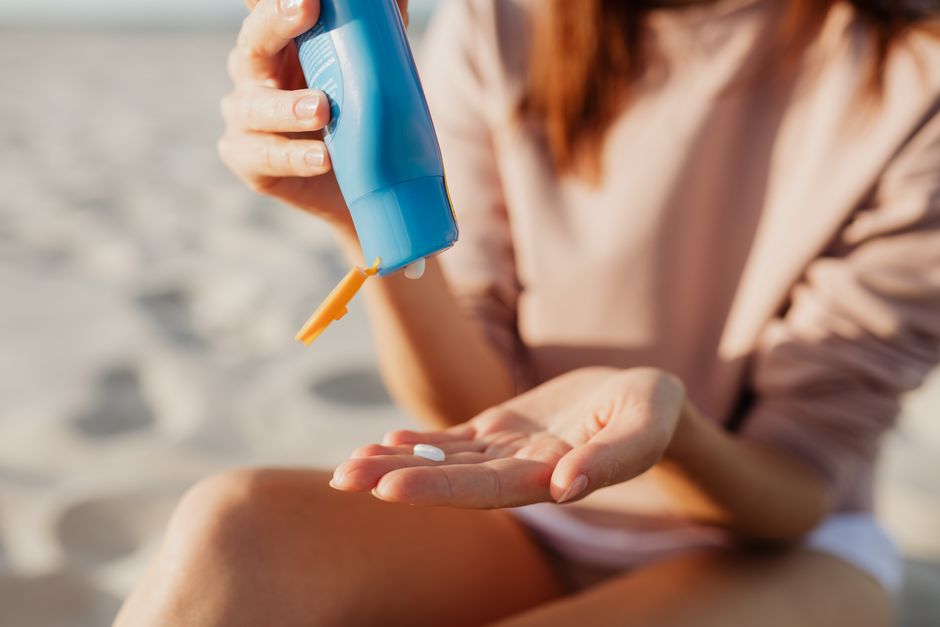
Sunscreen does not completely prevent tanning. It filters some UV rays, which reduces the amount of tanning your skin does, but no sunscreen blocks 100% of UV radiation. A tan is a sign of skin damage, and even with high-SPF sunscreen, some of that damage will still happen if you stay in the sun long enough.
This is a frustrating truth for anyone who wants to spend a day at the beach and come home without any color change. The marketing around sunscreen often implies total protection. The science tells a different story.
How Does Sunscreen Actually Work?
Sunscreen uses chemical filters or mineral blockers to absorb or reflect UV light before it penetrates your skin. Chemical sunscreens like avobenzone absorb UV radiation and convert it into heat. Mineral sunscreens with zinc oxide or titanium dioxide sit on top of the skin and scatter UV rays away.
Both types reduce the amount of UV energy that reaches living skin cells. But they do not eliminate it. Even a perfectly applied SPF 50 sunscreen lets through about 2% of UVB rays. That small amount is enough to trigger melanin production over a long enough exposure.
SPF stands for Sun Protection Factor. It measures protection against UVB rays, which cause sunburn. Most sunscreens also offer some UVA protection, but the rating system for that is less standardized. UVA rays penetrate deeper into the skin and are the main driver of tanning and long-term skin aging.
Can Sunscreen Prevent Tanning Completely?
No. Research published in the Journal of the American Academy of Dermatology confirms that sunscreen use does not prevent tanning. It delays it. If you apply sunscreen and stay in the sun for hours, your skin will still produce melanin and darken.
The SPF number tells you how long it takes for skin to redden compared to unprotected skin. SPF 30 means it takes 30 times longer to burn. But tanning happens at a lower dose of UV than burning. So even before you see redness, your skin may be tanning underneath.
A 2019 study in the British Journal of Dermatology found that people who used sunscreen daily still developed a measurable tan over a week of sun exposure. The tan was less intense than without sunscreen, but it was still visible.
Think of sunscreen as a dimmer switch, not an off switch. It reduces the amount of UV hitting your skin. It does not stop it entirely.
What SPF Level Actually Prevents Tanning?
No SPF level completely prevents tanning. High SPF numbers block more UVB, but the difference between SPF 50 and SPF 100 is small. SPF 50 blocks about 98% of UVB. SPF 100 blocks about 99%. That extra 1% matters for burn prevention but does not stop tanning.
| SPF Level | UVB Blocked | Tanning Prevention |
|---|---|---|
| SPF 15 | 93% | Low – tanning likely within 1-2 hours |
| SPF 30 | 97% | Moderate – tanning delayed but still occurs |
| SPF 50 | 98% | Limited – tanning possible with extended exposure |
| SPF 100 | 99% | Minimal difference from SPF 50 for tanning |
The key factor is not the SPF number but how much UVA gets through. Most sunscreens with high SPF also have good UVA protection, but there is no guarantee. Look for “broad spectrum” on the label. That means the product filters both UVB and UVA rays.
Even with broad spectrum SPF 100, if you stay in the sun for hours, enough UVA will reach your skin to trigger a tan. The higher SPF buys you more time before burning, not immunity from tanning.





Does Reapplication Make a Difference for Tanning Prevention?
Reapplication helps maintain the level of protection you started with. It does not increase it. If you applied SPF 30 correctly and it gave you 97% UVB protection, reapplying two hours later keeps that protection steady. It does not boost it to 99%.
Most people do not apply enough sunscreen in the first place. The standard recommendation is one ounce, about a shot glass full, for your whole body. A study in the Journal of the American Academy of Dermatology found that most people apply only 25% to 50% of that amount. That means the effective SPF they get is much lower than what the bottle says.
If you apply half the recommended amount of SPF 50, your actual protection drops to around SPF 7. At that level, tanning happens quickly. Reapplication corrects for missed spots and worn-off product, but it cannot fix the initial under-application.
Reapplication every two hours is essential, but it is not a strategy for preventing tanning. It is a strategy for preventing sunburn. If avoiding a tan is your goal, reapplication alone will not get you there.
What Actually Prevents Tanning If Sunscreen Is Not Enough?
Physical blocking is the most effective way to prevent tanning. This means staying out of the sun entirely during peak hours between 10 AM and 4 PM. If you are outside, seek shade under an umbrella, tree, or canopy.
Clothing provides reliable protection. A typical cotton t-shirt has an UPF of about 5 to 8, which is not great. Specialized sun-protective clothing with UPF 50+ blocks more than 98% of UV rays. That is better than most sunscreens and does not wash off or wear away.
Hats with a wide brim, at least 3 inches all around, protect your face, ears, and neck. These areas are especially prone to sun damage. Sunglasses with UV400 protection shield your eyes and the delicate skin around them.
Combining these methods with sunscreen gives you the best chance of minimizing a tan. Layering protection works. Sunscreen alone, even applied perfectly, is not enough to keep your skin from darkening if you are in the sun for more than a couple of hours.
What Are the Risks of Trying to Prevent Tanning With Sunscreen Alone?
Relying only on sunscreen to prevent tanning often leads to overexposure. People stay out longer than they should because they feel protected. This false sense of security increases total UV dose over time, which raises skin cancer risk.
The American Academy of Dermatology reports that one in five Americans will develop skin cancer in their lifetime. Most cases are linked to UV exposure from the sun or tanning beds. Sunscreen reduces that risk but does not eliminate it.
Another risk is vitamin D deficiency. Sunscreen blocks UVB rays needed for vitamin D synthesis. If you are covering all exposed skin with high-SPF sunscreen every time you go outside, your body may not produce enough vitamin D. The evidence on this is mixed, but some studies show that regular sunscreen users have lower vitamin D levels.
Most people can get enough vitamin D from brief sun exposure on small areas of skin, about 10 to 15 minutes a few times per week. After that, sunscreen is appropriate. If you are concerned about vitamin D, talk to your doctor about testing and supplements.
Common Misconceptions About Sunscreen and Tanning
- “Higher SPF means no tanning.” As discussed, SPF only measures UVB protection. Tanning is driven mainly by UVA, which is not fully blocked by any SPF.
- “Waterproof sunscreen prevents tanning.” No sunscreen is truly waterproof. The FDA no longer allows that claim. Water-resistant sunscreens maintain their SPF for 40 or 80 minutes in water, but they still allow tanning.
- “You cannot tan through sunscreen.” This is false. You can and will tan if you are in the sun long enough, regardless of the SPF.
- “A base tan prevents sunburn.” A tan provides an SPF of about 2 to 4. That is negligible protection. The idea of a “healthy base tan” is a myth. Any tan is a sign of DNA damage.
These misconceptions persist because marketing and social media oversimplify how sunscreen works. The reality is more nuanced. Sunscreen is a tool for reducing UV damage, not a shield that makes you invisible to the sun.
Frequently Asked Questions
Does SPF 50 prevent tanning?
SPF 50 blocks about 98% of UVB rays but does not prevent tanning completely. Enough UVA gets through to trigger melanin production over time.
Can you still get a tan with sunscreen on?
Yes. Sunscreen reduces the amount of UV reaching your skin but does not stop it entirely. A tan will still develop with enough sun exposure.
What type of sunscreen is best to avoid tanning?
Broad spectrum sunscreen with SPF 30 or higher offers the best protection, but no sunscreen prevents tanning completely. Physical blockers like clothing are more effective.
How long can you stay in the sun with sunscreen before tanning?
There is no set time. It depends on your skin type, the SPF, how much you applied, and the UV index. Most people will see some color change within 1 to 3 hours even with sunscreen.
