
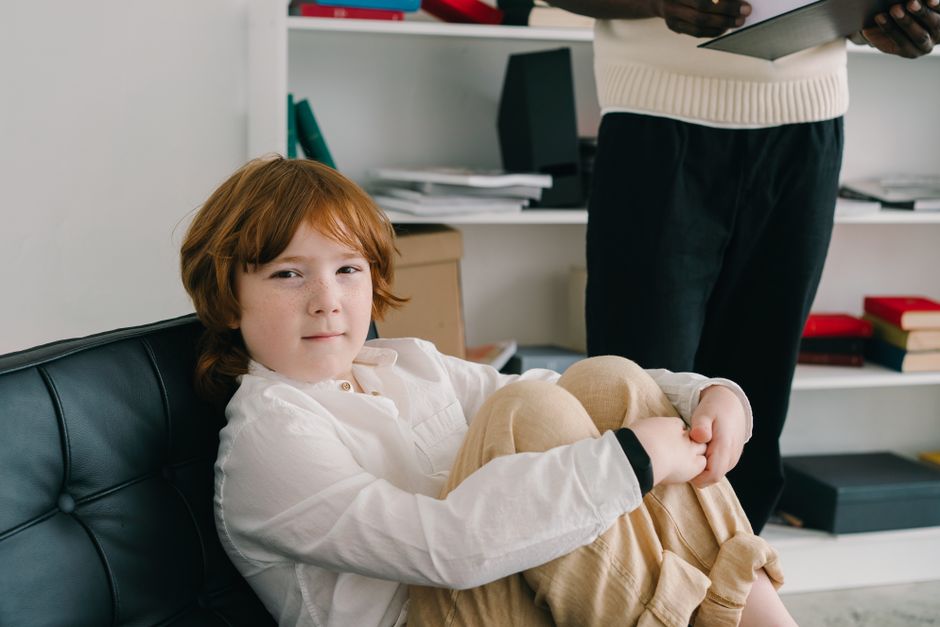
Yes, strict parenting can contribute to anxiety in children. The key word is can, not always. The outcome depends far less on how many rules a family has and far more on how those rules are enforced, how warm the relationship is, and whether a child feels safe making mistakes.
Researchers who study parenting have found that the pattern most strongly linked to childhood anxiety is not strictness itself. It is a combination of high control and low warmth, often called authoritarian parenting. Rules without connection tend to produce fear. Rules with connection tend to produce structure.
What Is the Difference Between Strict Parenting and Authoritarian Parenting?
Strict parenting means having clear rules and expectations. Authoritarian parenting means having those rules without warmth, explanation, or room for a child’s input.
Developmental psychologists often describe four broad parenting styles: authoritative, authoritarian, permissive, and uninvolved. The authoritative style combines firm expectations with emotional warmth and open communication. The authoritarian style combines firm expectations with low warmth and little explanation.
Both styles involve rules. Only one is consistently linked to higher rates of anxiety in children.
A parent can be quite strict about bedtime, screen time, or homework and still raise a confident child. What matters is whether that child feels loved, heard, and safe when they get something wrong.
Can Strict Parents Cause Anxiety In Children? The Reason It Happens
Anxiety in children grows from a specific belief: that the world is unsafe and that mistakes are dangerous. Certain parenting patterns can feed that belief.
When a child is punished harshly for small errors, they learn that mistakes carry serious consequences. Over time, the child may start avoiding anything that could lead to failure. Avoidance is one of the core behaviors that maintains anxiety.
When a child is not allowed to make age-appropriate choices, they get fewer chances to practice handling uncertainty. A child who never picks their own clothes, plans their own time, or resolves a small conflict with a friend has less evidence that they can cope.
When love or approval feels conditional on performance, a child may start monitoring themselves constantly. That hypervigilance is exhausting and is common in anxious children.
None of this happens from a single strict rule. It builds over years through repeated interactions.
Why Some Strict Families Raise Anxious Children and Others Do Not
Warmth is the variable that changes everything. A strict parent who is also warm, predictable, and emotionally available tends to raise children who feel secure within clear limits.
Several factors shape how strictness lands in a particular family:
- Warmth. Does the child feel loved even when they fail?
- Consistency. Are rules predictable, or do they shift with a parent’s mood?
- Explanation. Are rules explained, or just imposed?
- Autonomy. Does the child get age-appropriate control over their own life?
- Modeling. Do parents manage their own anxiety in ways children can observe and copy?
- Child temperament. Some children are naturally more sensitive to criticism or novelty.
Two families can have identical rules and produce very different children. The emotional climate around those rules often matters more than the rules themselves.





How Do You Know If Strictness Is Affecting a Child’s Anxiety?
Anxiety in children often shows up as behavior rather than words. Young children rarely say “I feel anxious.” They show it.
Signs worth paying attention to include:
- Frequent stomachaches or headaches with no medical cause, especially before school or social events
- Sleep problems, including trouble falling asleep or waking at night
- Refusing to try new things or go to familiar places
- Asking for reassurance repeatedly
- Perfectionism or distress over small mistakes
- Irritability, clinginess, or meltdowns that seem out of proportion
- Withdrawing from activities the child used to enjoy
These signs are not proof that parenting caused the anxiety. Anxiety has multiple contributors, including genetics, temperament, and life events. But if a child’s anxiety seems tied to fear of disappointing a parent, that pattern is worth examining.
If anxiety is interfering with school, friendships, sleep, or daily functioning, a pediatrician or child mental health professional can help assess what is going on.
What Kind of Parenting Reduces Anxiety Risk in Children?
The parenting style most consistently associated with lower anxiety is authoritative parenting: high warmth combined with clear, reasonable expectations.
In practice, that looks like a few specific habits.
Explain the rule, not just the consequence. “We don’t hit because it hurts people” teaches something. “Because I said so” does not.
Allow age-appropriate independence. Let children make small choices and experience small failures. Coping skills are built through practice, not protection.
Separate the behavior from the child. “That choice was not okay” lands differently than “you are bad.”
Stay calm during conflict. Children learn emotional regulation by watching adults regulate theirs.
Repair after mistakes. Parents who apologize and reconnect after a blowup give children a model for handling their own errors.
None of this requires abandoning structure. Children generally do better with predictable limits. The goal is limits delivered with warmth and respect, not fear.
Does Strict Parenting Always Cause Anxiety?
No. Strict parenting does not automatically cause anxiety. Many children raised with firm rules grow into confident, well-regulated adults.
The research consistently points to a specific pattern, not strictness in general. High control combined with low warmth, harsh punishment, and little emotional connection is the combination most associated with anxiety and other difficulties.
Culture also matters. In some cultural contexts, firm parental authority is the norm and is not linked to the same outcomes. What looks controlling in one family context may be experienced as caring in another.
Genetics and temperament play a real role too. Some children are born more sensitive to threat and criticism. The same parenting approach can affect two siblings differently.
The evidence supports a clear direction: warmth and connection reduce anxiety risk, while harshness and emotional distance increase it. Strictness by itself is not the deciding factor.
When Should a Parent Seek Professional Help?
If a child’s anxiety is affecting daily life, professional support is worth considering. Signs include anxiety that lasts for weeks or months, avoidance that is shrinking the child’s world, and distress that does not respond to reassurance.
Pediatricians, child psychologists, and licensed therapists can assess whether anxiety meets the threshold for a diagnosis. Evidence-based treatments for childhood anxiety exist, and early support tends to work well.
Parents do not have to figure this out alone. Asking for guidance is not a sign of failure. It is often the fastest path to helping a child feel better.
Frequently Asked Questions
Can strict parents cause anxiety in children?
Strict parenting can contribute to anxiety, especially when it comes with low warmth, harsh punishment, or little explanation. Strictness alone is not the cause; the emotional climate around the rules matters more.
What is the difference between strict and authoritarian parenting?
Strict parenting involves clear rules, while authoritarian parenting combines those rules with low warmth and little room for a child’s input. Authoritarian parenting is the style most consistently linked to higher anxiety in children.
Can a child be anxious without strict parents?
Yes. Anxiety in children has many contributors, including genetics, temperament, and life events. Parenting is one factor among several, not the only one.
What parenting style reduces anxiety in children?
Authoritative parenting, which combines warmth with clear and reasonable expectations, is most consistently linked to lower anxiety. It offers structure without harshness or emotional distance.
