
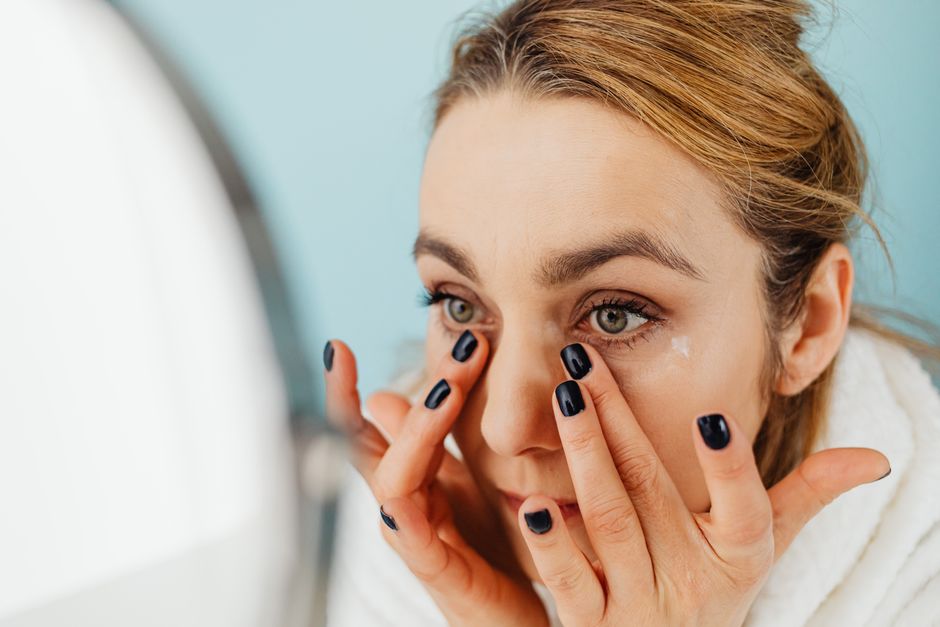
Yes, low estrogen can cause dry eyes. The link is well established in clinical research. Estrogen receptors are present in the lacrimal gland, meibomian glands, and tissues of the eye surface, and when estrogen levels fall, those tissues can produce fewer tears and lower-quality oils. This is why dry eye is one of the most commonly reported eye complaints during perimenopause and after menopause. It is also a recognized side effect of some hormone-blocking medications. What helps depends on the cause, but there are several evidence-based options worth discussing with a clinician.
Can Low Estrogen Cause Dry Eyes And What Helps?
Estrogen does not just affect reproductive tissue. Receptors for it exist throughout the eye, and they influence how the tear film is produced and maintained.
The tear film has three main layers: a watery (aqueous) layer, a mucus layer that helps tears spread evenly, and an outer oil (lipid) layer that slows evaporation. Estrogen appears to influence all three. When levels drop, the lacrimal gland may produce less aqueous fluid, and the meibomian glands along the eyelid margins may secrete oil that is thicker or reduced in volume. The result is a tear film that either does not form properly or evaporates too quickly.
This is why dry eye symptoms often cluster with other menopause-related changes. It is not simply a matter of producing fewer tears. In many cases, tears are produced in normal volume but evaporate too fast because the oil layer is compromised. That distinction matters because it changes which treatments are likely to help.
Several factors affect how severely this plays out. Genetics, medications, contact lens use, screen time, and the local environment all influence tear film stability. Two people with the same estrogen level can have very different eye symptoms.
Why Does Menopause Cause Dry Eyes?
Menopause is the most common life stage where estrogen-related dry eye appears. As ovarian estrogen production declines, the eye’s tear-producing tissues lose a key regulatory signal.
Research has consistently found that dry eye disease is more common in postmenopausal women than in premenopausal women of similar age. The relationship is not perfectly linear, though. Some women have significant dry eye during perimenopause when hormone levels fluctuate rather than simply decline. Others notice symptoms only years after their final period.
There is a non-obvious point here that often gets missed: estrogen is not the only hormone involved. Androgens, including testosterone, also influence meibomian gland function. In women, androgens are produced in smaller amounts by the adrenal glands and ovaries, and those levels also decline with age. Some researchers believe the androgen decline may matter as much as or more than estrogen for meibomian gland health. The evidence on this is still developing, but it helps explain why some women respond well to estrogen-focused treatment and others do not.
Hormone therapy is not a straightforward solution. Some studies have found that systemic hormone therapy improves dry eye symptoms, while others have found it worsens them or makes no difference. The route of administration, the type of estrogen, the dose, and whether a progestin is included all appear to matter. This is one reason clinicians generally do not prescribe hormone therapy solely for dry eye.
What About Dry Eyes From Breast Cancer Treatments?
Certain breast cancer treatments deliberately reduce estrogen or block its effects, and dry eye is a well-documented side effect.
Aromatase inhibitors, which lower estrogen production, are associated with dry eye in a meaningful proportion of users. Tamoxifen, which blocks estrogen receptors in breast tissue, has also been linked to eye surface changes. These medications are life-saving for many women, so the goal is not to stop them but to manage the eye symptoms alongside treatment.
Anyone on these medications who develops persistent dry eye should tell both their oncologist and an eye care provider. Some eye symptoms during these treatments can be more serious than simple dryness, and an eye exam can rule out other causes. Gonadotropin-releasing hormone agonists, used for some conditions, also suppress estrogen and can produce similar effects.
This is a case where the cause is clear and the mechanism is well understood. The challenge is balancing cancer treatment with eye comfort, and that requires coordination between specialists.
What Actually Helps Dry Eyes Related to Low Estrogen?
Treatment depends on which part of the tear film is failing. There is no single fix, and what works for one person may do nothing for another.
For mild symptoms, preservative-free artificial tears are a reasonable first step. Preservative-free formulations are generally preferred for anyone using drops more than a few times a day, because preservatives themselves can irritate the eye surface with frequent use. Lubricating gels or ointments used at bedtime can help with morning dryness.
For evaporative dry eye driven by meibomian gland dysfunction, warm compresses and eyelid hygiene can help. The evidence for these is moderate, not overwhelming, but they are low-risk and widely recommended by eye care providers. Some clinicians also recommend omega-3 fatty acid supplementation. The evidence on omega-3s for dry eye is mixed. Some trials have shown benefit and others have not, so it is reasonable to try but not something to rely on alone.
Prescription options exist for more persistent cases. Cyclosporine eye drops and lifitegrast are both FDA-approved for dry eye disease and work by reducing inflammation on the eye surface. They typically take weeks to months to show full effect. Topical estrogen eye drops have been studied, but they are not FDA-approved for dry eye and the evidence for their effectiveness is limited and inconsistent.
For people with severe dry eye not responding to other measures, procedures such as punctal plugs (which block tear drainage) or intense pulsed light therapy for meibomian gland dysfunction may be considered. These are typically handled by an ophthalmologist or optometrist.
- Preservative-free artificial tears for mild, occasional dryness
- Warm compresses and eyelid hygiene for meibomian gland problems
- Prescription anti-inflammatory drops for moderate to severe cases
- Punctal plugs or in-office procedures for persistent symptoms
- Review of medications that may be contributing
No clinical guidelines currently recommend treating dry eye with systemic hormone therapy alone. If hormone therapy is being used for other menopause symptoms and eye dryness improves, that is a welcome side effect, but it is not a reliable primary treatment.
When Should You See an Eye Doctor?
Dry eye is common, but not all eye dryness is harmless. Some symptoms warrant a professional exam rather than drugstore drops.
See an eye care provider if dryness persists despite consistent use of artificial tears, if it interferes with reading or driving, or if you notice redness, pain, or sensitivity to light that does not improve. Changes in vision — blurring that comes and goes, or any sudden vision loss — need prompt evaluation.
There is an important distinction between dryness as a symptom and dryness as a sign of something else. Conditions such as blepharitis, ocular rosacea, autoimmune diseases like Sjögren’s syndrome, and certain medications can all produce dry eye. A clinician can often tell the difference during a slit-lamp exam and by testing tear production and tear film stability.
Sjögren’s syndrome deserves specific mention. It is an autoimmune condition that affects moisture-producing glands throughout the body, including the eyes and mouth. It is more common in women and often emerges around menopause, which can make it easy to attribute symptoms to hormones alone. If dryness is severe, involves the mouth as well, or is accompanied by joint pain or fatigue, that is worth mentioning to a doctor.
Can You Prevent Estrogen-Related Dry Eyes?
You cannot prevent the hormonal changes of menopause. But you can reduce the factors that make dry eye worse.
Environmental and behavioral factors play a large role. Low humidity, air conditioning, forced-air heating, wind, and smoke all increase tear evaporation. Using a humidifier, avoiding direct air currents, and wearing wraparound sunglasses outdoors can help. Taking breaks during extended screen use matters because people blink less often when looking at screens, and blinking is what spreads the tear film across the eye.
Some medications worsen dry eye, including antihistamines, decongestants, certain antidepressants, and some blood pressure medications. Do not stop any prescribed medication on your own, but it is reasonable to ask a doctor or pharmacist whether a medication could be contributing.
Contact lens wear can also aggravate dryness, especially in low-humidity environments. Some people find that switching lens types or reducing wear time helps. Others find that their lenses become uncomfortable enough during perimenopause that they need to change their routine.
Nutrition and hydration get a lot of attention, but the evidence is modest. Staying adequately hydrated is sensible for general health, though it does not reliably fix dry eye on its own. Omega-3 intake has been studied extensively with mixed results. No single dietary change has been shown to reverse estrogen-related dry eye.
The most reliable approach is to address the symptoms directly with treatments matched to the type of dry eye you have, and to work with an eye care provider if over-the-counter options are not enough.
Frequently Asked Questions
Can low estrogen cause dry eyes?
Yes. Estrogen receptors are present in the tear-producing and oil-producing glands of the eye, and when estrogen levels fall, tear production and tear film quality can decline. Dry eye is a commonly reported symptom during perimenopause and after menopause.
Do estrogen eye drops help dry eyes?
The evidence is limited and inconsistent, and topical estrogen eye drops are not FDA-approved for dry eye. Some small studies have shown benefit, but results have not been strong enough to make this a standard treatment.
Does hormone replacement therapy help dry eyes?
Study results are mixed. Some research suggests systemic hormone therapy may improve dry eye symptoms, while other studies found no benefit or worsening. It is not currently recommended as a treatment for dry eye on its own.
What is the best treatment for menopausal dry eye?
Preservative-free artificial tears, warm compresses, and eyelid hygiene are reasonable first steps. For persistent symptoms, prescription anti-inflammatory drops or in-office procedures may be recommended by an eye care provider.
