
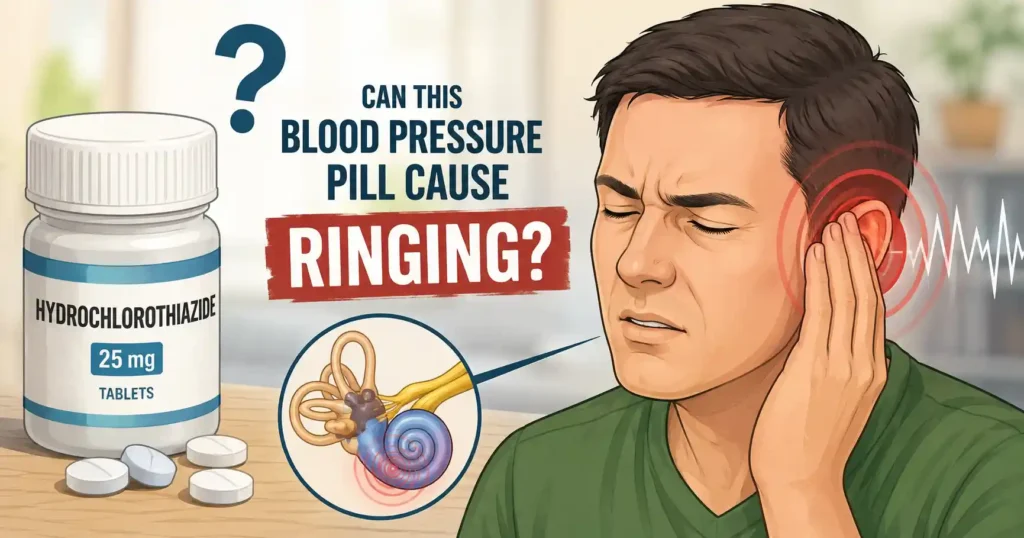
Some people who take hydrochlorothiazide report ringing in their ears. The question is whether the drug actually causes it. The short answer: yes, hydrochlorothiazide may cause tinnitus in a small number of people, but it is not a common side effect; it is very rare. The evidence comes from case reports and some clinical observations, not large controlled trials. If you develop tinnitus while taking hydrochlorothiazide, it could be related, but other causes are more likely.
How Does Hydrochlorothiazide Work?
Hydrochlorothiazide is a thiazide diuretic. It lowers blood pressure by helping your kidneys remove extra salt and water. This reduces the volume of blood in your vessels, which eases pressure on artery walls. It is also used to treat fluid retention from conditions like heart failure or kidney disease.
The drug works in the distal convoluted tubule of the kidney. It blocks sodium and chloride reabsorption, which pulls water out with them. This changes the balance of electrolytes, especially potassium and magnesium. Those changes may be relevant to how the drug could affect the inner ear.
What Do Studies Say About Hydrochlorothiazide and Tinnitus?
Hydrochlorothiazide is not listed as a common cause of drug‑induced tinnitus in major medical references. However, some case reports describe patients who developed tinnitus after starting the drug, with symptoms improving or stopping after the medication was discontinued.
One review of ototoxic medications noted that thiazide diuretics have been associated with tinnitus in rare instances, but the evidence is limited to individual cases. No large clinical trials have specifically investigated the link. The number of reported cases is very small compared to the millions of people who take the drug each year.
This means the connection is possible but not well‑established. If you have tinnitus and take hydrochlorothiazide, your doctor can consider whether the timing points to the drug. Other causes, such as age‑related hearing loss, noise exposure, or other medications, are much more common.
What Might Cause Tinnitus While Taking HCTZ?
If hydrochlorothiazide does cause tinnitus in some people, there are a few plausible mechanisms. None are proven, but they are grounded in known physiology.
- Electrolyte disturbances. Thiazide diuretics can lower potassium and magnesium levels. The inner ear is very sensitive to fluid and electrolyte balance. A drop in potassium or magnesium could disrupt the tiny hair cells that transmit sound signals to the brain. When these cells misfire, the brain interprets it as a ringing sound.
- Changes in blood pressure. Hydrochlorothiazide lowers blood pressure. In some people, a rapid drop can reduce blood flow to the cochlea, the spiral cavity of the inner ear. Reduced blood flow can damage hair cells and trigger tinnitus.
- Direct toxicity to the ear. Some diuretics, especially loop diuretics like furosemide, are known to be directly toxic to the inner ear (ototoxic). Thiazide diuretics are generally considered much less ototoxic, but a few case reports raise the possibility.
None of these mechanisms have been confirmed for hydrochlorothiazide specifically. They are theoretical explanations that fit the rare reports.





How Common Is Tinnitus With Hydrochlorothiazide?
Tinnitus is not listed in the common side effects (those affecting more than 1 in 100 people) for hydrochlorothiazide in the prescribing information. The drug’s label does not include tinnitus at all in the adverse reactions section for most brands.
Post‑marketing surveillance, which collects reports from doctors and patients after a drug is approved, has included rare reports of tinnitus. Because such reports are voluntary, they likely undercount the true number. But even if all reports are counted, the frequency remains very low compared to the number of prescriptions.
For context, millions of prescriptions are filled for hydrochlorothiazide each year in the United States. The number of tinnitus reports linked to the drug is in the hundreds over decades. That suggests it is a rare side effect, not something most users need to worry about.
What Should You Do If You Develop Tinnitus While on HCTZ?
If you notice ringing in your ears after starting hydrochlorothiazide, do not stop the medication on your own. Abruptly stopping a blood pressure drug can cause a dangerous rise in blood pressure.
Talk to your doctor. They will want to know when the tinnitus started, whether it is constant or intermittent, and whether it is in one or both ears. They may also ask about other medications, recent ear infections, or loud noise exposure.
Your doctor may try a “drug holiday” — temporarily stopping hydrochlorothiazide under medical supervision — to see if the tinnitus resolves. If it does, and it returns when the drug is restarted, that strongly suggests a connection. If the tinnitus does not go away after stopping the drug, another cause is more likely.
There are no specific tests to prove a drug caused tinnitus. The diagnosis is made by timing and by ruling out other causes. If hydrochlorothiazide is the suspected cause, your doctor can switch you to a different class of blood pressure medication, such as an ACE inhibitor, angiotensin receptor blocker, or calcium channel blocker.
Other Medications That Can Cause Tinnitus
Many medications are more strongly linked to tinnitus than hydrochlorothiazide. Knowing these can help you and your doctor narrow down the cause.
- Loop diuretics (furosemide, bumetanide, torsemide) — these are more ototoxic than thiazides. They are used for more severe fluid retention and kidney disease.
- High‑dose aspirin (more than 8 tablets a day) — a common cause of reversible tinnitus, especially in older adults.
- Nonsteroidal anti‑inflammatory drugs (NSAIDs) — ibuprofen, naproxen, and prescription‑strength versions can cause tinnitus, especially at high doses or with long‑term use.
- Certain antibiotics — aminoglycosides (gentamicin, tobramycin) are well‑known ototoxic drugs. Fluoroquinolones (ciprofloxacin, levofloxacin) have also been linked to tinnitus.
- Cancer chemotherapy drugs — cisplatin, carboplatin, and other platinum‑based drugs frequently cause permanent hearing loss and tinnitus.
- Quinine and related medications — used for malaria or leg cramps, quinine is a classic cause of tinnitus.
If you take any of these alongside hydrochlorothiazide, they are more likely suspects. Your doctor can help you sort through the list.
When Tinnitus Is Not Caused by a Drug
Tinnitus is extremely common. About 10 to 15 percent of adults experience it. Most of the time, it is not caused by a medication. The most common causes include:
- Noise exposure — from concerts, power tools, firearms, or headphones at high volume.
- Age‑related hearing loss — natural changes in the inner ear after age 60.
- Earwax blockage — simple and easily fixed.
- Ear infections or sinus congestion.
- Temporomandibular joint (TMJ) disorders — problems with the jaw joint can refer sound to the ear.
- High blood pressure itself — untreated hypertension is a well‑known risk factor for tinnitus.
Because hydrochlorothiazide is prescribed for high blood pressure, the tinnitus could be caused by the condition, not the drug. This is an important point. If your blood pressure was poorly controlled before treatment, the ringing may have been there all along and only noticed after you started paying attention.
How to Lower Your Risk of Tinnitus While on HCTZ
There are no proven ways to prevent tinnitus from hydrochlorothiazide because the link is rare and not well understood. However, general strategies to protect your hearing and ear health apply to everyone taking the drug.
Keep electrolyte levels normal. Your doctor will likely check your potassium and magnesium levels periodically while you are on a thiazide diuretic. Eating potassium‑rich foods — bananas, potatoes, spinach, avocados — can help. Some people need a potassium supplement. Do not take one without your doctor’s advice, as too much potassium can be dangerous.
Stay hydrated. Dehydration can worsen electrolyte imbalances and reduce blood flow to the inner ear. Drink enough water so your urine is light yellow.
Avoid loud noise. This is the single most important thing for preventing tinnitus from any cause. Use earplugs at concerts, keep headphone volume at 60 percent or less, and limit exposure time.
Monitor for ear symptoms. If you notice fullness, pressure, or hearing changes along with ringing, tell your doctor promptly. These could be signs of other ear problems that need treatment.
Does the Dose Matter?
Most drug‑induced tinnitus is dose‑related. Higher doses increase the risk. The usual starting dose of hydrochlorothiazide for blood pressure is 12.5 to 25 mg per day. The maximum recommended dose is 50 mg per day. Taking higher amounts, especially more than 50 mg daily, may increase the likelihood of electrolyte disturbances that could affect the ear.
If you develop tinnitus at a higher dose, your doctor might try lowering the dose or adding a second blood pressure drug instead of increasing hydrochlorothiazide further. This is a common strategy for managing side effects.
Frequently Asked Questions
Can hydrochlorothiazide (HCTZ) cause permanent tinnitus?
Permanent tinnitus caused by hydrochlorothiazide has not been well documented. Most published case reports describe tinnitus that improves after the medication is discontinued. However, if significant inner ear damage occurred, permanent hearing symptoms are theoretically possible, although this appears to be rare.
Will tinnitus go away after stopping hydrochlorothiazide?
In reported cases where hydrochlorothiazide was the suspected cause, tinnitus often improved within several days to a few weeks after the medication was stopped under medical supervision. If ringing in the ears continues for more than a month, another underlying cause should be investigated.
Is tinnitus a known side effect of hydrochlorothiazide?
Tinnitus is not listed as a common side effect in the official prescribing information for hydrochlorothiazide. However, rare post-marketing reports suggest it can occur in some people. Overall, the risk appears to be very low.
What should I do if I develop tinnitus after taking hydrochlorothiazide?
Do not stop taking hydrochlorothiazide on your own. Contact your healthcare provider as soon as possible. They can determine whether the medication may be contributing to your symptoms, discuss alternative treatments if necessary, and evaluate other common causes of tinnitus, such as hearing loss, loud noise exposure, earwax buildup, or other medications.
