
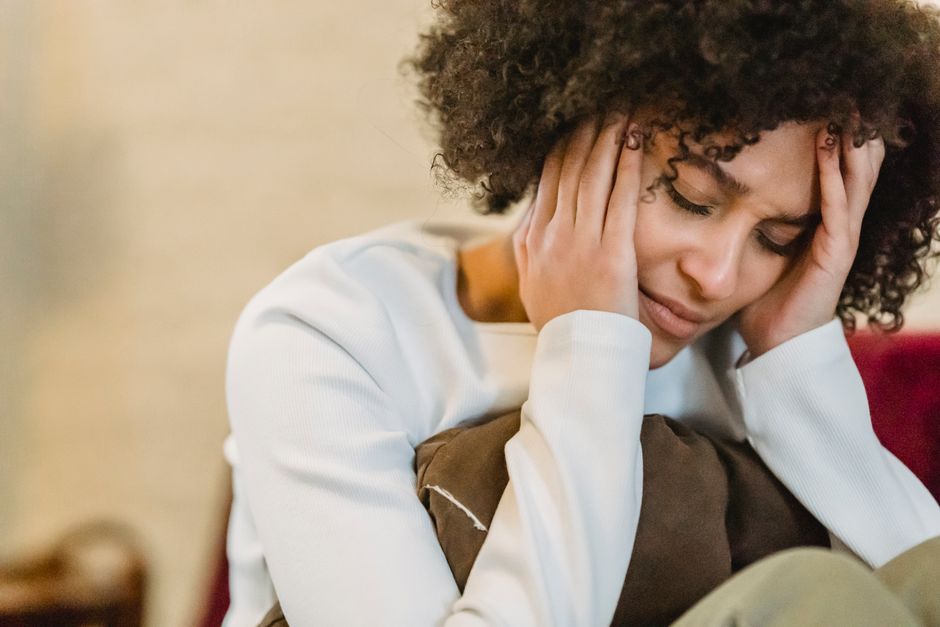
Can depression cause hair loss in women? The short answer is yes, but not in the direct way most people assume. Depression does not attack hair follicles. Instead, it sets off a chain of physical and behavioral changes — stress hormones, poor nutrition, sleep loss, and medication side effects — that can each disrupt normal hair growth. For some women, the hair shedding is a downstream effect of the illness itself. For others, it comes from the treatment. Untangling which is which matters, because the fix is different in each case.
How Does Depression Actually Cause Hair Loss in Women?
Hair grows in cycles. At any given time, most of your scalp hair is in a growing phase that lasts years. A smaller share is in a resting phase, and at the end of that rest, the hair falls out and a new one starts. Losing 50 to 100 hairs a day is normal and not a sign of a problem.
Depression can push more follicles than usual into the resting phase at the same time. When that happens, the shedding shows up weeks to a few months later. This delayed timing is why many women do not connect the hair loss to what was happening in their life months earlier.
The mechanism runs mostly through the body’s stress response. Depression is often accompanied by chronically elevated cortisol, the main stress hormone. Sustained high cortisol is thought to disrupt the normal hair cycle and can contribute to increased shedding. This is a well-established pattern in stress-related hair loss generally, though pinning down exactly how much cortisol elevation is needed to trigger it in any one person is not possible.
There is also a behavioral layer that is easy to overlook. Depression frequently brings appetite changes, skipped meals, and poor sleep. Over time, that can lead to deficiencies in nutrients the body needs for normal hair growth, including iron, zinc, and vitamin D. The hair loss is then partly a nutritional problem wearing a depression costume.
What Kind of Hair Loss Does Depression Cause?
The most common pattern linked to depression and psychological stress is telogen effluvium. This is diffuse shedding — hair coming out across the whole scalp rather than in one bald patch. Women often notice more hair in the shower drain or on the pillow rather than a visible thinning spot at first.
Telogen effluvium is usually temporary. Once the trigger eases, hair typically regrows over several months. That timeline is general and varies widely between individuals.
A second pattern is trichotillomania, a condition in which a person repeatedly pulls out their own hair. It is classified as an impulse control disorder and is strongly associated with depression and anxiety. The hair loss here is mechanical and often shows up as uneven patches or thinning in specific areas like the eyebrows or one side of the scalp. Trichotillomania is a distinct diagnosis, not a symptom of depression itself, but the two frequently occur together.
It is worth being clear that depression does not cause the patterned hair loss known as androgenetic alopecia, which is driven by genetics and hormones. If a woman has that type of thinning, depression is not the cause, though the two can exist at the same time and the stress of hair loss can worsen mood.
Can Antidepressants Cause Hair Loss?
Yes. Some antidepressants are associated with hair loss as a side effect, and this is a genuine clinical concern, not a myth. The evidence is strongest for certain classes, though reports exist across several types of medication.
This creates a difficult situation. A woman starts an antidepressant, her mood improves, and then months later her hair starts shedding. It is natural to assume the depression is worsening. In reality, the medication may be the cause.
It is also possible that both are true. Depression itself can drive shedding, and so can the drug used to treat it. Separating the two usually requires a doctor’s assessment and, sometimes, a medication change to see whether shedding slows.
Anyone noticing hair loss after starting or changing an antidepressant should talk to their prescriber rather than stopping the medication on their own. Abruptly stopping an antidepressant can cause its own problems, and the decision needs to be made with medical guidance. This is not a situation to manage alone.





Could Something Else Be Causing the Hair Loss?
This is where many women get stuck. Hair loss in women aged 35 to 65 has several common causes, and depression is only one possible thread. Often more than one factor is involved at once.
Conditions and factors frequently linked to hair thinning in this age group include:
- Thyroid disorders — both an underactive and overactive thyroid can cause diffuse shedding.
- Iron deficiency — low iron stores are a well-documented contributor to hair loss in women, even without anemia.
- Polycystic ovary syndrome (PCOS) — a common hormonal cause of thinning, usually in a patterned distribution.
- Menopause — shifting estrogen and androgen levels affect hair growth in many women.
- Crash dieting or rapid weight loss — a frequent trigger for telogen effluvium.
- Other medications — including some blood pressure drugs, blood thinners, and hormonal treatments.
Because these overlap so heavily with the age range where depression is also common, a proper evaluation matters. A doctor can order blood tests for thyroid function, iron status, and other markers to narrow down what is actually driving the shedding. Assuming it is “just stress” can mean missing a treatable cause.
Does Treating Depression Help Hair Regrow?
Often, yes — but the path is not always straightforward. If depression-related stress is the main driver, easing that stress can allow the hair cycle to normalize. Regrowth usually follows over the course of months, not weeks, because hair grows slowly.
The complication is that the treatment itself can sometimes work against you. If an antidepressant is causing the shedding, improving mood will not stop the hair loss. In that case, the answer may involve adjusting the medication under medical supervision.
There is no single fix that works for everyone. What tends to help is addressing the whole picture: treating the depression, correcting any nutritional deficiencies, ruling out thyroid and hormonal causes, and giving the hair cycle time to recover. A dermatologist and a mental health provider often need to work together, because the problem sits at the intersection of both.
One non-obvious point: hair regrowth after telogen effluvium can take six months or longer to become visible, and the new hair may come in finer or a slightly different texture at first. This is normal and does not mean the treatment failed. Many women give up on a plan too early because they expect faster results than hair biology allows.
When Should You See a Doctor?
See a doctor if hair loss is sudden, patchy, or accompanied by scalp itching, burning, or scaling. Those features point toward causes other than depression and stress, and some of them need prompt treatment.
Also seek evaluation if the shedding has continued for more than a few months, if you can see scalp through your hair, or if you are finding large amounts of hair coming out in the shower or on your brush. These are signs worth investigating rather than waiting out.
And if you are struggling with depression itself — persistent low mood, loss of interest, sleep changes, or thoughts of self-harm — that deserves attention on its own, separate from the hair question. In the United States, the 988 Suicide and Crisis Lifeline is available by call or text for anyone in crisis.
Frequently Asked Questions
Can depression cause hair loss in women?
Yes, indirectly. Depression raises stress hormones and often disrupts sleep and nutrition, which can push hair into a shedding phase, though it does not damage the follicles directly.
Is depression-related hair loss permanent?
Usually not. The most common pattern, telogen effluvium, tends to be temporary and hair typically regrows over several months once the trigger eases.
Do antidepressants cause hair loss?
Some do, and this is a recognized side effect for certain medications. Anyone who notices shedding after starting an antidepressant should talk to their prescriber rather than stopping the drug on their own.
How long after stress or depression does hair loss show up?
Shedding often appears weeks to a few months after the trigger, because hair follicles enter the resting phase before the hair actually falls out.
