
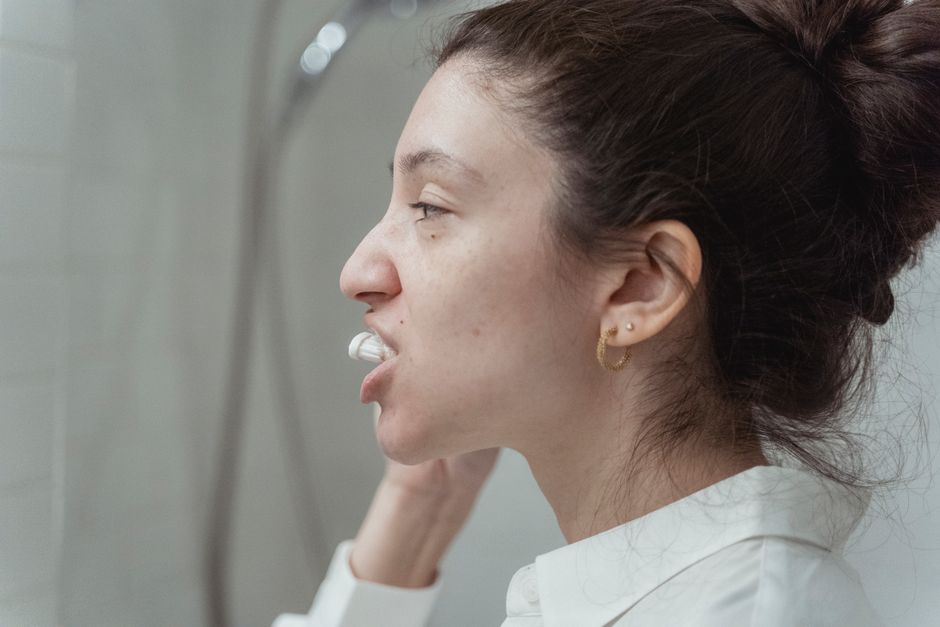
Many people notice in photos that one side of their face looks different from the other. It is a common worry, and chewing on one side often gets blamed. The short answer is that chewing on one side can contribute to facial asymmetry, but it is rarely the sole cause. The relationship is real, but it is more about muscle than bone, and the effects are usually subtle.
What Causes Facial Asymmetry in the First Place?
No human face is perfectly symmetrical. Minor differences between the left and right sides are normal and present in nearly everyone. Most asymmetry is genetic, meaning your bone structure developed that way before you were born.
Other factors influence how your face looks over time. Aging changes fat distribution and skin elasticity. Dental issues can alter how your jaw aligns. Injuries can shift structures. And yes, habitual behaviors like chewing on one side can play a role, but usually a small one.
It is important to separate bone from muscle. Your facial bones are largely set by early adulthood. Muscles, however, respond to use throughout your life. This is where chewing habits matter most.
Can Chewing On One Side Cause Facial Asymmetry?
Yes, but the effect is mostly muscular, not skeletal. When you consistently chew on one side, the muscles on that side — primarily the masseter, which is the main chewing muscle — work harder and can grow larger over time. This is the same principle as any muscle that gets used more frequently.
Research on this is limited, but the evidence that does exist points toward measurable differences. Some studies have found that people who prefer one chewing side tend to have thicker masseter muscles on that side. This can make the lower face appear fuller or more defined on one side.
The key word here is “appear.” The change is usually subtle and confined to soft tissue. Your jawbone itself is unlikely to reshape from chewing habits alone, especially after adolescence.
How Much Chewing Does It Take to Change Your Face?
There is no established threshold. No study has defined how many chews per day or how many years of one-sided chewing it takes to create a visible difference. The honest answer is that it varies from person to person.
Some people chew predominantly on one side for decades and show no obvious asymmetry. Others may develop a slightly fuller masseter muscle on their preferred side. Genetics, baseline muscle size, and how forcefully you chew all influence the outcome.
What is clear is that this is a slow process. Muscles adapt to repeated use over months and years, not days or weeks. If you are an adult, any change from chewing habits would have built up gradually over a long period.





Why Do People Chew on One Side?
Understanding why someone chews on one side matters because the underlying reason may be more significant than the chewing itself. Common reasons include:
- Tooth pain or sensitivity on one side
- Missing teeth that make chewing difficult on one side
- Ill-fitting dental work like crowns or fillings
- Temporomandibular joint (TMJ) discomfort
- Gum disease or oral infections
- Simple habit with no identifiable cause
If you chew on one side because the other side hurts, that pain is worth investigating. The discomfort is a signal that something needs attention. Ignoring it and continuing to chew on the comfortable side can lead to other problems, including uneven wear on your teeth and strain on your jaw joint.
Can You Reverse Asymmetry From Chewing on One Side?
If muscle size is the cause, switching to more balanced chewing may help over time. Muscles shrink when they are not used as heavily. If you start using both sides more evenly, the overdeveloped muscle may gradually reduce in size.
However, there are no guarantees. Some muscle changes become permanent, especially if they have been maintained for years. The longer the habit, the harder it may be to reverse. This is not a quick fix. Any change would take months to become noticeable.
For asymmetry caused by bone structure, chewing changes will not help. Skeletal asymmetry is fixed in adults. If this is the source of your concern, chewing on both sides will not alter your underlying bone structure.
When Should You See a Professional?
Most facial asymmetry is normal and does not require treatment. But certain situations warrant a professional evaluation. If you notice a sudden change in facial symmetry, that is different from a long-standing subtle difference. Sudden changes can indicate swelling, infection, or nerve issues.
Consider seeing a dentist if you have dental pain, missing teeth, or suspect your chewing habit is related to an oral health problem. A dentist can identify issues like tooth decay or gum disease that might be causing you to favor one side.
A doctor may be appropriate if you have concerns about jaw joint pain, difficulty chewing, or if the asymmetry is significant enough to affect your daily life. In rare cases, pronounced asymmetry can be related to underlying medical conditions, though this is uncommon.
For cosmetic concerns, a plastic surgeon or dermatologist can discuss options like Botox injections to reduce masseter muscle size. This is a legitimate treatment, but it is cosmetic and not medically necessary. The evidence for its effectiveness is reasonable, though individual results vary.
What Actually Matters More Than Chewing Habits
Facial asymmetry is multifactorial. Chewing on one side is just one variable. Your genetics, age, posture, and even sleeping position all contribute to how your face looks. Fixating on chewing alone misses the bigger picture.
Your teeth play a significant role in facial appearance. Tooth loss can cause bone resorption in the jaw, which changes facial contours over time. This is why replacing missing teeth matters for more than just function.
Your bite alignment also matters. If your teeth do not meet evenly, you may unconsciously favor one side. Orthodontic treatment can address this, though it is a significant decision that should be made with a dental professional.
Practical Steps You Can Take
If you are concerned about asymmetry from one-sided chewing, there are reasonable steps you can take. None of these are medical treatments, but they are sensible habits.
Try to chew more evenly. This sounds simple, but it requires conscious effort. Pay attention to which side you use and make an effort to include the other side. This is most effective if you have no underlying dental pain.
Address any dental problems. If you avoid one side because of pain or missing teeth, see a dentist. Fixing the underlying issue may naturally lead to more balanced chewing.
Do not obsess over your reflection. Most facial asymmetry is barely noticeable to others. What you see in the mirror is often exaggerated compared to how others perceive you. Mirrors reverse your image, which can make asymmetry seem more pronounced than it is.
Frequently Asked Questions
Can chewing on one side permanently change your face?
It can cause lasting muscle size differences, but bone structure changes are unlikely in adults. The effect is usually subtle and primarily affects soft tissue.
How long does it take for one-sided chewing to cause asymmetry?
There is no established timeline, but muscle changes from chewing habits develop over months or years. It is a gradual process, not a rapid one.
Can switching to chewing on both sides fix facial asymmetry?
If the asymmetry is from an overdeveloped muscle, more balanced chewing may help reduce it over time. If the cause is bone structure, it will not change.
Is Botox safe for reducing a large chewing muscle?
Botox injections into the masseter muscle are a recognized cosmetic procedure for this purpose. It is considered safe when performed by a qualified professional, but it is not a medical necessity.
