
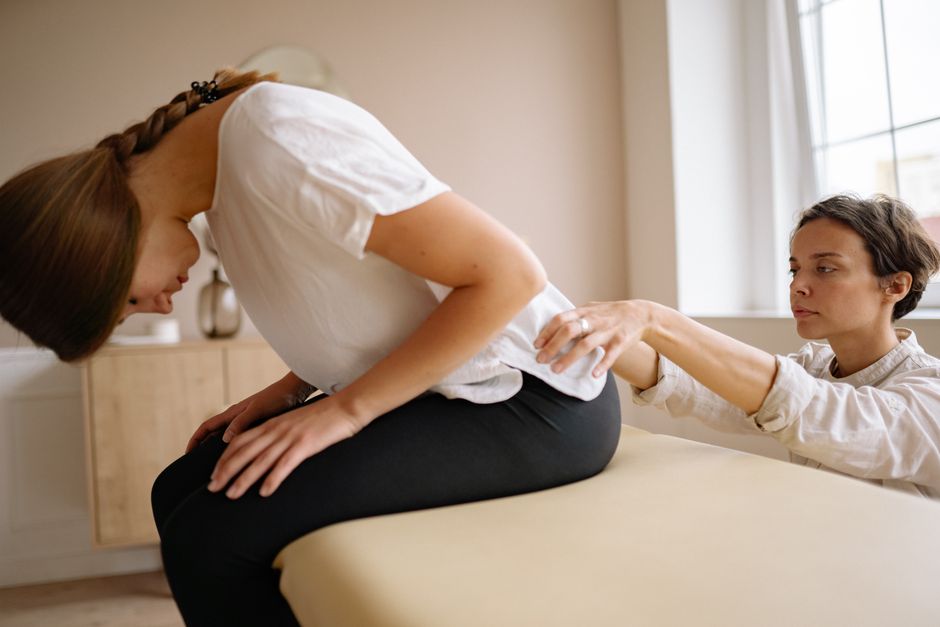
Yes, back pain can cause testicle pain. The nerves that supply the lower back and the testicles share pathways in the spinal cord, so pain from one area can travel to the other. This is called referred pain, and it is a well-documented medical phenomenon. However, testicle pain can also signal a serious problem in the testicle itself, so it is important to understand the difference.
How Can Back Pain Cause Testicles to Hurt?
The testicles and the lower back are not directly connected by muscles or bones. They are connected by nerves. The spinal nerves that exit the lower spine, specifically around the L1 and L2 vertebrae, send signals to the skin, muscles, and organs in the lower abdomen, groin, and scrotum.
When a structure in the lower back—like a disc, a joint, or a muscle—is irritated, it sends a pain signal to the spinal cord. The brain can struggle to tell exactly where that signal started. It may interpret the signal as coming from the testicle, even though the testicle itself is perfectly healthy. This is the same reason a heart attack can cause left arm pain.
This is not a rare event. Urologists and spine specialists see patients with this pattern regularly. The pain is real, but the source is the back, not the scrotum.
What Does Referred Testicle Pain Feel Like?
Referred pain from the back usually has a specific character. It often feels like a dull ache, a heavy sensation, or a deep pressure in the scrotum. It rarely feels like a sharp, stabbing pain that comes on suddenly.
The pain may come and go. It often worsens with certain positions or movements that stress the lower back, such as sitting for long periods, bending forward, or lifting. It may improve when you lie down or change posture. There is usually no swelling, redness, or warmth in the scrotum itself.
Nerve-related back pain can also cause other sensations. Some people report a tingling feeling or a sense of numbness in the groin or inner thigh. This supports the idea that the spinal nerves are involved.
When Testicle Pain Is a Medical Emergency
You must rule out serious testicular conditions before assuming the pain is from your back. Some causes of testicle pain require immediate medical care.
Testicular torsion is the most urgent. This happens when the spermatic cord twists, cutting off blood flow to the testicle. It causes sudden, severe pain, often with nausea and vomiting. The pain does not go away with position changes. This is a surgical emergency. If blood flow is not restored quickly, the testicle can be lost. Do not wait to see if it improves.
Epididymitis is an inflammation or infection of the tube that carries sperm. It usually causes pain that builds over a day or two, often with swelling, fever, or pain during urination. This requires medical evaluation and often antibiotics.
Other signs that require urgent attention include a hard lump in the testicle, blood in the urine, or pain that wakes you from sleep. If you have any of these, see a doctor promptly. Do not assume back pain is the cause until a healthcare provider has examined you.
-
 Can Lower Back Pain Cause Testicles to Ache? The Short Answer
 -
Is Ice or Heat Better for Back Pain? Here’s What to Know
-
Do Waist Trainers Help with Back Pain? Here’s What to Know
-
What Does Pain Management Do for Back Pain? Here’s What to Know
-
Arctic Blast Reviews 2026: Does The Cooling Pain Drop Work?





How to Tell the Difference Between Back Pain and Testicle Pain
The key difference is the pattern. Referred pain from the back tends to be constant and dull. Testicular pain from a local problem tends to be sharper and more specific.
Ask yourself a few questions. Does the pain change when you move your back or change position? Does it feel worse after sitting or standing for a long time? If yes, the back is likely involved. Does the pain come with swelling, fever, or a change in the size of the testicle? If yes, the problem is likely in the scrotum itself.
Also pay attention to the timeline. Referred pain from the back usually develops gradually and follows the pattern of your back pain. Sudden, severe testicle pain is different. It demands immediate attention regardless of your back history.
If you are unsure, be cautious. See a healthcare provider. An ultrasound of the scrotum can quickly tell whether the testicle has a structural problem. This test is fast, painless, and widely available.
Common Back Conditions That Refer Pain to the Testicles
Several specific back problems can produce referred testicle pain. A herniated disc in the lower lumbar spine is a common cause. When disc material presses on a nerve root, the pain can travel along the nerve pathway into the groin and scrotum.
Facet joint arthritis is another possibility. These small joints in the spine can become inflamed and irritate nearby nerves. The resulting pain is often a deep ache that spreads into the buttock and down into the groin.
Muscle spasms in the deep muscles of the lower back or pelvis can also trigger referred pain. The piriformis muscle, located deep in the buttock, sits close to the sciatic nerve. When this muscle tightens, it can cause pain that radiates into the groin area.
Spinal stenosis, a narrowing of the spinal canal, can also cause nerve compression. This is more common in older adults. The pain may be worse when standing or walking and improve when sitting or leaning forward.
How to Manage Back-Related Testicle Pain
If a doctor has confirmed that your testicle pain comes from your back, treatment focuses on the back, not the scrotum. Rest, gentle stretching, and over-the-counter anti-inflammatory medications like ibuprofen can help reduce nerve irritation.
Physical therapy is often effective. A therapist can teach you exercises to strengthen the core muscles that support the spine. Strong core muscles reduce the load on the lower back and can relieve pressure on irritated nerves.
Posture matters. Sitting for long hours with poor posture puts extra strain on the lower back. Use a chair with good lumbar support. Take breaks to stand and walk every 30 to 60 minutes.
Applying heat to the lower back can relax tense muscles. Cold packs can reduce inflammation in the first few days after a flare-up. Neither treatment directly touches the testicle, but both can reduce the source of the referred pain.
Some people find relief with gentle yoga or stretching focused on the hips and lower back. The key is to avoid movements that cause sharp pain. If a stretch makes the testicle pain worse, stop.
When to See a Doctor for Testicle Pain
You should see a doctor if testicle pain lasts more than a few days, if it is severe, or if it comes with any other symptoms. A healthcare provider can perform a physical exam and order imaging tests to rule out problems in the testicle itself.
A scrotal ultrasound is the standard test. It uses sound waves to create images of the testicles and surrounding structures. It can detect torsion, epididymitis, cysts, and tumors. This test gives a clear answer about whether the testicle is the source of the pain.
If the ultrasound is normal, the focus shifts to the back. Your doctor may recommend imaging of the lumbar spine, such as an MRI, to look for disc problems or nerve compression. This step-by-step approach ensures nothing serious is missed.
Do not delay care out of embarrassment or fear. Testicle pain is a common complaint. Doctors see it frequently, and the evaluation is routine.
Frequently Asked Questions
Can a herniated disc cause testicle pain?
Yes, a herniated disc in the lower lumbar spine can press on nerve roots that send pain signals to the groin and scrotum. This is a recognized cause of referred testicle pain.
How long does referred testicle pain last?
Referred pain lasts as long as the underlying back problem remains irritated. It usually improves as the back condition resolves with rest, physical therapy, or other treatment.
Should I go to the ER for testicle pain?
Go to the ER if the pain is sudden and severe, especially with nausea or vomiting, or if the testicle is swollen and tender. These signs may indicate testicular torsion, which requires immediate surgery.
Can sitting too long cause testicle pain from the back?
Yes, prolonged sitting puts pressure on the lower spine and can irritate the nerves that refer pain to the testicles. Taking regular breaks to stand and stretch can help reduce this.
