
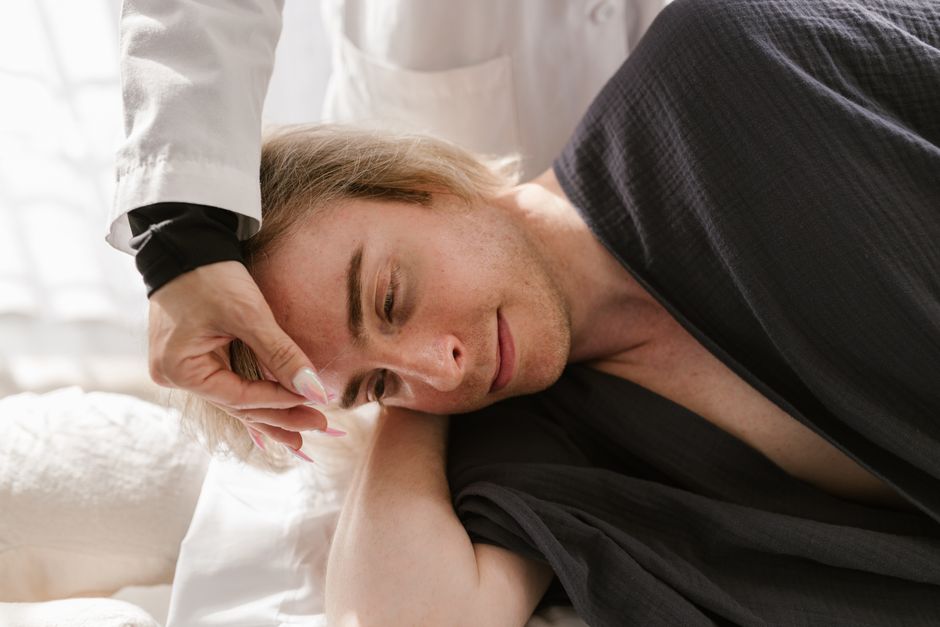
Autophagy is the body’s cellular recycling system, a natural process where cells break down and reuse damaged parts. It is not a cure for alopecia, and no clinical evidence shows that triggering autophagy can reverse hair loss. The relationship between autophagy and hair growth is real but complex, and current research is far too early to support any treatment claims.
What Is Autophagy and How Does It Work?
Every cell in your body constantly maintains itself. When components become damaged or worn out, the cell tags them for removal. Autophagy is that removal process — the cell engulfs the damaged material and breaks it down into basic building blocks it can reuse.
Think of it like a recycling plant inside each cell. Without autophagy, damaged proteins and organelles accumulate, and the cell eventually stops functioning properly. This process is essential for health, and it becomes less efficient with age.
Autophagy is triggered by several conditions. Fasting activates it. Exercise activates it. Certain metabolic stresses activate it. The body uses autophagy as a survival mechanism — when resources are scarce, cells become more efficient at recycling what they already have.
The Link Between Autophagy and Hair Follicles
Hair follicles are among the most dynamic structures in the human body. They constantly cycle through phases of growth, regression, and rest. This cycling requires enormous cellular energy and precise regulation.
Research has shown that autophagy plays a role in this hair cycle. Studies in animal models have found that autophagy is active in hair follicle cells during certain phases of the growth cycle. When researchers block autophagy in these models, hair growth is disrupted.
This has led some researchers to ask whether enhancing autophagy could promote hair growth or protect follicles from damage. It is a reasonable question, but the evidence is far from conclusive.
Most of what we know comes from animal studies and laboratory experiments on cultured cells. These models do not always translate to humans. The hair loss conditions people actually experience — androgenetic alopecia, alopecia areata, telogen effluvium — each have different underlying causes.
Can Fasting or Diet Changes Cure Hair Loss?
Because fasting triggers autophagy, some people have asked whether intermittent fasting could help with hair loss. This is where the evidence gets especially tricky.
Fasting does activate autophagy throughout the body. But fasting also stresses the body in ways that can affect hair. Severe calorie restriction is a well-documented cause of telogen effluvium — a temporary shedding condition that occurs when the body diverts resources away from hair growth.
Some research suggests that short fasts may not harm hair, but no studies have shown that fasting improves hair loss. The theoretical benefit of autophagy activation has not been demonstrated in human trials for any form of alopecia.
In fact, rapid weight loss and extreme dieting are known triggers for temporary hair shedding. The stress of nutritional deficiency can push hair follicles into the resting phase, causing noticeable hair fall weeks later.



What the Research Actually Shows
Several studies have examined autophagy in the context of hair follicles. Some research published in dermatology journals has found that autophagy markers change during different phases of the hair cycle in mice. Other studies have explored whether autophagy protects hair follicle cells from damage caused by chemotherapy or toxins.
These are legitimate areas of scientific inquiry. But none of this research has produced a treatment. No clinical trial has shown that a drug, supplement, or dietary intervention that enhances autophagy can cure or reverse alopecia in humans.
There is also an important distinction between autophagy as a general cellular process and autophagy as a targeted therapy. Even if autophagy is necessary for healthy hair cycling, that does not mean increasing it will fix a specific hair loss condition.
Hair loss has many causes. Hormonal factors drive androgenetic alopecia. Autoimmune processes drive alopecia areata. Stress, illness, and nutritional changes drive telogen effluvium. Autophagy is not a single pathway that addresses all of these.
Marketing Claims vs. Clinical Reality
You will see supplements and products claiming to support autophagy for hair health. These claims are not supported by clinical evidence.
No supplement has been proven to meaningfully increase autophagy in human hair follicles. Even compounds that show promise in laboratory studies have not demonstrated benefits in controlled human trials for hair loss.
Some products claim to contain ingredients that “activate autophagy.” This is marketing language, not a medical claim. The research simply does not exist to support these product claims.
Be especially cautious with products that promise to cure alopecia. Alopecia encompasses multiple conditions with different causes and treatments. No single product — autophagy-related or otherwise — can address all of them.
Established Treatments for Alopecia
For people seeking treatment for hair loss, there are options with real clinical evidence behind them. These treatments work through mechanisms that are well understood.
Minoxidil is approved for androgenetic alopecia and is available over the counter. It works by stimulating hair follicles and prolonging the growth phase. It does not cure hair loss — it manages it, and results stop when use stops.
Finasteride is an oral prescription medication for male pattern hair loss. It works by blocking the conversion of testosterone to dihydrotestosterone, the hormone that shrinks hair follicles in genetically susceptible men.
Corticosteroid injections are used for alopecia areata. They suppress the immune response that attacks hair follicles. This treatment is effective for many people but does not prevent future episodes.
These treatments have been studied extensively in human trials. They do not work for everyone, and they have side effects. But they are the treatments with actual evidence behind them.
What About Emerging Research on Autophagy and Hair?
Researchers are actively studying autophagy in many areas of medicine, including dermatology. Some of this work could eventually lead to new treatments for hair loss.
One area of interest is whether autophagy protects hair follicle stem cells. These stem cells are responsible for regenerating the follicle during each hair cycle. If they become damaged or exhausted, hair growth stops. Some researchers believe that maintaining autophagy in these cells could preserve their function.
Another line of research involves drugs that stimulate autophagy. Certain medications already approved for other conditions are known to activate autophagy. Researchers are investigating whether these drugs could be repurposed for hair loss.
This is genuinely promising science. But it is early-stage. Laboratory findings do not guarantee clinical success. Many compounds that work in mice fail in human trials.
Should You Try to Boost Autophagy for Hair Loss?
There is no harm in adopting habits that support general health, including some that promote autophagy. Regular exercise and a balanced diet are good for your body, and they happen to support autophagy.
But do not expect these habits to cure hair loss. If you have androgenetic alopecia, lifestyle changes will not stop the hormonal process driving your hair loss. If you have alopecia areata, autophagy enhancement will not address the autoimmune response.
If you are experiencing hair loss, the most useful step is to see a dermatologist. A doctor can diagnose the specific type of alopecia you have and recommend treatments with proven effectiveness.
Hair loss is often distressing, and the desire for a simple solution is understandable. But the honest answer is that autophagy is not that solution — not yet, and possibly never.
Frequently Asked Questions
Can autophagy cure alopecia?
No. No clinical evidence shows that autophagy can cure any form of alopecia. Research on autophagy and hair growth is early-stage and limited to animal and laboratory studies.
Does fasting help hair regrowth?
No studies show that fasting promotes hair regrowth. Severe calorie restriction is actually a known trigger for temporary hair shedding.
Can supplements activate autophagy for hair loss?
No supplement has been proven to meaningfully activate autophagy in human hair follicles. Product claims about autophagy activation are not supported by clinical evidence.
What is the best proven treatment for alopecia?
The best treatment depends on the type of alopecia. Minoxidil, finasteride, and corticosteroid injections have the strongest evidence, but a dermatologist must diagnose your specific condition first.
