

Finding out you might be pregnant is a big moment. If you see a positive result on a home pregnancy test, your mind starts racing. But what if you also know you have an ovarian cyst? You might wonder if the cyst itself caused that positive line.
The short answer is no. An ovarian cyst does not produce the pregnancy hormone that home tests detect. A positive pregnancy test means your body is producing human chorionic gonadotropin (hCG), a hormone made only during pregnancy — or in rare medical conditions unrelated to cysts.
There are exceptions and nuances worth understanding. Some cysts are linked to conditions that can cause false positives, and some rare tumors produce hCG. Knowing the difference matters for your health and peace of mind.
What Does a Pregnancy Test Actually Detect?
Home pregnancy tests detect hCG in your urine. This hormone is produced by cells that form the placenta after a fertilized egg implants in the uterus. The test uses antibodies that bind to hCG molecules, creating a visible line or digital reading.
hCG levels rise quickly in early pregnancy. They typically double every 48 to 72 hours during the first several weeks. This rapid increase is why most tests are accurate by the time you miss a period.
For a test to show positive, hCG must be present at a detectable level. Most home tests detect hCG at 20 to 25 milli-international units per milliliter (mIU/mL). If your body is not producing hCG, the test cannot turn positive — regardless of whether you have an ovarian cyst.
Can An Ovarian Cyst Cause A Positive Pregnancy Test?
No. A standard ovarian cyst — whether it is a follicular cyst, corpus luteum cyst, or dermoid cyst — does not produce hCG. The cyst itself cannot trigger a positive pregnancy test.
However, there is a critical distinction to understand. A corpus luteum cyst forms after ovulation. The corpus luteum is the structure that remains after an egg is released. If you become pregnant, this structure continues to produce progesterone to support the early pregnancy. In some cases, fluid accumulates and forms a cyst. This cyst is a result of the pregnancy, not the cause of the positive test.
So if you have a corpus luteum cyst and a positive pregnancy test, the test is positive because you are pregnant. The cyst is a normal finding in early pregnancy, not an alternative explanation.
When an Ovarian Cyst Is Linked to a False Positive
There is one rare scenario where an ovarian mass can cause a false positive pregnancy test. Some ovarian tumors — particularly germ cell tumors — can produce hCG. These are not simple cysts. They are solid tumors that require medical evaluation.
This is uncommon. Most ovarian growths do not produce hormones that interfere with pregnancy tests. But if a blood test confirms hCG in your system and an ultrasound shows no pregnancy, your doctor will investigate other sources. Ovarian germ cell tumors are one possibility, though other conditions exist too.
Some research also suggests that certain medications containing hCG — used in fertility treatments — can cause false positives. This is not related to cysts but is worth knowing if you are undergoing fertility treatment.
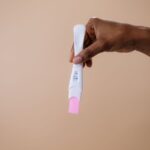




Other Causes of False Positive Pregnancy Tests
False positives are rare but they happen. The most common causes include:
- Chemical pregnancy: A very early miscarriage where hCG was produced but the pregnancy did not continue.
- Recent pregnancy: hCG can remain in your system for weeks after a miscarriage, abortion, or delivery.
- Medications: Fertility drugs containing hCG, such as some ovulation trigger shots, can cause false positives.
- Medical conditions: Rare conditions like gestational trophoblastic disease or certain tumors produce hCG.
- Test errors: Expired tests, evaporation lines, or reading the test after the recommended time window can cause confusion.
If you get a positive result and are not pregnant, your doctor can order a blood test. Blood tests are more sensitive and can measure exact hCG levels. An ultrasound can then determine if a pregnancy is present in the uterus.
Ovarian Cyst Symptoms vs. Early Pregnancy Symptoms
Ovarian cysts and early pregnancy share some symptoms. This overlap can add confusion.
Both can cause:
- Mild pelvic pain or pressure
- Bloating
- Breast tenderness
- Changes in bowel habits
- Fatigue
The key difference is hCG. Pregnancy symptoms are driven by hormones like hCG, progesterone, and estrogen. Cyst symptoms are driven by the physical presence of the cyst and its size. A cyst that is large, bleeding, or twisting can cause sharp pain. Pregnancy typically causes more diffuse, cramping sensations.
If you have symptoms that could be either, the pregnancy test is the most reliable first step. If it is positive, follow up with a doctor for confirmation.
What to Do If You Get a Positive Test and Have a Cyst
First, confirm the result with a second test. Use a different brand if possible. Follow the instructions exactly, including the time window for reading the result.
Next, contact your doctor. They will likely order a blood hCG test and schedule an ultrasound. The ultrasound can show whether a pregnancy is developing in the uterus and whether a cyst is present on the ovary.
If you are pregnant, most ovarian cysts found during early pregnancy are benign and resolve on their own. Your doctor will monitor the cyst with follow-up ultrasounds. Surgery is rarely needed during pregnancy unless the cyst is very large, painful, or suspicious for cancer.
If you are not pregnant but the test was positive, your doctor will investigate the source of the hCG. This involves blood tests, imaging, and possibly referral to a specialist depending on what is found.
When to Seek Emergency Care
Most ovarian cysts cause no symptoms and go away without treatment. But some situations require urgent medical attention.
Seek emergency care if you experience:
- Sudden, severe abdominal or pelvic pain
- Pain with fever or vomiting
- Dizziness, lightheadedness, or fainting
- Rapid breathing
- Pain that does not improve with rest
These symptoms can indicate a ruptured cyst, ovarian torsion (twisting), or internal bleeding. These are medical emergencies. Do not wait to see if symptoms improve.
If you are pregnant and have these symptoms, go to the emergency room immediately. Ectopic pregnancy — a pregnancy outside the uterus — can also cause these symptoms and requires urgent treatment.
Understanding the Limits of Home Tests
Home pregnancy tests are highly accurate when used correctly. But they are not perfect. They can miss early pregnancies, and they can rarely show false positives.
If you have an ovarian cyst and a positive test, the most likely explanation is pregnancy. The cyst and the positive test are probably connected — but the connection is that the pregnancy caused the cyst, not the other way around.
Trust the test result but verify it with medical care. A positive test is the beginning of a conversation with your doctor, not the end of one.
Frequently Asked Questions
Can a cyst cause a false positive pregnancy test?
No, a standard ovarian cyst does not produce hCG and cannot cause a positive test. Rare ovarian germ cell tumors can produce hCG, but these are not simple cysts.
Can a corpus luteum cyst make a pregnancy test positive?
No. A corpus luteum cyst forms after ovulation and may persist in early pregnancy, but the pregnancy itself produces the hCG that makes the test positive.
How long does hCG stay in your system after a miscarriage?
hCG levels typically return to zero within 2 to 6 weeks after a miscarriage. The exact time depends on how far along the pregnancy was and how quickly your body clears the hormone.
Should I see a doctor if I have a positive test and an ovarian cyst?
Yes. Schedule an appointment for a blood test and ultrasound to confirm the pregnancy and evaluate the cyst. Most cysts in early pregnancy are harmless and monitored with follow-up imaging.
