
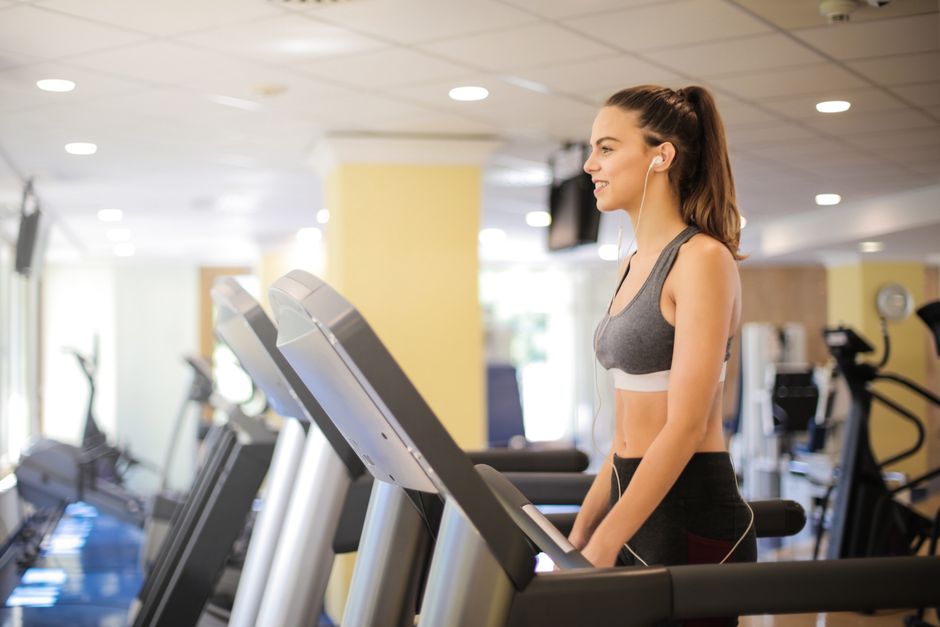
The best way to lose weight on a treadmill is to walk or run at a pace you can sustain for 30 to 60 minutes, several days a week, while eating fewer calories than you burn. The treadmill is a tool for burning calories and building fitness. It is not a shortcut. The workout that wins is the one you will actually do next month, not the hardest one you can survive today.
Does the treadmill actually help you lose weight?
Yes, but only through the same math that applies everywhere else. Weight loss happens when you take in fewer calories than your body uses. A treadmill raises the “calories out” side of that equation.
Walking on a treadmill burns a meaningful number of calories per session. Running burns more per minute. But a single workout rarely creates a large deficit on its own. A 30-minute walk might burn a few hundred calories. That is real, and it adds up over weeks. It is also easy to erase with one large snack afterward.
This is where many people get stuck. They finish a workout, feel they have earned something, and eat back more than they burned. Research on exercise and appetite suggests the body does not always perfectly compensate, but it can partially compensate, especially with intense training. The net effect of exercise alone on weight is often smaller than people expect.
None of this means the treadmill is useless. It means the treadmill works best as one part of a plan that also includes watching what you eat. Exercise also improves heart health, blood sugar control, and mood, which matter independent of the number on the scale.
What is the best way to lose weight on a treadmill?
The best approach combines steady walking or jogging with some higher-intensity work, done consistently. There is no single magic setting. What matters most is total weekly activity and whether you keep it up.
Here is a practical structure that fits most people:
- Frequency: Aim for at least 150 minutes of moderate activity per week, which is the general public health recommendation for adults. That is about 30 minutes on five days.
- Duration: Start with what you can handle, even 10 to 15 minutes, and build up gradually.
- Intensity: Moderate means you can talk but not sing. You are breathing harder but not gasping.
- Incline: Adding incline increases the challenge without requiring you to run. This is useful if running bothers your joints.
- Progression: Once a session feels easy, add a few minutes, a bit more incline, or a slightly faster pace.
The 150-minute figure comes from broad public health guidance for adults. It is a floor for health benefits, not a ceiling. Some people need more activity to lose weight, and some need to focus more on food.
Two workout styles are worth knowing. Steady-state means holding one comfortable pace the whole time. Interval training means alternating harder pushes with easier recovery. Both burn calories. Intervals can burn more per minute and save time, but they are harder to recover from and not necessary for weight loss. If intervals make you dread the treadmill, steady walking you enjoy will beat intervals you skip.
Should you walk or run on the treadmill to lose weight?
Running burns more calories per minute than walking at the same body weight. That is simply because it takes more energy to move faster. But walking has real advantages that matter for weight loss over time.
Walking is easier on the joints, easier to recover from, and easier to do daily. That means more total minutes per week, and total minutes are what drive calorie burn. A person who walks comfortably for an hour every day may burn more over a week than someone who runs hard twice and then needs days off.
Running is efficient. If your time is limited and your joints tolerate it, running covers more ground and burns more per session. Incline walking sits in between. It raises intensity and calorie burn while keeping the impact lower than running.
The honest answer is that the best choice is the one your body tolerates and your schedule allows. If you are new to exercise, starting with walking is sensible. You can add running later if you want.




How many calories does a treadmill burn?
Calorie burn depends on your body weight, the speed, the incline, and how long you go. Heavier bodies burn more calories for the same activity. Faster speeds and steeper inclines burn more than easy flat walking.
Rather than chase exact numbers, use these relationships:
- Walking at a brisk pace burns less per minute than jogging.
- Adding incline raises burn without adding speed.
- Longer sessions burn more than shorter ones at the same pace.
- Holding the handrails reduces the work your body does, so it lowers calorie burn.
That last point surprises people. Gripping the rails or leaning on the console shifts your weight off your legs and reduces the effort. If weight loss is the goal, use the rails only for balance, not for support.
Many treadmills display a calorie estimate. Treat it as a rough guide, not a precise measurement. These numbers can be off by a fair margin because they rely on averages.
Why the scale may not move even when you exercise
This trips up almost everyone. You start working out, you feel better, but the scale barely budges for weeks. There are several normal reasons.
Exercise can increase muscle and glycogen, and glycogen holds water. So you may gain a little water weight even as you lose fat. The scale cannot tell the difference between fat, muscle, and water. This is why body measurements and how your clothes fit can be more useful early on than the scale alone.
The other common reason is eating back the calories. A workout can increase appetite for some people. If you eat more than you burned, you will not lose weight no matter how hard you train. Tracking food for a week or two, without judgment, often reveals where the extra calories come from.
Weight loss also tends to be slow and uneven. It rarely moves in a straight line. Plateaus are normal and are not a sign that the treadmill has stopped working.
Common mistakes that slow treadmill weight loss
Most stalled progress comes down to a few fixable habits.
- Doing too much too soon, then burning out or getting injured.
- Holding the handrails the whole time, which cuts the effort.
- Rewarding every workout with a treat that exceeds the calories burned.
- Only doing cardio and ignoring strength training, which helps preserve muscle as you lose weight.
- Changing nothing about food, then expecting the treadmill alone to do the job.
Strength training deserves a mention. When you lose weight, some of it can come from muscle if you are not doing anything to protect it. Lifting weights or doing bodyweight resistance work a couple of times a week helps you keep muscle while you lose fat. This is well established in exercise science.
Sleep and stress also matter more than people think. Poor sleep can affect appetite hormones and make it harder to stick to a plan. This is not a moral failing. It is biology working against you.
How to start and stay consistent
Consistency beats intensity for weight loss. A moderate plan you follow for months will outperform a brutal plan you quit in two weeks.
Start where you are. If that is 10 minutes at an easy pace, start there. Add a few minutes each week. Pick a time of day you can protect. Lay out your shoes the night before. These small steps reduce the friction that kills habits.
Track your workouts loosely, not obsessively. Notice how you feel, how your clothes fit, and whether your energy is improving. Those signals often change before the scale does.
If you have heart disease, joint problems, or other health conditions, talk with a clinician before starting a new routine. For most healthy adults, walking and jogging are safe, but personal medical advice beats general advice.
Frequently Asked Questions
How long should I walk on the treadmill to lose weight?
Aim for at least 150 minutes of moderate activity per week, which is about 30 minutes on five days. You can split this into shorter sessions if that fits your schedule better.
Is it better to walk or run on a treadmill for weight loss?
Running burns more calories per minute, but walking is easier to sustain and easier on your joints. The better choice is the one you will do consistently.
Why am I not losing weight even though I use the treadmill?
Most often it is because calories eaten still match or exceed calories burned, or because water weight is masking fat loss. Tracking food for a week or two usually shows what is happening.
How many days a week should I use the treadmill?
Most adults benefit from activity on most days, but three to five sessions a week is a reasonable starting point. Build up gradually rather than jumping in all at once.
