
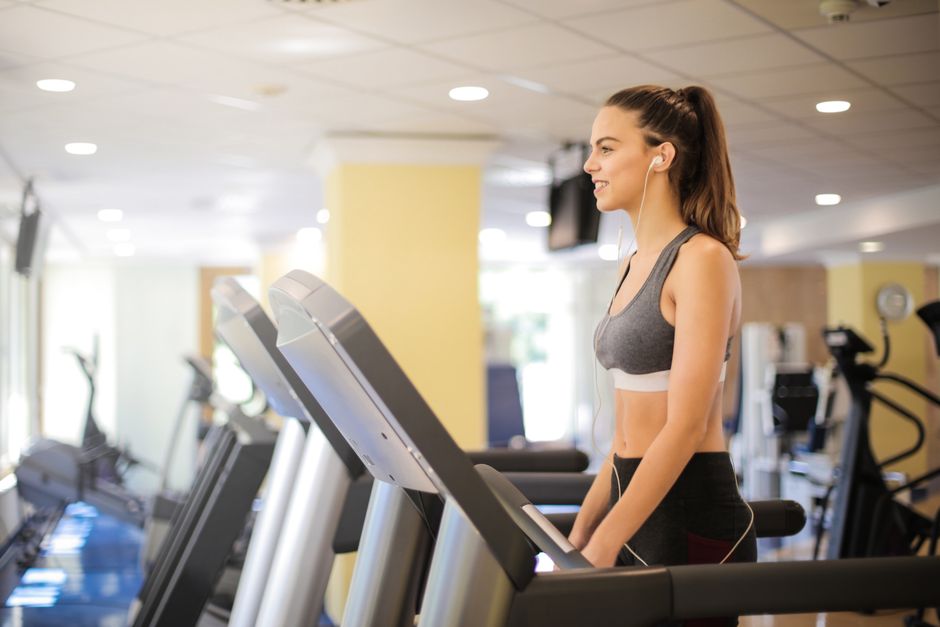
Treadmills are a solid tool for weight loss, but they are not a magic fix. Walking or running on a treadmill burns calories, which helps create the calorie deficit needed to lose weight. However, what you eat matters more than how much you move. A treadmill can help you lose weight, but only when combined with a proper diet and consistent routine.
How Does a Treadmill Help You Burn Calories?
Your body burns calories for energy. When you walk or run, your muscles need more energy. This increases your calorie burn. The number of calories you burn depends on your weight, speed, and incline.
A 155-pound person burns roughly 300 calories per hour walking at a moderate pace of 3.5 miles per hour. The same person burns about 600 calories per hour running at 6 miles per hour. These numbers come from estimates used by the American Council on Exercise.
To lose one pound of fat, you need a deficit of about 3,500 calories. If you burn 300 calories per treadmill session, you would need about 12 sessions to lose one pound. This is doable, but it requires patience. Weight loss from treadmill use alone is slow for most people.
Is Treadmill is Good for Weight Loss Compared to Outdoor Walking?
Both treadmill walking and outdoor walking burn similar calories. The difference is control. A treadmill lets you set a precise speed and incline. You cannot control outdoor terrain as easily.
Studies have found that treadmill walking can feel easier than outdoor walking at the same speed. This is because the belt moves for you. Some people report that outdoor walking feels harder because of wind resistance and uneven ground. This might mean you work slightly harder outside.
But the real advantage of a treadmill is consistency. You can use it in any weather. You can watch a show or listen to a podcast. This makes it easier to stick with a routine over months. Consistency matters more for long-term weight loss than small differences in calorie burn per session.
What Does Research Say About Treadmill Incline for Weight Loss?
Walking on a flat treadmill burns fewer calories than walking on an incline. Research published in the Journal of Strength and Conditioning Research found that walking at a 3% incline increases calorie burn by about 60% compared to walking on flat ground. Walking at a 6% incline increases it even more.
Incline walking also engages your glutes and hamstrings more than flat walking. This builds muscle over time. More muscle means a slightly higher resting metabolism. The effect is small but real.
If you want to lose weight, using incline is a smart move. Start at a low incline like 2% or 3%. Increase by 1% each week as you get stronger. Do not set the incline too high too fast. That can strain your lower back and Achilles tendons.




How Often Should You Use a Treadmill for Weight Loss?
The CDC recommends at least 150 minutes of moderate-intensity aerobic activity per week for general health. For weight loss, more is usually better. Many people need 200 to 300 minutes per week to lose significant weight.
This means using the treadmill 4 to 6 days per week. Each session should be 30 to 60 minutes. Start at the lower end if you are new to exercise. Increase duration gradually over several weeks.
Consistency matters more than intensity. A 30-minute walk every day is better than a 60-minute run once a week. Your body adapts to routine. Weight loss happens when you keep showing up.
Here is a simple weekly plan to start:
- Monday: 30 minutes, flat walk at moderate pace
- Tuesday: 30 minutes, incline 3% at moderate pace
- Wednesday: Rest or light stretching
- Thursday: 30 minutes, flat walk at moderate pace
- Friday: 30 minutes, incline 5% at moderate pace
- Saturday: 40 minutes, flat walk at moderate pace
- Sunday: Rest or light stretching
What Are the Limits of Treadmill Use for Weight Loss?
Treadmill use alone rarely leads to major weight loss. The main reason is that exercise burns fewer calories than most people think. A 30-minute walk burns roughly 150 to 200 calories. That is the same as two small cookies or one sugary coffee drink.
If you eat back the calories you burn, you will not lose weight. This is called compensation. Some people feel hungrier after exercise. Others reward themselves with food. Both behaviors cancel out the calorie deficit.
Research shows that exercise without dietary changes leads to modest weight loss. A review in the journal Progress in Cardiovascular Diseases found that exercise-only programs produce about 2 to 3 pounds of weight loss over 6 to 12 months. Adding dietary changes increases this to 10 to 15 pounds or more.
Another limit is that your body adapts. After a few weeks of the same treadmill routine, your body becomes more efficient. You burn fewer calories for the same effort. This is called metabolic adaptation. To keep making progress, you need to increase intensity, duration, or frequency over time.
How to Make Treadmill Workouts More Effective for Weight Loss
You can increase calorie burn by changing your treadmill routine. Interval training is one effective method. This means alternating between high and low intensity. For example, walk for 2 minutes at a moderate pace, then run for 1 minute at a fast pace. Repeat this cycle for 20 to 30 minutes.
Research published in the Journal of Obesity found that interval training burns more calories in less time compared to steady-state exercise. It also improves cardiovascular fitness faster. This makes it a time-efficient option for busy people.
Another strategy is to increase your non-exercise activity. This is called NEAT — non-exercise activity thermogenesis. It includes walking to work, taking stairs, and standing instead of sitting. A study from the Mayo Clinic found that people with high NEAT burn up to 350 more calories per day than people with low NEAT. This adds up over weeks.
Here is a comparison of different treadmill strategies for weight loss:
| Strategy | Calorie Burn Per 30 Minutes (155 lb person) | Key Benefit |
|---|---|---|
| Flat walking (3.5 mph) | 150 | Easy to start, low injury risk |
| Incline walking (3.5 mph, 5% incline) | 240 | Higher calorie burn, builds glutes |
| Running (6 mph) | 300 | High calorie burn, improves fitness |
| Interval training (alternating walk/run) | 280 | Time-efficient, boosts metabolism |
Common Misconceptions About Treadmills and Weight Loss
One common myth is that running burns fat from your belly. Spot reduction is not real. Your body loses fat from all over, not just the area you exercise. Treadmill running will not target belly fat specifically. It will help reduce overall body fat over time.
Another myth is that you must sweat heavily to burn calories. Sweating is not a good measure of calorie burn. Sweat is your body’s cooling system. You can burn calories without sweating much, especially at lower intensities.
Some people believe that treadmill use alone can offset a poor diet. This is widely claimed though strong evidence is limited. A 2018 study in the American Journal of Clinical Nutrition found that exercise alone without dietary changes leads to minimal weight loss. Diet is the primary driver of weight loss for most people.
As of 2026 there is no clinical evidence that any specific treadmill program guarantees weight loss. Results vary by individual. Factors like genetics, sleep, stress, and medication all play a role. Be skeptical of any claim that promises fast or effortless weight loss from treadmill use alone.
Frequently Asked Questions
How long should I use a treadmill to lose weight?
Aim for 30 to 60 minutes per session, 4 to 6 days per week. Consistency matters more than session length.
Is walking or running better for weight loss on a treadmill?
Running burns more calories per minute, but walking is easier to sustain. Both work if you do them consistently.
Can I lose belly fat by using a treadmill?
No. Spot reduction is not possible. Treadmill use reduces overall body fat, which includes belly fat over time.
Do I need to change my diet to lose weight with a treadmill?
Yes. Diet is the main driver of weight loss. Exercise alone without dietary changes leads to minimal weight loss for most people.
