
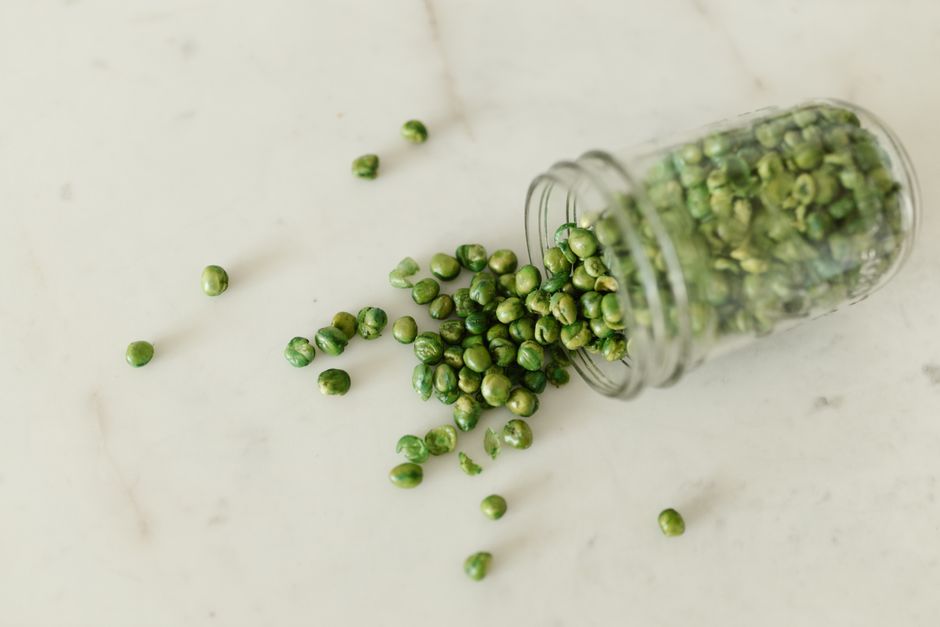
Wasabi peas are a crunchy snack that many people assume is a healthy choice because the main ingredient is a vegetable. The honest answer is that they are a moderately healthy snack, but not in the way you might think. The peas themselves offer protein and fiber, but the coating and frying process add significant calories, sodium, and sugar. They are not a health food, but they are also not a junk food—they sit somewhere in the middle, and understanding exactly where requires looking at how they are made.
What Are Wasabi Peas Actually Made Of?
Wasabi peas start as dried green peas, usually the same variety used for split pea soup. The peas are soaked, dried, and then coated in a batter made from wheat flour, cornstarch, and seasonings. The coated peas are then either baked or fried, depending on the brand.
Most commercial wasabi peas are fried in vegetable oil. The wasabi flavor comes from a powder mixed into the coating, and here is an important detail: most products do not contain real wasabi. Real wasabi comes from the root of the wasabi plant, which is expensive and hard to grow. Most wasabi peas use a mixture of horseradish, mustard powder, and green food coloring to mimic the flavor and appearance.
This matters for your health because the ingredient list tells the real story. A typical bag contains green peas, vegetable oil, wheat flour, sugar, salt, horseradish powder, mustard powder, and artificial color. The peas are the base, but they are not the majority of the calories.
Are Wasabi Peas Healthy? The Nutritional Breakdown
The nutritional profile of wasabi peas varies by brand, but the general pattern is consistent across most products. A standard serving size is about one-third of a cup, which is roughly 30 grams. That serving typically contains around 120 to 140 calories.
The macronutrient breakdown shows why this snack is not as healthy as plain peas. In a single serving, you are getting approximately 3 to 4 grams of protein and 2 to 3 grams of fiber. Those are decent numbers for a snack. But you are also getting 4 to 6 grams of fat, mostly from the frying oil, and 15 to 18 grams of carbohydrates, which includes 3 to 5 grams of added sugar.
The sodium content is where the health concerns become more serious. A single serving of wasabi peas typically contains 200 to 300 milligrams of sodium. That is about 10 to 13 percent of the recommended daily limit of 2,300 milligrams. It is easy to eat two or three servings in one sitting because the snack is small and crunchy, which means you can consume nearly half a day’s worth of sodium without realizing it.
Compared to plain roasted or boiled green peas, wasabi peas have roughly three times the calories, four times the fat, and significantly more sodium. The frying process is the main reason for this difference. The peas themselves are nutritious, but the processing adds what nutritionists call “empty calories”—calories that come from fat and sugar rather than from the nutrients in the peas.
What Are the Actual Health Benefits?
Despite the processing, wasabi peas do retain some of the nutritional benefits of the original green peas. Green peas are a legitimate source of plant-based protein and dietary fiber. The fiber in peas supports digestive health and helps regulate blood sugar by slowing the absorption of carbohydrates.
Peas also contain several vitamins and minerals that survive the processing reasonably well. They provide vitamin K, which supports bone health and blood clotting. They contain B vitamins, particularly folate, which is important for cell division and DNA synthesis. They also provide small amounts of iron and magnesium.
The wasabi component itself, whether real or imitation, contains compounds called isothiocyanates. These are the molecules responsible for the spicy, sinus-clearing sensation. Some research suggests that isothiocyanates have antioxidant and anti-inflammatory properties. However, the amount in a serving of wasabi peas is small, and the evidence for health benefits from eating these compounds in snack form is limited. Do not eat wasabi peas expecting antioxidant benefits—the amounts are too small to matter meaningfully.
The protein and fiber content is the real benefit. At 3 to 4 grams of protein per serving, wasabi peas are a better snack choice than potato chips, which contain almost no protein and no fiber. The fiber also helps with satiety, meaning you feel fuller for longer after eating them compared to refined snack foods.





What Are the Health Risks and Downsides?
The primary health concern with wasabi peas is the sodium content. High sodium intake is linked to high blood pressure, which is a major risk factor for heart disease and stroke. For people who already have hypertension or are salt-sensitive, a serving of wasabi peas can be a significant portion of their daily sodium allowance.
The added sugar is a secondary concern. While 3 to 5 grams per serving may not sound like much, it adds up. The sugar is added to balance the heat of the wasabi coating, and it contributes to the carbohydrate count. For people managing diabetes or following a low-carb diet, this is worth tracking.
The fat content is also worth noting. The frying oil is typically a vegetable oil, and the quality of that oil varies by brand. Some brands use oils high in omega-6 fatty acids, which are pro-inflammatory when consumed in excess. The fat content is not alarming in a single serving, but it is not a healthy fat source like the unsaturated fats found in nuts or avocados.
There is also a choking hazard consideration that is rarely discussed. Wasabi peas are hard, small, and round. They are a known choking risk for young children and for older adults with swallowing difficulties. They are not an appropriate snack for children under four years old.
For people with digestive issues, the fiber content can cause gas and bloating, especially if eaten in large quantities. The peas are not cooked thoroughly before coating, and some people find them difficult to digest.
How Do Wasabi Peas Compare to Other Snacks?
When comparing wasabi peas to other common snacks, it helps to look at the numbers side by side. The comparison shows where wasabi peas sit in the snack hierarchy.
| Snack (per 30g serving) | Calories | Fat | Sodium | Protein | Fiber |
|---|---|---|---|---|---|
| Wasabi peas | 130 | 4-5g | 200-300mg | 3-4g | 2-3g |
| Potato chips | 160 | 10g | 170mg | 2g | 1g |
| Roasted almonds | 170 | 15g | 0mg | 6g | 3g |
| Pretzels | 110 | 1g | 350mg | 3g | 1g |
| Plain roasted chickpeas | 120 | 4g | 80mg | 5g | 5g |
The comparison shows that wasabi peas are better than potato chips in every category except sodium. They have fewer calories, less fat, more protein, and more fiber. Compared to pretzels, they are similar in calories but have less sodium and more protein. Compared to almonds, they have fewer calories but also far less healthy fat and protein. The clear winner in this comparison is plain roasted chickpeas, which offer more protein and fiber with less sodium and similar calories.
The takeaway is that wasabi peas are a reasonable middle-ground snack. They outperform the worst options but do not match the best ones.
How to Choose a Healthier Wasabi Pea Product
If you enjoy wasabi peas and want to keep eating them, the brand you choose makes a real difference. Reading the nutrition label is the most reliable way to find a better option.
Look for baked versions instead of fried ones. Baked wasabi peas typically have half the fat of fried versions. The label will usually state “baked” or “roasted” on the front, and the fat content on the nutrition panel will confirm it. A baked product should have 1 to 2 grams of fat per serving, not 4 to 6 grams.
Check the sodium content specifically. Some brands have 150 milligrams per serving, while others have over 300 milligrams. The difference is purely a matter of how much salt is added to the coating. Choose the brand with the lowest sodium number.
Look for products that list green peas as the first ingredient and do not list sugar in the first three ingredients. Some brands add more sugar than others, and this is not a necessary component of the snack. The heat from the wasabi does not require sugar to be palatable.
Also check the ingredient list for artificial colors. Most brands use Yellow 5 and Blue 1 to achieve the green color. Some natural brands use spinach powder or spirulina instead. This is not a major health difference, but if you prefer to avoid artificial dyes, the natural-colored options exist and taste essentially the same.
Finally, consider portion control. The serving size of one-third of a cup is smaller than most people realize. Measure out a single serving into a bowl rather than eating directly from the bag. This simple habit prevents the mindless overeating that turns a moderate snack into a high-sodium meal.
Are There Better Alternatives to Wasabi Peas?
Several snacks offer the same crunchy, spicy, satisfying profile with a better nutritional balance. If you are looking for the wasabi flavor specifically, the options are limited, but the alternatives are worth considering.
Plain roasted chickpeas are the closest nutritional upgrade. They have a similar texture and can be seasoned at home with wasabi powder, horseradish, and a small amount of salt. This gives you full control over the sodium and fat content. A simple recipe is to toss canned chickpeas with olive oil and wasabi powder, then roast them in the oven until crisp.
Wasabi-flavored roasted edamame is another option. Edamame has more protein than green peas and a similar crunchy texture when roasted. Some brands make wasabi-flavored edamame with less sodium than traditional wasabi peas.
For a completely different approach, wasabi-flavored almonds are available from several brands. Almonds provide healthy monounsaturated fats and more protein per serving, though they are higher in calories. The wasabi coating on almonds typically uses the same horseradish-based flavoring, so the taste is similar.
If you want to stay with peas, plain roasted green peas without the wasabi coating are a better choice. They have less sodium and sugar, and you can add your own seasoning at home.
Frequently Asked Questions
Are wasabi peas fattening?
Wasabi peas are moderately calorie-dense at about 130 calories per serving, and the fried versions contain 4 to 6 grams of fat per serving. Eating them in moderation as a snack is unlikely to cause weight gain, but eating multiple servings regularly can add significant calories.
Do wasabi peas contain real wasabi?
Most commercial wasabi peas do not contain real wasabi. They use a mixture of horseradish, mustard powder, and green food coloring to mimic the flavor and appearance of real wasabi.
Can I eat wasabi peas on a low-sodium diet?
Wasabi peas are not ideal for a low-sodium diet because a single serving contains 200 to 300 milligrams of sodium. If you have high blood pressure or are salt-sensitive, you should limit your portion size or choose a lower-sodium brand.
Are wasabi peas safe for children?
Wasabi peas are a choking hazard for children under four years old because they are hard, small, and round. Older children can eat them, but the spicy flavor may be too intense for many kids.
