
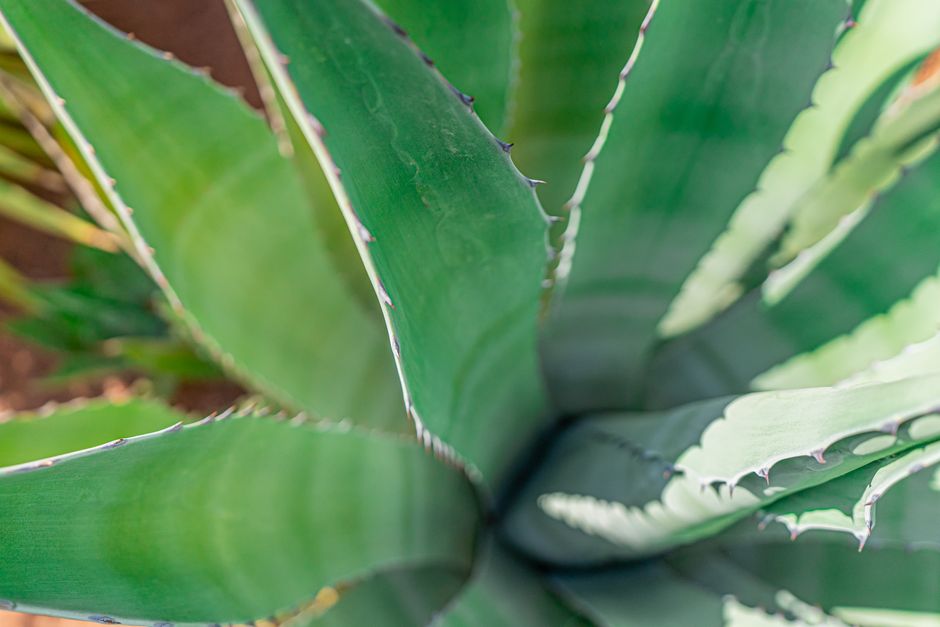
Agave syrup is a sweetener made from the sap of the agave plant — the same plant used to make tequila. It is often marketed as a natural, low-glycemic alternative to sugar. In reality, agave syrup is a highly processed liquid sweetener that is roughly 85% fructose, which is a higher fructose share than high-fructose corn syrup. Whether it is “healthy” depends entirely on how much you use and what you are comparing it to.
What Is Agave Syrup and How Is It Made?
Agave syrup starts as sap collected from mature agave plants, mostly grown in Mexico. The raw sap is a cloudy liquid that contains inulin, a complex carbohydrate made of fructose units. To turn that sap into the pourable syrup sold in stores, manufacturers heat it and treat it with enzymes. Those enzymes break the inulin down into simple sugars — mostly fructose and some glucose.
The result is a thin, amber liquid that is sweeter than table sugar and dissolves easily in cold drinks. It is sometimes labeled “agave nectar,” which sounds more natural than it is. Both names describe the same product.
This processing matters. The finished syrup is not simply concentrated plant sap. It is an industrially refined sweetener, and the refining is what concentrates the fructose.
How Much Fructose Is in Agave Syrup?
Agave syrup is one of the most fructose-heavy sweeteners available. Depending on the brand and processing method, fructose makes up roughly 70% to 90% of its sugar content, with the rest being glucose. Table sugar, by comparison, is about 50% fructose and 50% glucose. High-fructose corn syrup used in most US beverages is typically around 55% fructose.
That comparison surprises many people. Agave is often assumed to be gentler than processed sweeteners, but its fructose share is higher than the sweetener it is usually positioned to replace.
| Sweetener | Approximate fructose share |
|---|---|
| Agave syrup | 70–90% |
| High-fructose corn syrup | ~55% |
| Table sugar (sucrose) | 50% |
| Honey | ~50% |
Fructose is not inherently harmful in small amounts, especially when eaten as whole fruit, where it comes packaged with fiber, water, and micronutrients. The concern is dose and form. Large amounts of free fructose — fructose not bound to fiber in a whole food — are metabolized differently from glucose, and that difference has health consequences when intake is high.
Why Does Fructose Content Matter?
Fructose is processed almost entirely in the liver, while glucose is used by cells throughout the body. When you consume a lot of fructose at once, the liver has to handle the whole load. Some of it is converted to glucose, some to glycogen for storage, and any excess can be turned into fat through a process called de novo lipogenesis.
This is where the “agave is healthier” claim gets complicated. Because agave is so high in fructose, it does not spike blood sugar as sharply as glucose or table sugar do. That is the basis for its low glycemic index. But a lower blood sugar spike is not the same as a health benefit. Fructose still contains calories, still contributes to total sugar intake, and at high doses has been linked in research to fat accumulation in the liver and other metabolic effects.
This distinction is often lost in marketing. A low glycemic index tells you how a food affects blood sugar in the short term. It does not tell you what happens over months and years of regular, heavy use.





Is Agave Syrup Better Than Sugar or Honey?
Not in any clear, established way. The evidence does not show that agave syrup produces better health outcomes than table sugar, honey, or maple syrup. All of them are added sugars, and all of them contribute to total sugar intake.
Agave has a few practical differences worth knowing:
- It is sweeter than sugar, so some people use less of it by volume.
- It dissolves well in cold liquids, which suits iced drinks and cocktails.
- It has a lower glycemic index than table sugar, which matters mainly for people managing blood sugar closely.
- It contains more fructose than most other common sweeteners, which is a downside at high intake, not a benefit.
For someone managing diabetes, the lower glycemic index of agave might seem appealing. But fructose still affects blood sugar and liver metabolism, and the American Diabetes Association does not single out agave as a preferred sweetener. The general guidance for people with diabetes is to limit all added sugars, not to swap one for another and assume the swap is protective.
The honest position: if you are choosing between sweeteners, agave is not clearly better than the alternatives. It is simply different.
Does Agave Syrup Have Any Real Health Benefits?
No established health benefits have been confirmed in human trials. Some claims circulate about agave being anti-inflammatory or good for gut health, usually based on its inulin content. But the inulin in raw agave sap is largely broken down during processing into simple sugars. The finished syrup contains little to none of it.
Agave syrup does contain trace amounts of minerals, but the amounts are so small they are nutritionally irrelevant. You would have to consume unrealistic quantities to get meaningful mineral intake — and the sugar load would far outweigh any benefit.
There is also a persistent claim that agave is a “natural” sweetener because it comes from a plant. This is a category error. Sugar comes from a plant too. So does high-fructose corn syrup. “Natural” describes origin, not health effect.
How Does Agave Syrup Fit Into a Healthy Diet?
The general guidance from major health organizations is to keep added sugars to a small share of daily calories. The American Heart Association recommends limiting added sugars to no more than about 6% of daily calories for most adults — which works out to roughly 25 grams (about 6 teaspoons) per day for a 2,000-calorie diet.
Agave syrup counts toward that limit just like any other added sugar. Using it does not give you a pass.
If you enjoy agave for its taste or how it dissolves, there is no strong reason to avoid it entirely. But there is also no strong reason to choose it over sugar for health reasons. The amount you use matters far more than which sweetener you pick.
A practical way to think about it: the healthiest sweetener is the one you use least. Whole fruit is a better source of sweetness because it comes with fiber and water, which slow absorption and help you feel full. If you are adding a sweetener to coffee, tea, or a recipe, the total amount across your day is what shapes your health, not the label on the bottle.
Is Agave Syrup Safe for Everyone?
Agave syrup is generally recognized as safe for most adults when consumed in normal food amounts. The main concern is the same one that applies to all added sugars: too much of it.
Some groups should be more cautious. People with diabetes need to account for agave in their carbohydrate and sugar totals, even though its glycemic index is lower than sugar’s. People with irritable bowel syndrome or fructose intolerance may react poorly to agave because of its high fructose content — fructose malabsorption can cause bloating, gas, and digestive discomfort in these individuals.
For children, added sugars of any kind should be limited. No clinical guidelines single out agave as a preferred sweetener for children, and the general advice to minimize added sugar applies.
There is no established evidence that agave syrup is harmful in small amounts for healthy adults. But there is also no evidence it is protective. It is a sweetener, not a health food.
Frequently Asked Questions
Is agave syrup healthier than sugar?
No, the evidence does not show that agave syrup produces better health outcomes than regular sugar. Both are added sugars, and agave actually contains more fructose than table sugar.
Is agave syrup safe for diabetics?
Agave has a lower glycemic index than sugar, but it still affects blood sugar and should be counted in daily carbohydrate and sugar totals. It is not a free pass for people with diabetes.
Does agave syrup have any health benefits?
No health benefits have been confirmed in human trials. Claims about inulin or anti-inflammatory effects do not hold up, because the inulin is largely broken down during processing.
Why is agave syrup so high in fructose?
The agave plant stores carbohydrates as inulin, a fructose-based compound. Processing breaks the inulin down into simple sugars, leaving a syrup that is roughly 70% to 90% fructose.
Can you use agave syrup every day?
You can use it in moderation, but it counts toward your daily added sugar limit just like any other sweetener. The American Heart Association suggests keeping added sugars to about 25 grams per day for most adults on a 2,000-calorie diet.
