
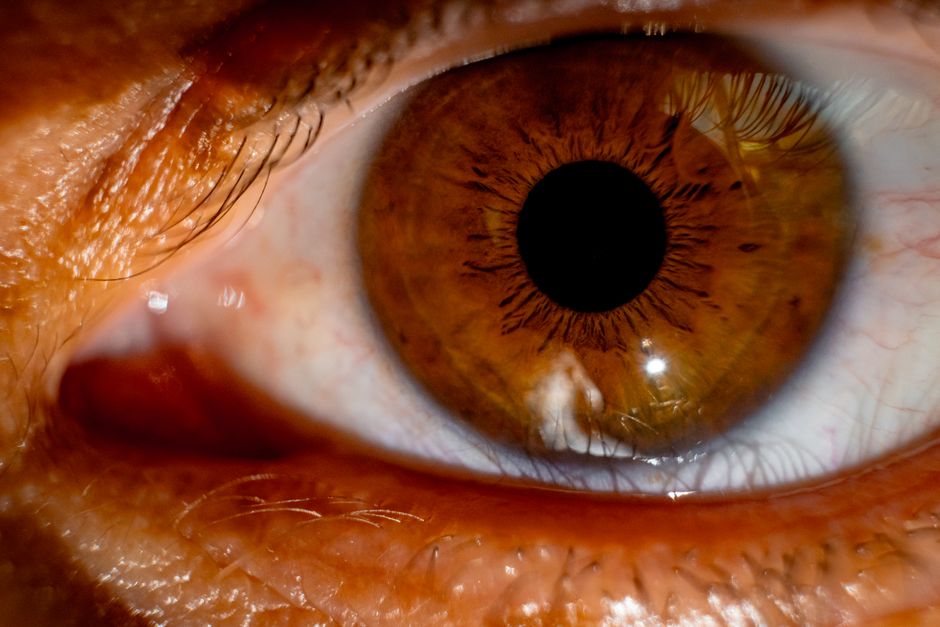
Yes, many vision problems have a strong genetic component. Refractive errors like nearsightedness, inherited retinal diseases, and some forms of glaucoma run in families in patterns researchers have mapped to specific genes. But genes are rarely the whole story. For most common vision problems, inheritance sets the odds — environment and age help decide whether those odds play out.
Are Vision Problems Genetic? What the Science Says
The short answer is that genetics clearly influences most vision conditions, but the strength of that influence varies enormously by condition. Some eye diseases are caused by a single gene change and follow predictable inheritance patterns. Others, like ordinary nearsightedness, involve hundreds of genetic variants that each nudge risk up or down slightly.
Researchers use a measure called heritability to describe how much of the variation in a condition across a population is explained by genes. Twin studies have consistently found high heritability for refractive error — meaning identical twins are far more likely to share the same prescription than fraternal twins. That does not mean a person’s prescription is fixed at birth. It means genes account for a large share of why prescriptions differ between people.
The distinction matters. A high heritability estimate describes a population, not an individual. Someone with two nearsighted parents can still have perfect vision. Someone with no family history can still develop a serious inherited retinal condition, usually because of a new mutation or recessive genes carried silently by both parents.
Which Vision Problems Have the Strongest Genetic Link?
Inherited retinal diseases sit at the strong end of the spectrum. Conditions such as retinitis pigmentosa, Stargardt disease, and Leber congenital amaurosis are often traced to changes in a single gene. Researchers have identified mutations in dozens of genes linked to retinal degeneration, and genetic testing can sometimes pinpoint the exact cause.
Color vision deficiency is another clear example. The most common form, red-green color blindness, is inherited through genes on the X chromosome. Because of that, it affects far more men than women. A man needs only one copy of the affected gene to be colorblind, while a woman would need two.
Other conditions with well-documented genetic contributions include:
- Keratoconus — a thinning and bulging of the cornea that tends to run in families.
- Age-related macular degeneration — variants in genes such as CFH and ARMS2 are associated with higher risk, though lifestyle factors also matter.
- Primary open-angle glaucoma — family history is one of the most consistently identified risk factors.
- High myopia — severe nearsightedness has a stronger genetic signal than mild cases.
For these conditions, having a family member with the disease raises risk. It does not determine outcome. Many people with a genetic predisposition never develop the condition, and many people without one do.
How Does Nearsightedness Get Passed Down?
Nearsightedness, or myopia, is the most common vision problem worldwide, and its genetics are genuinely complex. It is not caused by one gene. Genome-wide studies have identified hundreds of genetic variants that each contribute a small amount of risk. Together, these variants help explain why myopia clusters in families.
Here is the part that surprises people. The rapid rise in myopia rates in some countries over the past few decades is too fast to be explained by genetics alone. A population’s gene pool does not change that quickly. Researchers point to environmental factors — particularly time spent on close-up work and reduced time outdoors during childhood — as a major driver of that shift.
Some studies suggest that time spent outdoors during childhood is associated with lower rates of myopia onset, though the precise mechanism is still being investigated. The leading hypothesis involves light exposure influencing eye growth. This is an active area of research, not a settled prescription for prevention.
The practical takeaway: myopia runs in families, and children of nearsighted parents are more likely to become nearsighted themselves. But environment appears to influence whether that genetic tendency expresses itself, and how strongly.




What About Cataracts and Age-Related Vision Loss?
Cataracts — clouding of the lens — have a genetic component, but age is the dominant factor. Essentially everyone who lives long enough will develop some degree of lens clouding. Genetics may influence how early or how quickly that happens, but it does not determine whether it happens at all.
Age-related macular degeneration sits in a middle zone. Genetic variants in the complement system and other pathways are well-established risk factors. So are smoking, age, and cardiovascular health. Someone with high genetic risk who never smokes has a different risk profile than someone with the same genes who does.
This pattern repeats across most age-related eye conditions. Genes load the gun; other factors influence whether it fires. That framing is not just a metaphor — it reflects how polygenic conditions actually behave.
When Should Family History Change What You Do?
Family history is useful information, not a diagnosis. Knowing that a parent or sibling has glaucoma, for example, is a reason to mention it to an eye care professional and to keep up with recommended eye exams. It is not a reason to assume you will develop the condition.
Some situations warrant more attention than others:
- A family member diagnosed with an inherited retinal disease at a young age.
- Multiple relatives with glaucoma, especially at younger ages.
- Early-onset cataracts in more than one family member.
- A strong pattern of high myopia across generations.
In these cases, an eye care professional may recommend earlier or more frequent screening. For inherited retinal diseases specifically, genetic counseling and testing can clarify risk for other family members. These services exist and are worth asking about — but whether they are appropriate for any individual is a clinical decision, not something to self-direct.
Can You Inherit a Vision Problem Without a Family History?
Yes. This is one of the most misunderstood parts of genetics. Many inherited eye conditions are recessive, meaning a person needs two copies of a changed gene — one from each parent — to be affected. Parents who each carry one copy are typically unaffected and often have no idea they carry it. The condition can appear in a child with no prior family history.
New mutations also occur. A gene change can arise spontaneously in a person whose parents do not carry it. This is a recognized cause of several inherited retinal diseases.
This is why “no family history” does not mean “no genetic cause.” It means the pattern has not been visible yet. For conditions like retinitis pigmentosa, a substantial share of cases occur in people with no affected relatives.
Does Genetic Risk Mean a Condition Is Unavoidable?
No. This is where the science is clear and often misrepresented. Inheriting a genetic variant that raises risk is not the same as inheriting a disease. Risk is probabilistic.
For conditions with strong environmental components — myopia, macular degeneration, diabetic eye disease — behavior and health factors influence whether genetic risk translates into actual disease. That does not mean any specific lifestyle change is proven to prevent these conditions. It means the relationship between genes and outcome is not fixed.
For single-gene retinal diseases, the picture is different. When a specific mutation causes a condition, the genetic contribution is much more deterministic. Even here, the age of onset and rate of progression can vary between people with the same mutation, and researchers do not fully understand why.
The evidence is mixed on how much lifestyle modification changes outcomes for inherited retinal diseases. No clinical evidence currently confirms that any behavioral change prevents them. For polygenic conditions like common myopia and macular degeneration, the evidence for environmental influence is stronger but still does not amount to a guaranteed prevention strategy.
What Genetic Testing Can and Cannot Tell You
Genetic testing for eye disease has become more accessible, but its usefulness depends heavily on the condition. For inherited retinal diseases, testing can sometimes identify a specific gene mutation, which helps with prognosis, family planning, and eligibility for certain clinical trials. For common conditions like mild myopia or age-related cataracts, testing currently offers little practical value because so many genes are involved and each contributes only slightly.
Direct-to-consumer genetic tests that report eye disease risk should be interpreted with caution. Many of these tests look at a limited set of variants and cannot capture the full picture of a complex condition. A result showing “elevated risk” is not a diagnosis, and a result showing “typical risk” does not rule out an inherited condition.
If a serious eye condition runs in your family, a conversation with an ophthalmologist or genetic counselor is more useful than a consumer test. They can assess whether clinical-grade testing would actually change anything about your care.
Frequently Asked Questions
Are vision problems genetic?
Many vision problems have a genetic component, but the strength varies widely. Single-gene conditions like retinitis pigmentosa are strongly inherited, while common problems like mild nearsightedness involve many genes plus environmental factors.
Can I go blind if my parents have eye problems?
Not necessarily. Having a parent with an eye condition raises your risk but does not determine your outcome. Most people with a family history of common eye diseases never develop severe vision loss.
Is nearsightedness inherited from mother or father?
Both parents contribute. Myopia is polygenic, meaning hundreds of genetic variants from both parents influence risk, and environmental factors like time outdoors during childhood also play a role.
Can genetic testing tell me if I will get glaucoma?
Not reliably. Current genetic tests cannot predict whether a specific person will develop common glaucoma, though family history is a recognized risk factor worth discussing with an eye doctor.
