
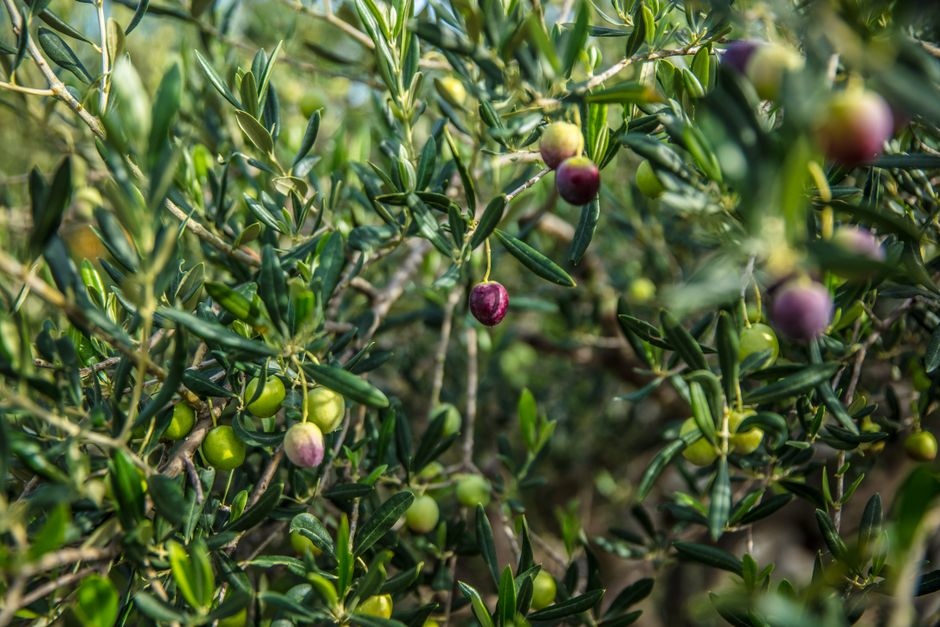
If you have ever stood in the grocery store looking at a jar of olives and wondered whether they belong with the vegetables or the fruit, you are not alone. The short answer is that olives are botanically a fruit. More specifically, they are a type of stone fruit, or drupe, just like peaches, plums, and cherries. But the way we eat and use olives in cooking places them firmly in the savory category, which is why the confusion is so common.
Why Are Olives Considered a Fruit?
The classification of olives as a fruit comes down to basic botany. A fruit is the mature ovary of a flowering plant, and it contains the seeds. Olives grow on olive trees, and each olive contains a single hard pit, or stone, with a seed inside. That structure is the defining feature of a drupe.
Other familiar drupes include mangoes, dates, and almonds. The fleshy part of the olive that we eat is the mesocarp, and the hard pit is the endocarp. So from a scientific standpoint, the olive is as much a fruit as a cherry is. The confusion only arises because we rarely eat olives raw, and we use them in salty, briny dishes rather than sweet ones.
Botanists have no debate here. Every textbook and university biology course classifies the olive as a fruit. The United States Department of Agriculture also lists olives under the fruit category in its food classification systems.
Why Do Most People Think Olives Are Vegetables?
The reason most people call olives a vegetable is not about science — it is about how we use them in the kitchen. In culinary terms, a vegetable is any savory, often less sweet plant part that is used in main dishes, salads, or side dishes. Olives are almost never used in desserts or sweet preparations. They are brined, fermented, stuffed with pimentos, and added to pizzas, pastas, and salads.
This creates a strong mental association. When you think of a fruit salad, olives do not come to mind. When you think of a vegetable tray, olives often fit right in. This culinary habit is so ingrained that even some cookbooks and food magazines refer to olives as a vegetable, even though they know better.
There is also a practical reason. In grocery stores, olives are usually shelved near pickles, peppers, and other preserved vegetables, not in the produce section near apples and oranges. That placement reinforces the idea that olives are vegetables, even if the label says otherwise.
So the split is simple: botanically a fruit, culinarily a vegetable. Both answers are correct depending on the context.
Are Olives A Fruit Or Vegetable in Nutrition?
Nutritionally, olives behave more like a fat source than either a fruit or a vegetable. A standard serving of olives, about five to ten olives depending on size, contains roughly 40 to 60 calories. Most of those calories come from fat, specifically monounsaturated fat, which is the same heart-healthy type found in avocados and olive oil.
Olives are low in carbohydrates and contain very little sugar. A typical fruit like an apple has about 19 grams of sugar per cup. Olives have less than one gram. This is one reason they do not taste sweet and do not fit the typical fruit profile in a meal plan.
They do provide some vitamins and minerals. Olives contain vitamin E, iron, copper, and calcium. They are also rich in polyphenols, which are plant compounds with antioxidant effects. The specific polyphenol called oleuropein gives olives their bitter taste and is linked to anti-inflammatory benefits.
But if you are comparing olives to leafy greens or berries in terms of vitamin density, they fall short. They are best thought of as a condiment or a small addition to a meal, not a primary source of vitamins.




How Are Olives Different From Other Fruits?
The biggest difference between olives and most other fruits is that you cannot eat them straight off the tree. A fresh olive contains a compound called oleuropein, which makes it intensely bitter and almost inedible. To become the olives we buy in jars or at a deli counter, they must go through a curing process.
Curing methods include brining in salt water, packing in dry salt, soaking in lye, or fermenting in water. Each method reduces the bitterness and develops the flavor. This process can take weeks or months. No other common fruit requires this kind of treatment before it can be eaten.
Another difference is the fat content. Most fruits are nearly fat-free. Olives are one of the few fruits that store significant amounts of oil. That is why olives are pressed to make olive oil, something you cannot do with an orange or a strawberry.
Here is a quick comparison to show the differences:
| Characteristic | Olives | Typical Fruit (Apple) |
|---|---|---|
| Botanical classification | Drupe (fruit) | Pome (fruit) |
| Edible raw | No | Yes |
| Fat content per 100g | 11-15g | 0.2g |
| Sugar content per 100g | 0.5g | 10-13g |
| Common culinary use | Savory dishes | Sweet or raw |
What About Green vs. Black Olives — Are They Different Fruits?
Green olives and black olives are not different varieties in the way that green apples and red apples are different. They are actually the same fruit at different stages of ripeness. Green olives are picked before they are fully ripe. Black olives are left on the tree longer until they ripen fully and change color.
The texture and flavor change with ripeness. Green olives are firmer and more bitter. Black olives are softer and milder. But both are the same fruit, just harvested at different times.
Some olive varieties do stay green or turn black more readily, but the color itself is primarily a ripeness marker. The curing process also affects the final color. Many black olives sold in cans are actually green olives that have been treated with oxygen and iron compounds to turn them black. This is a common practice and is considered safe, though it changes the flavor slightly.
So if you see a jar labeled “black olives,” they may have started as green olives. The only way to know for sure is to buy olives from a source that specifies the variety and processing method.
What About Olive Oil — Does It Count as Fruit Juice?
This is a question that comes up in food science discussions. If olives are fruit, and you press them to extract liquid, then technically olive oil is fruit juice. But that is not how the food industry or nutrition guidelines treat it.
Olive oil is classified as a fat, not a juice, because its composition is almost entirely fat. Fruit juices like apple or orange juice are mostly water and sugar. Olive oil contains no water and no sugar after pressing. So while the origin is fruit, the final product behaves nothing like juice in your diet.
The USDA and FDA both classify olive oil under the fats and oils category. Calling it fruit juice would be accurate in a literal sense but misleading in every practical way. It is a fun trivia fact, but it does not change how you should use it.
Some people also ask whether olives themselves count as a serving of fruit in dietary guidelines. The answer is technically yes, but most nutritionists will tell you not to count them that way. A serving of fruit is typically defined by carbohydrate content and fiber. Olives are so low in carbs that they do not fit the standard serving size model. If you are tracking your fruit intake for blood sugar management, olives will not register the same way an apple or a banana will.
Common Misconceptions About Olives
One common myth is that olives are pickled vegetables. Pickling is a preservation method, not a classification. Olives are cured, not pickled in the traditional vinegar brine used for cucumbers. The confusion comes from the similar salty, tangy taste.
Another misconception is that all olives are high in sodium. It is true that cured olives contain salt, but the amount varies widely by brand and curing method. Some olives are packed in water with very little salt. You can find low-sodium options if you check the label. A typical serving of five olives has around 200 to 300 milligrams of sodium, which is about 10 to 15 percent of the daily recommended limit for most adults.
Some people also believe that olives are a good source of fiber. They do contain some fiber, about 1.5 grams per 100 grams, but that is lower than most vegetables and fruits. An apple has about 2.4 grams of fiber per 100 grams, and a cup of broccoli has about 2.6 grams. Olives are not a significant fiber source.
Finally, there is a persistent idea that eating olives can help you lose weight because they are a fruit. There is no evidence that olives have any special weight loss properties. They are calorie-dense because of their fat content, so eating large amounts can add calories to your diet. They can be part of a healthy eating pattern, but they are not a weight loss food.
Frequently Asked Questions
Are olives a fruit or a vegetable in science?
In botany, olives are a fruit, specifically a drupe or stone fruit. They contain a seed inside a hard pit, just like peaches and cherries.
Can you eat olives raw from the tree?
No, raw olives are extremely bitter and inedible due to a compound called oleuropein. They must be cured or fermented before eating.
Are green and black olives the same fruit?
Yes, they are the same fruit at different ripeness stages. Green olives are picked early, and black olives are left to ripen fully on the tree.
Do olives count as a serving of fruit in my diet?
Technically yes, but nutritionally they do not. They are very low in sugar and carbohydrates, so they do not provide the same nutrients as typical fruits.
