
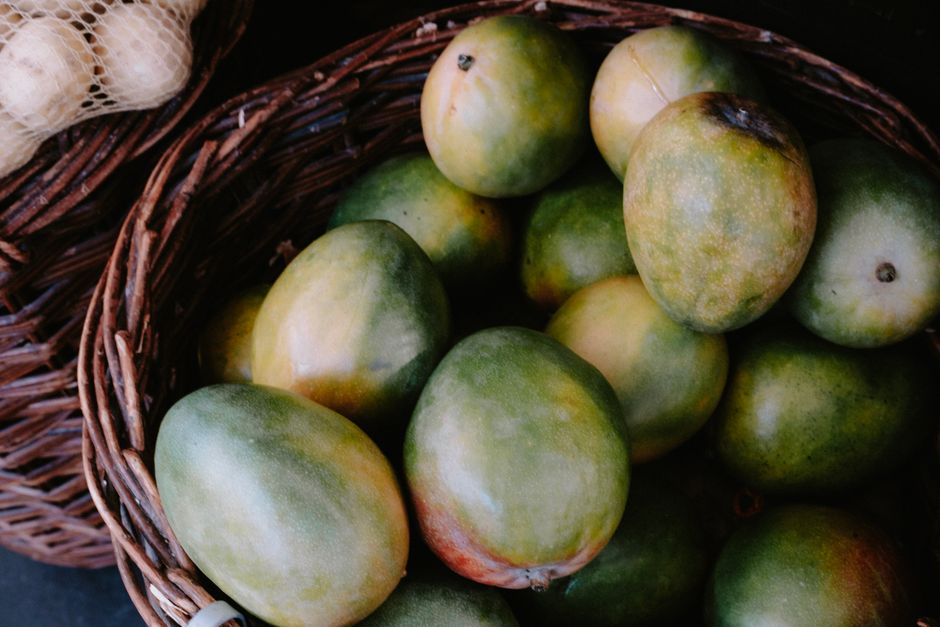
Yes, a mango is a stone fruit. In botanical terms, it is a drupe, which is the scientific name for a fruit that has a fleshy outer layer surrounding a hard, stony shell that contains a single seed. Peaches, plums, cherries, and olives are also stone fruits. The mango’s large, flat, fibrous pit is the “stone,” and everything you eat around it is the fleshy part of the fruit.
What Exactly Makes a Fruit a Stone Fruit?
Botanists classify fruits by their structure, not by their taste or how we use them in cooking. A stone fruit, or drupe, has three distinct layers. The outer layer is the skin (exocarp). The middle layer is the fleshy, edible part (mesocarp). The inner layer is the hard, woody shell (endocarp) that protects the seed.
Mangoes fit this structure perfectly. The skin is the thin outer layer. The sweet, orange flesh is the middle layer. The hard, hairy pit in the center is the inner shell that holds the single seed. Because it has this hard pit, the mango is classified as a drupe.
This is different from other fruit types. Berries, for example, have multiple seeds embedded directly in the flesh without a hard stone. Citrus fruits are classified as hesperidia, a type of berry with a thick, leathery rind. Understanding this structure helps explain why mangoes behave the way they do, from how they ripen to how they are eaten.
Are Mangoes Related to Peaches and Plums?
Botanically, they share the same fruit structure, but they are not close relatives. Mangoes belong to the family Anacardiaceae, which also includes cashews and poison ivy. Peaches, plums, and cherries belong to the family Rosaceae, which includes roses, apples, and almonds.
This means the similarity between a mango and a peach is a result of convergent evolution. They grew in different parts of the world and developed the same strategy for protecting their seeds: a hard pit. The fleshy fruit attracts animals to eat it, and the hard stone passes through the animal’s digestive system intact, allowing the seed to be dispersed far from the parent tree.
So, while a mango is a stone fruit by structure, it is not a close botanical cousin to the stone fruits you might see at a local orchard.
How the Stone (Pit) Affects Eating a Mango
The stone is the defining feature of the mango, and it dictates how you prepare the fruit. Unlike a berry you can pop in your mouth, a mango requires work to access the flesh without damaging it. The pit is flat, oval-shaped, and covered in fibrous threads that cling to the flesh.
There is no single “best” way to cut a mango, but the goal is always to cut around the stone. The standard method is to slice the fruit vertically, about a quarter-inch from the center on each side. This gives you two large “cheeks” of flesh and a central section that still holds the pit. The cheeks can be scored and scooped, while the remaining flesh around the pit is usually eaten off the stone.
The fiber content of the pit is also why some mangoes are messier to eat than others. Varieties like the Ataulfo (honey mango) have thin, small pits and less fiber, making them easier to cube. Larger varieties like the Tommy Atkins have thicker, more fibrous pits that cling tightly to the flesh.





Is a Mango a Citrus Fruit?
No. This is a common confusion because mangoes are tropical fruits, just like oranges and lemons. However, citrus fruits belong to the genus Citrus in the family Rutaceae. Mangoes belong to the genus Mangifera.
The confusion likely comes from the shared tropical environment and the fact that both are rich in vitamin C. However, their internal structures are completely different. A citrus fruit is a berry with segmented pulp filled with juice sacs. A mango is a drupe with a single, solid stone. They are not botanically related.
If you cut a mango open, you will never find the radial segments of an orange. You will always find a single, hard pit in the center. This structural difference is the definitive test for identifying a stone fruit.
Nutritional Differences Between Mangoes and Other Stone Fruits
Because mangoes are not closely related to peaches or plums, their nutritional profiles differ in notable ways. Mangoes are exceptionally high in vitamin C and vitamin A (as beta-carotene). They also contain a unique enzyme profile that other stone fruits do not share.
Here is a quick comparison of the nutritional highlights of a one-cup serving of raw mango vs. a one-cup serving of raw peach slices, based on USDA data:
| Nutrient | Mango (1 cup, sliced) | Peach (1 cup, sliced) |
|---|---|---|
| Calories | 99 | 60 |
| Vitamin C | 60.1 mg | 9.9 mg |
| Vitamin A (RAE) | 89 mcg | 32 mcg |
| Fiber | 2.6 g | 2.3 g |
| Natural Sugars | 22.5 g | 12.9 g |
Mangoes are significantly sweeter and more calorie-dense than peaches. They also provide substantially more vitamin C per serving. The fiber content is similar. This makes mango a distinct nutritional choice compared to temperate stone fruits.
Why the “Stone” Matters for Allergies
People with pollen allergies sometimes worry about stone fruits. This is a real concern, but the mechanism is different for mangoes compared to peaches and apples.
Peaches, apples, and cherries can trigger Oral Allergy Syndrome (OAS) in people who are allergic to birch pollen. This happens because the proteins in these fruits are similar in shape to birch pollen proteins, and the immune system confuses them. This usually causes mild itching or swelling in the mouth and throat.
Mangoes do not typically cause OAS. Instead, mango allergies are more often linked to contact dermatitis. The sap and skin of the mango contain urushiol, the same compound found in poison ivy and poison oak. People who are highly sensitive to poison ivy may develop a rash on their lips or hands after touching mango skin. The flesh of the fruit is generally safe, but the skin and the sap near the stem are the triggers.
The hard pit itself is not the source of the allergen. The risk lies in the skin and the milky sap that can leak from the stem. This is why some people can eat mango flesh without issue but break out in a rash if they bite directly into the skin.
Are There Other Tropical Stone Fruits?
Yes, the tropics produce several fruits that are true drupes, even though they do not look like peaches. Recognizing these helps solidify the concept of what a stone fruit is.
- Olives: A classic drupe, though usually eaten for their oil rather than fresh flesh.
- Cherries: A small, classic drupe.
- Lychee: A tropical fruit with a thin, leathery skin and a single, glossy brown seed inside the translucent flesh.
- Rambutan: A close relative of lychee, covered in soft spines, with the same single-seed structure.
- Coconut: Technically a fibrous one-seeded drupe. The “flesh” is the endosperm, and the hard shell is the stone.
- Cashews: The cashew apple is a false fruit, but the cashew nut itself is the seed of a drupe.
This list shows that the “stone fruit” classification is about anatomy, not geography or appearance. Any fruit with a fleshy outside and a hard, single-seeded pit inside qualifies.
How to Use Mangoes Knowing They Are Drupes
Understanding that a mango is a stone fruit changes how you handle it in the kitchen. Because the pit is large and flat, you cannot simply core a mango like an apple. You must work around the stone’s shape.
The best approach is to use the “cheek” method. Stand the mango upright on a cutting board with the stem facing you. The pit runs vertically. Slice down on either side of the center, following the curve of the pit. You will remove two large, bowl-shaped pieces of flesh. Score the flesh in a crosshatch pattern without cutting through the skin, then push the skin inside out to pop the cubes free.
The central piece still has flesh attached to the pit. It is perfectly edible, though fibrous. You can eat it right off the stone or cut the flesh away in strips. This is the most efficient way to waste less fruit and get to the flesh that is closest to the seed.
Frequently Asked Questions
Can you eat the stone of a mango?
No, the stone itself is not edible. It is extremely hard and woody, and the seed inside is not meant for human consumption.
Is a mango a berry?
No, a mango is a drupe, not a berry. Berries have multiple seeds embedded in the flesh, while a mango has a single hard pit.
Are mango pits poisonous?
The pit is not considered toxic in small accidental amounts, but it is not digestible and should not be eaten. The skin and sap contain urushiol, which can cause skin irritation.
Why is my mango stringy?
Stringiness comes from the fibers that connect the flesh to the stone. Varieties with larger pits and more fiber, like Tommy Atkins, are stringier than varieties like Ataulfo.
