
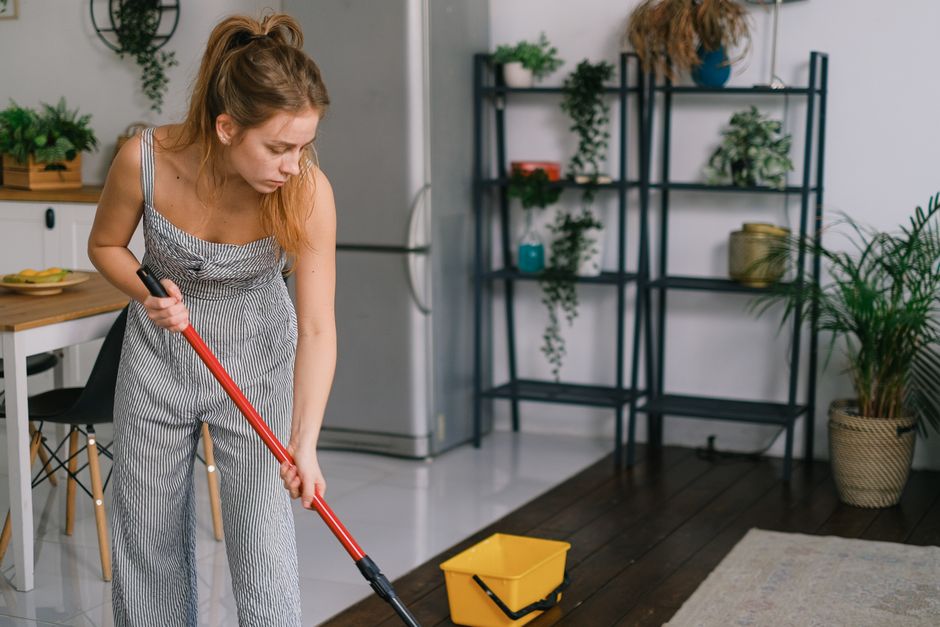
A mop is only as clean as the water and the process you use with it. A dirty mop head can hold and spread bacteria around a home, and a clean, well-rinsed mop used with fresh water spreads very little. The tool is not the problem on its own. How you use it decides whether you are cleaning the floor or moving germs from one spot to another.
That distinction matters because mopping is one of the most common chores in any home. Most people assume a wet floor means a clean floor. The science is more specific than that, and it comes down to a few factors you can actually control.
Are Mops Sanitary Or Just Spreading Bacteria?
A mop can do both, and the difference is not luck. It depends on how much organic material and moisture the mop head holds, how often it is cleaned, and whether the water is changed during use.
Microbiologists have known for decades that damp, porous materials are friendly to bacteria. A mop head stays wet for hours or days between uses. That moisture, plus traces of soil, grease, and skin cells picked up from the floor, creates a place where microbes can survive and multiply. Research on household cleaning tools has found that mop heads and sponges tend to carry more bacteria than many other items in the home.
Here is the part that surprises people. A mop does not usually make a floor dirtier than it started. What it can do is redistribute contamination. If you mop a bathroom floor and then use the same mop and water in the kitchen, you are moving whatever was on the first floor to the second. The floor may look clean. The bacterial load has simply moved around.
The good news is that this is a process problem, not a design flaw. Change the water, rinse the mop head, and dry it properly, and the same mop behaves very differently.
How Does a Mop Pick Up and Spread Bacteria?
A mop works by mechanical action. The fibers lift soil and microbes off the floor and trap them in the mop head. That is the goal. The problem starts when the mop head is already loaded with contamination and the water is dirty.
Once the water in the bucket turns gray or cloudy, it is carrying suspended soil and microbes. Every dip of the mop reintroduces that material to the floor. You are essentially painting a thin layer of dirty water across the surface. This is why the water in a bucket gets dark so quickly in a busy kitchen.
Cross-contamination works the same way. A mop used in a bathroom, near a toilet, or on a floor where raw meat was dropped can pick up organisms like E. coli or Salmonella. Those organisms can survive on a damp mop head and be transferred to the next surface it touches. The risk is real but manageable, and it is highest when the same mop and water are used across different rooms without rinsing.
The type of floor matters too. Grout lines, textured tile, and seams between floorboards give microbes places to settle. A smooth sealed floor releases contamination more easily. That does not mean textured floors are unsafe. It means they need more attention and cleaner water.
What Makes a Mop Head a Good Place for Bacteria to Grow?
Moisture is the main factor. Bacteria need water to grow, and a mop head holds water long after you finish cleaning. A mop stored damp in a closet or bucket can stay wet for days.
Temperature and organic matter add to it. Warm indoor air speeds up microbial growth. So do the food residues, oils, and dust that mops pick up from kitchen and entryway floors. A mop head that is never fully dried is essentially a wet sponge sitting in the dark.
There is a common misunderstanding worth clearing up. A mop head does not need to smell bad to be contaminated. Odor is a signal that microbial growth has reached a certain point, but a mop can carry bacteria before you notice any smell. Relying on your nose is not a reliable test.
The material of the mop head plays a role as well. Microfiber mops have tightly packed fibers that trap particles effectively, and some research suggests they can remove more soil and microbes than traditional string mops when used correctly. That advantage disappears if the microfiber pad is not washed and dried between uses.





How Should You Clean and Store a Mop to Reduce Bacteria?
Cleaning the mop head after every use is the single most effective step. Rinse it thoroughly in clean water until the water runs clear, then wring it out as much as possible.
Drying is just as important as washing. Hang the mop head so air can circulate around it, ideally outdoors or in a well-ventilated area. A mop head that dries completely between uses gives bacteria far less opportunity to grow. Never store a damp mop in a closed bucket or a dark closet.
For deeper cleaning, some mop heads can be machine washed. Check the manufacturer’s instructions first, because heat settings and detergents vary by material. Some microfiber pads tolerate hot water and can be washed with other cleaning cloths. Others may break down. There is no single rule that fits every mop.
Replacing the mop head regularly is also reasonable. There is no universal guideline for how often, because it depends on how much you mop and what you mop. A mop used daily in a kitchen will wear out faster than one used weekly in a hallway. If the head is frayed, permanently discolored, or holds odor after washing, replacing it is sensible.
Some people disinfect mop heads with bleach solutions. This can work, but bleach can damage certain fibers and should be used according to the product label. No clinical guideline sets a standard bleach concentration for mop heads specifically, so follow the manufacturer’s directions rather than a home remedy.
Does the Type of Mop Change How Much Bacteria Spreads?
Different mop types behave differently, mainly because of how much water they leave behind and how easily they can be cleaned.
String mops and sponge mops hold a lot of water. That can be useful on large floors, but it also means more moisture stays on the surface and more contamination stays in the head. Flat microfiber mops use less water and can be swapped for a fresh pad mid-clean, which reduces cross-contamination.
Spray mops and steam mops take a different approach. Steam mops apply heat directly to the floor. Heat can reduce microbial levels on hard surfaces, though how well it works depends on contact time and the temperature reached at the surface. A quick pass may not be enough. Steam is not a substitute for removing visible soil first.
The table below compares common mop types on the factors that matter most for bacterial spread. These are general tendencies, not guarantees, because results depend heavily on how each mop is used and maintained.
| Mop type | Water left on floor | Ease of cleaning the head | Cross-contamination risk |
|---|---|---|---|
| String mop | High | Moderate | Higher if reused with dirty water |
| Sponge mop | High | Moderate | Higher if stored damp |
| Flat microfiber | Low | High (machine washable pads) | Lower with fresh pads |
| Steam mop | Very low | Pad dependent | Lower, but depends on contact time |
None of these types is automatically sanitary. A microfiber mop with a dirty pad and dirty water can spread just as much as a string mop. The habits around the tool matter more than the tool itself.
What Practical Steps Reduce the Risk of Spreading Germs?
A few simple habits make the biggest difference. None of them require special equipment.
- Change the water when it turns cloudy, and use fresh water for each room.
- Rinse the mop head thoroughly before dipping it back in the bucket.
- Work from the cleanest area toward the dirtiest, not the other way around.
- Use separate mops or fresh pads for bathrooms and kitchens.
- Dry the mop head completely after every use.
- Clean up visible spills and food debris before mopping, not during.
For most healthy households, these steps are enough. There is no evidence that a well-maintained mop poses a meaningful health risk in a typical home. The concern is more about hygiene habits than about danger.
People with weakened immune systems, infants, or anyone recovering from illness may want to be more careful. In those situations, using fresh water, clean pads, and allowing floors to dry fully is a reasonable approach. No specific clinical guideline sets a required cleaning frequency for household mops, so common sense and visible cleanliness are the practical guides.
One more point worth making. Mopping is not the same as disinfecting. Mopping removes soil and a large share of microbes mechanically. Disinfecting kills what remains, and it requires a product designed for that purpose, applied according to its label. If someone in the home is sick, cleaning the floor and then disinfecting high-touch surfaces are separate steps with separate goals.
Frequently Asked Questions
Are mops sanitary or just spreading bacteria?
A mop can spread bacteria if the water is dirty or the head is left damp, but a clean mop used with fresh water spreads very little. The outcome depends on your cleaning habits, not the mop itself.
How often should you replace a mop head?
There is no official guideline for how often to replace a mop head. Replace it when it is frayed, permanently discolored, or still smells after washing.
Can you get sick from mopping your floors?
For most healthy people, mopping a typical home floor is not a meaningful source of illness. Risk rises when the same dirty water and mop are used across rooms, especially in kitchens and bathrooms.
Does a steam mop kill more bacteria than a regular mop?
Steam mops apply heat that can reduce microbes on hard surfaces, but results depend on contact time and the temperature reached. They still work best after visible soil is removed.
