
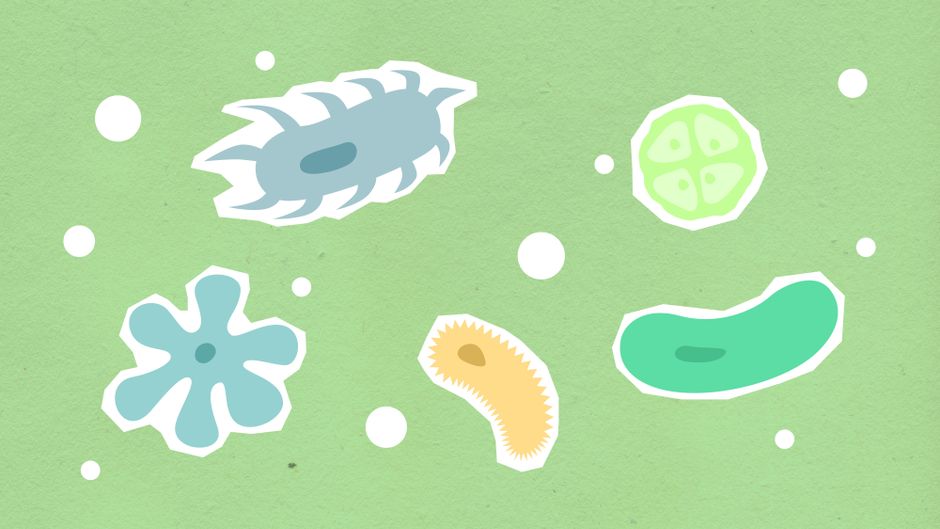
Your cells contain structures that carry their own DNA, divide on their own schedule, and look remarkably like bacteria under a microscope. Those structures are mitochondria. The evidence that they were once free-living bacteria is strong and comes from multiple independent lines of research. It is not a fringe idea or a loose metaphor. It is the leading scientific explanation for how complex life acquired its power plants.
The short version: mitochondria descend from ancient bacteria that were engulfed by another cell roughly two billion years ago. Instead of being digested, they stayed. Over time, the two organisms became one. This process is called endosymbiosis, and the evidence behind it is among the most well-supported ideas in biology.
Are Mitochondria Bacteria The Evidence Explained
Mitochondria are not bacteria today. They are organelles — specialized compartments inside your cells. But the evidence that they evolved from bacteria is extensive and comes from several directions at once.
The strongest lines of evidence include:
- Their own DNA. Mitochondria contain a small circular chromosome, similar in shape to bacterial DNA. Human nuclear DNA is linear and packaged differently.
- Double membranes. Mitochondria have two membranes. The leading explanation is that the inner membrane belonged to the original bacterium and the outer membrane came from the host cell that engulfed it.
- Independent division. Mitochondria replicate on their own timeline, not in sync with the cell’s normal division cycle. They split using machinery similar to what bacteria use.
- Antibiotic sensitivity. Some antibiotics that target bacterial ribosomes can also affect mitochondrial ribosomes. This is one reason certain antibiotics occasionally cause side effects in tissues that rely heavily on mitochondria.
- Ribosome similarity. The protein-building machinery inside mitochondria more closely resembles bacterial ribosomes than the ribosomes in the rest of your cell.
Each of these points alone could have an alternative explanation. Together, they point in one direction. The endosymbiotic origin of mitochondria is accepted by the overwhelming majority of biologists.
What Is the Endosymbiotic Theory?
The endosymbiotic theory proposes that mitochondria were once free-living bacteria that entered a larger host cell and were not destroyed. Instead, the two formed a permanent partnership.
The likely sequence went something like this. An ancient single-celled organism engulfed a bacterium. The bacterium provided a way to use oxygen to make energy more efficiently. The host cell provided protection and nutrients. Over many generations, the bacterium lost genes it no longer needed and transferred some of its remaining genes to the host’s nucleus. It became dependent on the host. The host became dependent on it.
This is not a case of one organism eating another. It is a case of one organism moving in permanently. The relationship became so tightly integrated that neither partner can survive alone today.
One detail that often surprises people: mitochondria still carry a small amount of their own DNA. In humans, mitochondrial DNA contains 37 genes. The original bacterium likely had thousands. Most of those genes moved to the cell’s nucleus over evolutionary time. A few stayed behind because they are too important to relocate.
How Do Mitochondria Compare to Bacteria Today?
Mitochondria share key features with modern bacteria, but they are not the same thing. The table below shows the main similarities and differences.
| Feature | Mitochondria | Free-Living Bacteria |
|---|---|---|
| DNA shape | Circular | Circular |
| Number of membranes | Two | One (most species) |
| Ribosome type | Bacterial-like | Bacterial |
| Can survive alone? | No | Yes |
| Division | Independent of cell cycle | Independent |
| Genome size | Very small (37 genes in humans) | Typically thousands of genes |
The comparison shows why scientists describe mitochondria as “domesticated bacteria.” They kept some bacterial traits and lost others. They are no longer independent organisms. They are parts of a larger system.



Why Do Mitochondria Have Their Own DNA?
Mitochondria kept a small set of genes because those genes code for proteins that are extremely difficult to import from outside. The proteins they produce are hydrophobic — they repel water — and are embedded in the inner mitochondrial membrane.
If those proteins were made in the cell’s main cytoplasm and then shipped to the mitochondria, they would likely clump together and cause problems before arriving. Keeping the genes on-site solves that problem. It is a logistical solution, not a sign that mitochondria are still independent organisms.
Mitochondrial DNA is inherited only from your mother. This is because sperm mitochondria are typically destroyed after fertilization. That pattern of maternal inheritance is another piece of evidence that mitochondrial DNA operates under its own rules, separate from the nuclear genome.
What Does This Mean for Human Health?
The bacterial ancestry of mitochondria has real medical implications. Because mitochondria retain bacterial-like ribosomes, some antibiotics can interfere with them. This is not a theoretical concern. Certain classes of antibiotics — particularly aminoglycosides and some others — have been associated with hearing loss and kidney effects in part because of their impact on mitochondrial function.
Mitochondrial dysfunction is also involved in a range of conditions. These include rare inherited mitochondrial diseases, as well as more common conditions where mitochondrial function declines with age or is impaired by disease. The exact role mitochondria play in aging and chronic disease is an active area of research. The evidence is strong that they matter. The details are still being worked out.
One practical point: mitochondrial DNA accumulates mutations faster than nuclear DNA. This is partly because mitochondria generate reactive oxygen species as a byproduct of energy production, and those molecules can damage DNA. Mitochondria have repair mechanisms, but they are not perfect. Over a lifetime, this damage can accumulate.
What Are the Main Objections to the Theory?
Some people point out that mitochondria cannot survive outside the cell, so how could they have ever been bacteria? That objection misunderstands the timeline. The endosymbiotic event happened billions of years ago. What we see today is the result of billions of years of co-evolution. The fact that mitochondria are now dependent on the cell does not mean they always were.
Another objection is that no one has directly observed the original event. That is true. We cannot watch something that happened roughly two billion years ago. But the evidence from genetics, cell biology, and biochemistry all points to the same conclusion. Direct observation is not the only form of scientific evidence.
A third point some raise is that mitochondria have lost so many bacterial traits that calling them bacteria is misleading. This is a fair criticism of the wording, not the theory. Mitochondria are not bacteria. They are descended from bacteria. That distinction matters.
How Strong Is the Evidence Overall?
The evidence is very strong. The endosymbiotic theory is not a hypothesis in the everyday sense of a guess. It is a well-supported scientific explanation that has survived decades of testing.
Genomic studies have shown that mitochondrial genes are more closely related to certain groups of bacteria than to any other living thing. Cell biology has shown that mitochondria divide using machinery similar to bacterial division. Biochemistry has shown that mitochondrial ribosomes respond to antibiotics in ways that bacterial ribosomes do, but human ribosomes do not.
The theory also explains why mitochondria have two membranes, why they have their own DNA, and why they divide independently. No competing explanation accounts for all of these facts at once.
If you want to read more about how cells work and what the evidence shows, explore other articles on HBmag.com.
Frequently Asked Questions
Are mitochondria actually bacteria?
No. Mitochondria are organelles inside your cells. They are descended from bacteria, but they are not bacteria today.
Did mitochondria used to be free-living bacteria?
Yes. The evidence strongly supports that mitochondria originated from free-living bacteria that were engulfed by an ancient host cell.
Why do mitochondria have their own DNA?
They kept a small set of genes because the proteins those genes code for are difficult to import from outside the mitochondria.
Is the endosymbiotic theory proven?
It is not proven in the sense of direct observation, because the event happened roughly two billion years ago. But the evidence from genetics, cell biology, and biochemistry is extensive and consistent.
