
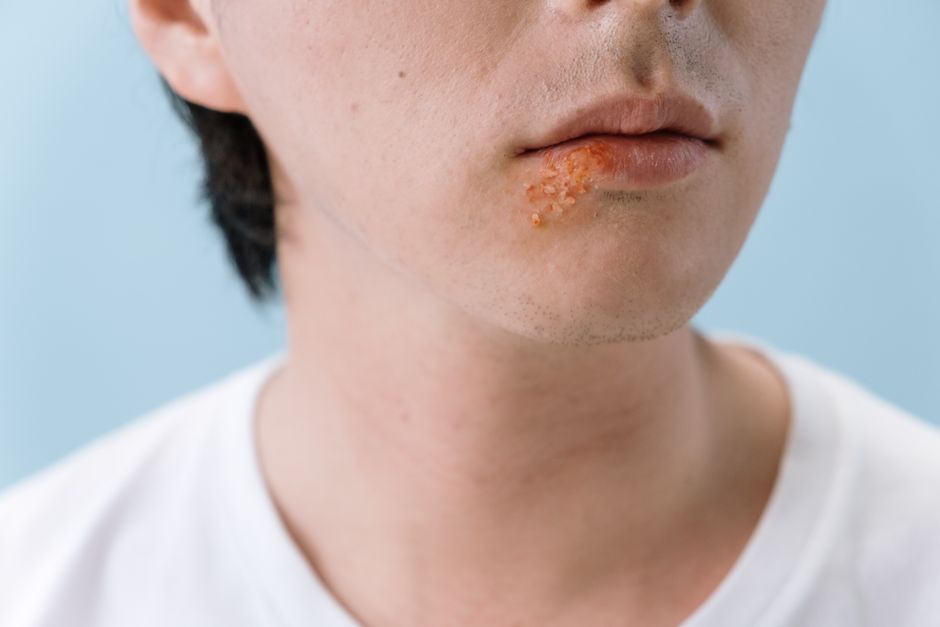
Yes, cold sores are extremely common. The World Health Organization estimates that roughly 67% of the global population under age 50 carries the virus that causes them. That is over 3.7 billion people. Most people get the virus as children, though many never develop visible sores.
What Causes a Cold Sore?
A cold sore is caused by the herpes simplex virus type 1 (HSV-1). This is different from the virus that causes genital herpes, though both are related. You catch HSV-1 through direct contact with an infected person’s skin or saliva. A kiss from a parent is a common way children get it.
Once you have the virus, it stays in your body for life. It hides in nerve cells near your cheekbone. For many people, the virus never causes a sore. For others, it reactivates when certain triggers are present. Stress, illness, sun exposure, and fatigue are common triggers.
Research published in the Journal of the American Medical Association found that about one-third of infected people have recurrent outbreaks. The other two-thirds carry the virus but rarely or never see a sore.
Are Cold Sores Common in Different Age Groups?
Yes, but the age you catch it matters. Data from the CDC shows that infection rates climb steadily with age. By age 20, about 50% of people have HSV-1. By age 50, that number reaches roughly 80%.
Children between ages 1 and 5 are at highest risk of first-time infection. Their immune systems are still developing, and they share close contact with family members. Daycare settings also increase exposure. Most children who get the virus have no symptoms at first. Some develop a fever and painful blisters around the mouth.
Adults who get HSV-1 later in life often have fewer outbreaks. Some studies suggest the immune system handles the virus better after childhood. But the virus stays present either way.
| Age Group | Estimated HSV-1 Infection Rate | Likelihood of Recurrent Sores |
|---|---|---|
| Under 5 years | 20-30% | Low |
| 14-19 years | 40-50% | Moderate |
| 20-29 years | 50-60% | Moderate to High |
| 40-49 years | 70-80% | High |
| 60+ years | 80%+ | Lower (immune system adapts) |
How Do You Know If You Have the Virus?
Most people do not know. A blood test can detect antibodies for HSV-1, but doctors rarely order one unless you have symptoms. The CDC does not recommend routine testing for HSV-1 in people without symptoms. The reason is simple: knowing you carry the virus does not change your care.
If you have a sore, a doctor can swab it and test the fluid. This confirms whether HSV-1 is present. But even without a test, a classic cold sore is easy to spot. It starts with a tingling or burning sensation on or near the lip. Within a day or two, small blisters appear. They fill with fluid, then crust over and heal within 7 to 10 days.
Some people mistake canker sores for cold sores. Canker sores are inside the mouth and are not caused by a virus. Cold sores appear on the outside of the mouth, usually on the lip border.




What Treatments Actually Work for Cold Sores?
Prescription antiviral medications are the only thing proven to shorten outbreaks. Drugs like acyclovir, valacyclovir, and famciclovir stop the virus from multiplying. When taken at the first sign of tingling, they can reduce healing time by one to two days.
Over-the-counter creams like docosanol (brand name Abreva) also have evidence behind them. A study in Antiviral Research found that docosanol reduced healing time by about 18 hours compared to placebo. That is modest but real. It works best when applied at the very first tingle.
Lysine supplements are widely claimed to help. The evidence is weak. Some small studies suggest lysine may reduce outbreak frequency in people who get frequent sores. Larger, better-designed studies have not confirmed this. If you try lysine, know the evidence is not strong.
Things that do not work according to clinical trials: vitamin C, zinc applied topically, tea tree oil, and garlic. These are popular remedies online but lack solid evidence.
- Prescription antivirals – Strong evidence, can shorten outbreaks by 1-2 days
- Docosanol cream – Moderate evidence, modest benefit if applied early
- Lysine supplements – Weak evidence, may help some people
- Tea tree oil – No clinical evidence for cold sores
- Garlic – No clinical evidence, can irritate skin
Can You Prevent Cold Sores from Coming Back?
You cannot eliminate the virus from your body. But you can reduce how often outbreaks happen. The key is identifying your personal triggers and managing them.
Sun exposure is one of the most common triggers. A study in the Journal of Medical Virology found that UV light reactivates HSV-1 in about 40% of people who get recurrent cold sores. Using lip balm with SPF 30 or higher every day can significantly cut outbreak frequency.
Stress is another major trigger. When you are stressed, your body produces cortisol, which suppresses parts of the immune system. That gives the virus a chance to reactivate. Simple stress management habits like regular sleep, exercise, and breaks during the day make a real difference for many people.
For people with very frequent outbreaks (six or more per year), doctors sometimes prescribe daily antiviral medication. This is called suppressive therapy. It reduces outbreak frequency by 70-80% in most people. It is safe for long-term use and has few side effects.
Some people report that avoiding foods high in arginine (like nuts, chocolate, and seeds) helps. The theory is that arginine helps the virus replicate. There is no strong clinical evidence for this. But it is harmless to try if you notice a pattern.
Are Cold Sores Contagious Even Without a Sore?
Yes. This is a common misunderstanding. The virus can shed from your skin even when you have no visible sore. This is called asymptomatic shedding. Research published in the Journal of Clinical Virology found that people with HSV-1 shed the virus on about 10-20% of days, even with no symptoms.
Shedding happens most often in the first year after infection. It decreases over time but never stops entirely. The highest risk of transmission is during an active outbreak. The blisters contain high concentrations of the virus. But you can still pass it to someone through a kiss or shared drink when you have no sore at all.
This is why so many people have the virus. It spreads easily, often without anyone knowing. Using your own utensils, lip balm, and towel during an outbreak is smart. But understand that even careful people can pass it.
Do not share lip products or razors at any time. That is the simplest way to reduce risk.
Frequently Asked Questions
Can you get a cold sore from stress alone?
Stress cannot give you the virus if you do not already carry it. But if you have HSV-1, stress is one of the most common triggers for a reactivation.
How long is a cold sore contagious?
You are contagious from the first tingle until the sore is completely healed and the scab has fallen off. This is usually 7 to 10 days.
Can cold sores spread to other parts of your body?
Yes, if you touch a sore and then touch another area, especially the eyes or genitals. Wash your hands after touching a cold sore to prevent spreading the virus.
Is there a cure for cold sores?
No cure exists. The virus stays in your body for life. Antiviral medications can manage outbreaks but cannot eliminate the virus.
