
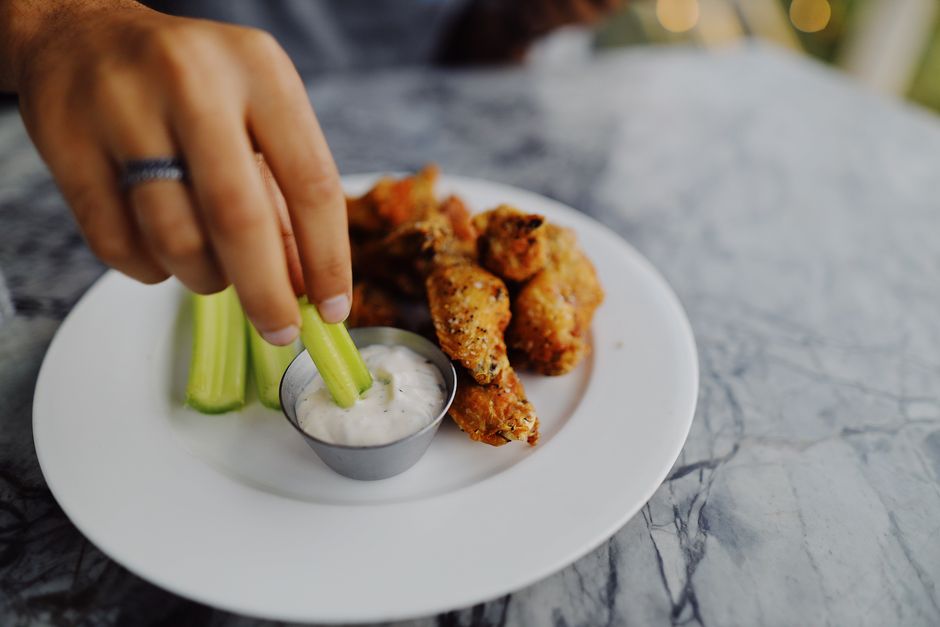
Buffalo wings themselves are gluten free. The chicken is gluten free, and traditional Buffalo sauce is made from hot sauce, butter, and seasonings that do not contain wheat. The trouble comes from everything around them: the breading, the fryer, and the dips.
So the honest answer is that it depends on how the wings are prepared and what they touch along the way. Plain, unbreaded wings tossed in classic Buffalo sauce are gluten free. Breaded wings, wings dropped in a shared fryer, and certain dipping sauces are where gluten enters the picture.
If you have celiac disease or a wheat allergy, that distinction matters. This guide explains exactly where gluten hides in a plate of wings and how to order them safely.
What Is Actually in a Buffalo Wing?
A traditional Buffalo wing has three parts: the chicken, the sauce, and the cooking method. None of those three is inherently a gluten source.
Chicken wings are pure protein and fat. They contain no wheat, barley, or rye. The classic sauce is a simple blend of cayenne pepper hot sauce, melted butter, and sometimes vinegar, garlic, or other spices. The original hot sauce used for Buffalo wings is made from aged cayenne peppers, vinegar, salt, and garlic. None of those ingredients contains gluten.
Butter is dairy, not wheat. So a wing that is cooked plain and tossed in that sauce is gluten free at its core. The problems start with the word “traditional.” Many restaurants add steps that introduce gluten without the menu saying so.
Where Does Gluten Hide in Buffalo Wings?
Gluten shows up in Buffalo wings through four main routes. Knowing them is the difference between a safe meal and a reaction.
- Breading and batter. Many wings are coated in flour, breadcrumbs, or a beer batter before frying. Wheat flour is the most common coating. This is the most obvious source.
- Shared fryer oil. Even unbreaded wings can pick up gluten if they are fried in the same oil as breaded items. Wheat particles from breaded chicken, onion rings, or mozzarella sticks can linger in the oil.
- Sauce additives. Most hot sauce is gluten free, but some commercial sauces and wing coatings use wheat-based thickeners, soy sauce, or malt vinegar. Soy sauce is made with wheat unless it is specifically labeled gluten free.
- Cross-contact on the line. Tongs, cutting boards, and hands that touch breaded food can transfer gluten to plain wings in a busy kitchen.
The sauce itself is rarely the issue. The coating and the fryer are. That is the opposite of what most people worry about.
Are Breaded Buffalo Wings Gluten Free?
No. Breaded or battered Buffalo wings are not gluten free. The coating is usually wheat flour, and wheat is one of the three grains that contain gluten.
Some restaurants offer a “crispy” wing that is dusted with flour or cornstarch before frying. Cornstarch is gluten free. Flour is not. You have to ask which one is used, because the menu often does not say.
There is also a middle category: wings that are not breaded but are fried in a shared fryer. These are not safe for someone with celiac disease. The oil carries gluten from other fried foods. For a person with celiac disease, even small amounts of gluten can trigger an immune reaction and intestinal damage, according to established celiac research. The threshold for a reaction varies by person, but the clinical guidance is to avoid cross-contact entirely.
If you have a wheat allergy rather than celiac disease, the concern is different. A wheat allergy is an immune response to wheat proteins, and reactions can range from mild to severe. Shared fryer oil is still a risk, because the oil can carry wheat protein.





How Can You Order Gluten-Free Buffalo Wings Safely?
You can order gluten-free wings at many restaurants, but it takes a few specific questions. The goal is to confirm three things: no breading, no shared fryer, and no gluten in the sauce.
- Ask if the wings are breaded or dusted with flour. If they are, ask for them unbreaded.
- Ask if the wings can be grilled, baked, or cooked in a dedicated fryer. A dedicated fryer means it is used only for gluten-free items.
- Ask what is in the Buffalo sauce. Confirm it is a basic hot sauce and butter blend, not a thickened or soy-based sauce.
- Ask about the blue cheese or ranch dip. Some dressings contain gluten-based thickeners or malt vinegar.
- Ask about the celery and carrot sticks. These are naturally gluten free, but confirm they are not stored or handled with breaded items.
Some restaurants keep a separate gluten-free menu and train staff on cross-contact. Others do not. A kitchen that cannot guarantee a clean fryer or clean prep space cannot guarantee gluten-free wings, no matter what the server says.
What About the Dipping Sauces and Sides?
The wings are only half the plate. The dips and sides can carry gluten too.
Blue cheese dressing is usually made from blue cheese, mayonnaise, sour cream, and vinegar. Most versions are gluten free, but some use wheat-based thickeners. Ranch dressing is similar. Both are worth checking, especially at restaurants that make them in-house with added stabilizers.
Barbecue sauce is a common problem. Many BBQ sauces contain soy sauce or malt vinegar, both of which can contain gluten. Honey mustard, teriyaki, and some Asian-style wing sauces often contain soy sauce as well. If the sauce is not labeled gluten free, treat it as a possible source.
Celery and carrot sticks are naturally gluten free. So is plain chicken. The risk on the side plate is almost always the dip, not the vegetables.
Are Store-Bought and Frozen Buffalo Wings Gluten Free?
Some are, and some are not. Frozen and restaurant wings vary widely, so the label is the only reliable guide.
Frozen breaded wings almost always contain wheat. Frozen unbreaded wings in Buffalo sauce are more likely to be gluten free, but you still need to read the ingredient list. Watch for wheat flour, modified food starch (which may be wheat-derived), soy sauce, malt vinegar, and “natural flavors” that are not specified.
In the United States, a product labeled “gluten-free” must meet a defined standard. Under FDA rules, foods labeled gluten-free must contain less than 20 parts per million of gluten. That is the level widely considered safe for most people with celiac disease. A “gluten-free” label is a stronger signal than a restaurant server’s assurance, because it is backed by a defined regulatory standard.
For restaurant wings, no such label exists. You are relying on the kitchen’s practices and honesty. That is a real difference, and it is worth remembering when you decide where to eat.
Does the Cooking Method Change Anything?
Yes. How the wing is cooked matters as much as what is in it.
Grilled and baked wings are lower risk than fried wings, because they avoid the shared fryer entirely. If a restaurant grills plain wings and tosses them in a clean Buffalo sauce, that is about as safe as a restaurant wing gets. Air-fried wings at home are also a good option, since you control the coating and the oil.
Deep-fried wings are the highest risk, because the fryer is the most common point of cross-contact. Even a kitchen that means well may fry breaded chicken in the same oil. If the restaurant has a dedicated gluten-free fryer, that changes the equation. If it does not, the oil is a genuine concern.
One more point: the sauce is usually added after cooking, so a plain grilled wing tossed in Buffalo sauce is a different food from a breaded fried wing. Same name, very different gluten profile.
Frequently Asked Questions
Are Buffalo wings gluten free?
Plain, unbreaded Buffalo wings tossed in traditional hot sauce and butter are gluten free. Breaded wings and wings cooked in a shared fryer are not.
Is Buffalo sauce gluten free?
Classic Buffalo sauce made from hot sauce, butter, and spices is gluten free. Some commercial sauces add wheat-based thickeners or soy sauce, so check the label or ask the kitchen.
Are restaurant Buffalo wings safe for celiac disease?
Only if the restaurant confirms the wings are unbreaded, cooked in a dedicated fryer, and handled without cross-contact. A shared fryer is not safe for someone with celiac disease.
Do blue cheese and ranch dips contain gluten?
Most blue cheese and ranch dressings are gluten free, but some use wheat-based thickeners or malt vinegar. Ask for the ingredient list or choose a dip you can verify.
