
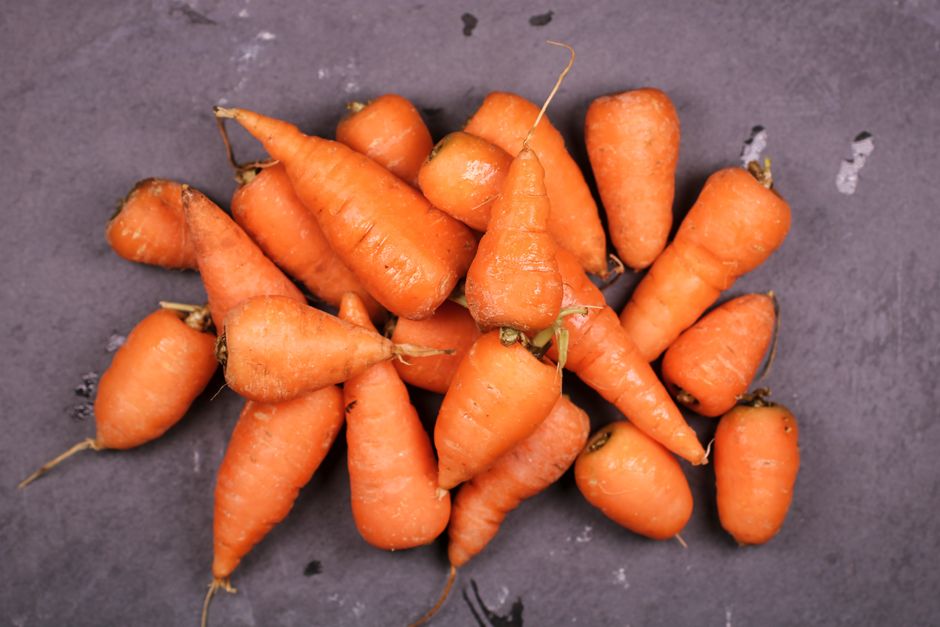
Baby carrots are real carrots, and they are healthy. They deliver the same core nutrition as full-size carrots: fiber, vitamin A in the form of beta-carotene, vitamin K, potassium, and antioxidants. The peeling and shaping they go through removes some fiber and nutrients from the surface, but the difference is modest.
The bigger questions people actually have are about how they are made, whether the white coating some bags develop means anything, and whether the “baby” label hides something. It does not. Baby carrots are a variety of carrot harvested early and cut down to size, not a different vegetable and not a processed food in the way that term usually implies.
What Are Baby Carrots, Exactly?
Most baby carrots sold in the United States are cut from full-size carrots. Farmers plant a specific type of carrot bred to be slender and sweet, harvest it young, then send it through machines that peel, cut, and polish the carrots into short uniform pieces. The leftover trimmings are not thrown away — they are used in juice, soups, and other food products.
This is different from a true “baby carrot,” which is simply a carrot pulled from the ground before it reaches full size. Those are sometimes sold as baby carrots too, usually with a bit of green stem still attached. Both are carrots. Neither is a manufactured food product in the sense of a nugget or a patty.
The confusion comes from the word “baby.” It sounds like marketing. In this case, it is a description of size, not a claim about nutrition. A baby carrot and a full-size carrot contain the same basic nutrients. The only meaningful difference is that the peeled surface of a baby carrot loses a small amount of fiber and some of the nutrients concentrated in the skin.
Are Baby Carrots as Nutritious as Regular Carrots?
They are close enough that the difference does not matter for most people. The nutrient profile is nearly identical, with a small reduction in fiber and a handful of surface nutrients because the outer layer is removed.
Here is how the two compare on the nutrients that matter most in carrots. Values are approximate and drawn from standard USDA nutrient data for raw carrots.
| Nutrient (per 100 g raw) | Full-size carrot | Baby carrot |
|---|---|---|
| Calories | ~41 | ~35 |
| Fiber | ~2.8 g | ~1.5–2 g |
| Vitamin A (from beta-carotene) | Very high | Very high |
| Vitamin K | Present | Present, slightly lower |
| Potassium | Present | Present |
| Water content | ~88% | ~90% |
The vitamin A content is the headline. A single serving of baby carrots provides a large share of the daily vitamin A most adults need, mostly as beta-carotene. Beta-carotene is a provitamin A carotenoid, meaning the body converts it into vitamin A as needed. That conversion is regulated, which is why eating a lot of carrots does not cause vitamin A toxicity the way high-dose preformed vitamin A supplements can.
The fiber gap is real but small. If you eat carrots mainly for fiber, whole unpeeled carrots give you a bit more. If you eat them as a crunchy low-calorie snack, the difference is not worth worrying about.
Why Do Baby Carrots Sometimes Turn White?
That white film is called “white blush,” and it is a sign of dehydration, not spoilage. When the peeled surface of a carrot dries out, the outer cells lose moisture and light reflects off them differently, which shows up as a pale coating.
White blush does not mean the carrots are bad. They are still safe to eat. The texture may be slightly tougher, and the flavor can be a little duller. Soaking them in cold water for a short time often restores some of the color and crispness. If the carrots are also slimy, soft, or smell off, that is a different situation and they should be discarded.




Are Baby Carrots Safe to Eat Raw?
Yes. Raw baby carrots are safe for most healthy adults and children. They are washed and peeled during processing, which removes most surface contamination.
There is one caveat worth knowing. Carrots are a root vegetable grown in soil, and soil can carry harmful bacteria. Bagged baby carrots have been linked to occasional recalls over the years, usually related to contamination during processing or packaging rather than the carrots themselves. This is rare, but it is why food safety agencies treat raw produce as something to handle with basic care.
For people with weakened immune systems, pregnant women, young children, and older adults, some food safety guidance suggests cooking raw produce rather than eating it raw when there is any concern about contamination. This is a general precaution for raw vegetables, not a specific warning about baby carrots. If you are in one of these groups and want to be careful, cooking carrots removes the risk from surface bacteria.
Do Baby Carrots Have Added Sugar or Preservatives?
No. Plain bagged baby carrots contain one ingredient: carrots. They are not soaked in sugar water, and they do not need preservatives because they are washed, sealed, and refrigerated.
A persistent online claim says baby carrots are rinsed in a chlorine solution, which sounds alarming until you look at what actually happens. Many produce processors, including carrot packers, use a very dilute chlorine rinse — similar in strength to the chlorine in drinking water — to reduce bacteria on the surface. The carrots are then rinsed with clean water. The chlorine does not remain on the carrot in any meaningful amount.
This is standard food safety practice for many fresh-cut vegetables. It is not unique to baby carrots, and it is not a health concern at the concentrations used. If the idea still bothers you, buying whole carrots and peeling them yourself is a reasonable alternative. It is a preference, not a safety requirement.
Are Baby Carrots Good for Weight Management and Blood Sugar?
Baby carrots are a strong snack choice for most people watching their weight. They are low in calories, high in water, and crunchy, which makes them satisfying to eat without adding much energy. A full cup of baby carrots is roughly 35 to 50 calories, depending on the exact size and water content.
Their effect on blood sugar is modest. Carrots have a low to medium glycemic index depending on how they are prepared and eaten. Cooking softens them and raises the glycemic index somewhat, while eating them raw with a source of protein or fat — like hummus or cheese — slows digestion further. For most people with type 2 diabetes, carrots fit comfortably into a balanced diet. Anyone managing blood sugar with medication should follow their care team’s guidance rather than adjusting intake based on any single food.
One detail worth knowing: the natural sugars in carrots are not the same as added sugar. The total sugar content is low, and it comes packaged with fiber and water that affect how the body absorbs it.
Can You Eat Too Many Carrots?
You can, though it takes a lot. Eating very large amounts of carrots over time can turn the skin a yellow-orange color, a harmless condition called carotenaemia. It is not dangerous and fades when intake drops.
The more relevant point is that carrots should not crowd out other vegetables. A diet built mostly on one vegetable, no matter how healthy that vegetable is, will miss nutrients found elsewhere. Variety matters more than any single food.
Beta-carotene supplements are a separate issue from carrots. High-dose beta-carotene supplements have been associated with harm in certain groups, particularly smokers. That finding applies to concentrated supplements, not to carrots eaten as food. The two should not be treated as equivalent.
Are Baby Carrots Healthy? The Bottom Line
Baby carrots are a genuinely healthy food. They are real carrots, minimally processed, and nutritionally close to full-size carrots. They are low in calories, rich in beta-carotene, and easy to eat raw.
The claims that they are soaked in sugar, loaded with preservatives, or stripped of all nutrition do not hold up. The white coating is dehydration. The chlorine rinse is a dilute, standard food safety step. The fiber difference from whole carrots is small.
If you want the most fiber and the least processing, buy whole carrots and eat the skin. If you want a convenient, affordable, crunchy snack that most people — including kids — will actually eat, baby carrots do the job well. Both are good choices.
Frequently Asked Questions
Are baby carrots actually baby carrots?
Most bagged baby carrots are cut and peeled from full-size carrots grown to be slender, not harvested as miniature vegetables. A smaller number are true young carrots pulled early. Both are real carrots with the same basic nutrition.
Are baby carrots as healthy as regular carrots?
Yes, with a small difference. Peeling removes some surface fiber and a few nutrients, but the vitamin A, potassium, and antioxidant content remains close to that of whole carrots.
Why do baby carrots turn white in the bag?
The white coating is called white blush and is caused by the peeled surface drying out. It is not mold or spoilage, and the carrots are still safe to eat.
Do baby carrots have added sugar or preservatives?
No. Plain bagged baby carrots contain only carrots. They may be rinsed in a very dilute chlorine solution during processing, which is a standard food safety step, then rinsed with clean water.
