
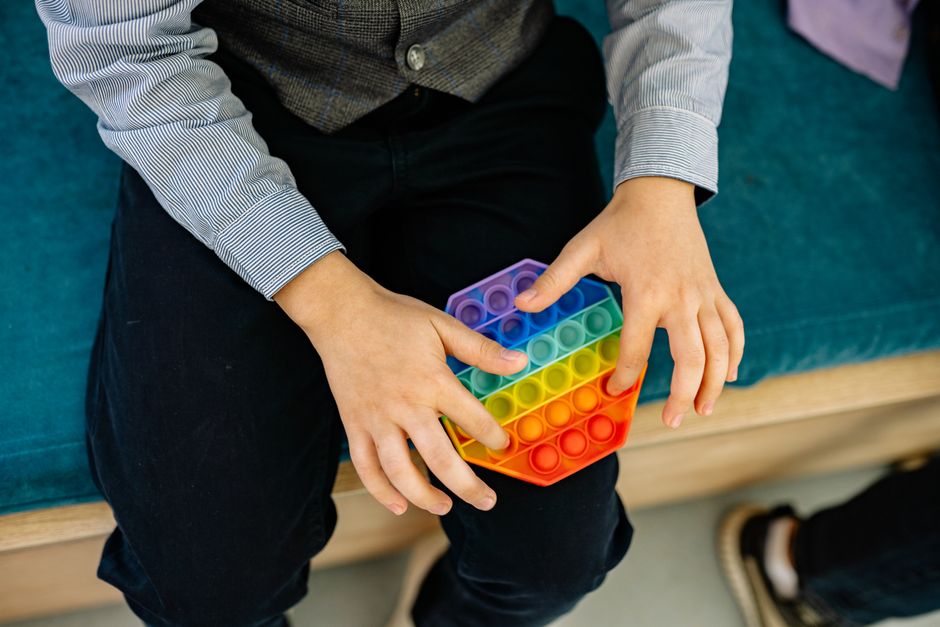
Fidget spinners, stress balls, and squishy cubes are not just for kids. Anxiety relief toys for adults are small objects you handle to redirect nervous energy, and many adults use them during meetings, phone calls, or moments of high stress. They work best as one tool among several, not as a standalone treatment for an anxiety disorder.
What Are Anxiety Relief Toys?
Anxiety relief toys are physical objects designed to be manipulated with your hands. The category includes fidget spinners, stress balls, putty, squishy cubes, marble mazes, textured rings, and similar items.
The idea is simple. When anxiety rises, many people feel restless or tense. Giving your hands something to do can absorb some of that physical energy. The toy becomes a place to put nervous movement instead of tapping a foot, biting nails, or picking at skin.
These objects are sometimes called fidgets or sensory tools. They are not medical devices. No regulatory agency approves them to treat anxiety. That distinction matters when you are deciding whether to spend money on one.
How Do Fidget Toys Actually Work for Anxiety?
Fidget toys work through a few well-understood mechanisms. None of them are mysterious.
The first is sensory grounding. Touching something with a distinct texture or weight pulls your attention toward a physical sensation. That can interrupt a spiral of worried thoughts, at least briefly.
The second is displacement of restless movement. Anxiety often shows up in the body as fidgeting, leg bouncing, or hair twirling. A toy gives that impulse somewhere to go.
The third involves rhythmic, repetitive motion. Spinning, squeezing, or clicking at a steady pace may have a mild calming effect for some people. The evidence for this is not strong enough to call it a proven treatment, but many users report it helps them feel more settled.
What these toys do not do is change the underlying biology of an anxiety disorder. They do not alter brain chemistry the way medication can. They do not rewire thought patterns the way cognitive behavioral therapy does. Think of them as a coping aid, not a cure.
Do Anxiety Relief Toys Really Help, or Is It Just Marketing?
The honest answer is that the research is limited. Some studies suggest fidget tools may help with focus and restlessness in certain settings. Other studies have found little to no benefit.
A key problem is that most research on fidget toys has looked at children, often in classroom settings, not adults with anxiety. Extending those findings to adults is a reasonable guess, but it is still a guess.
What we can say with more confidence is this: the placebo effect is real, and it is powerful. If a toy helps you feel calmer, that benefit is genuine even if it comes partly from your belief that it will work. Feeling calmer is the outcome that matters.
What no study has confirmed is that any specific toy reduces clinical anxiety better than a placebo, or better than another coping strategy. Claims that a particular fidget “rewires your brain” or “cures anxiety” are not supported by evidence.
So the practical takeaway: try one if you are curious. Just do not expect it to replace proven treatments.





Which Types of Fidget Toys Exist?
The range is wider than most people realize. Different designs suit different needs.
- Stress balls and squeeze toys. Good for people who carry tension in their hands. Provide resistance and a satisfying release.
- Fidget spinners. Smooth, repetitive motion. Quiet enough for some settings, but can be distracting to others nearby.
- Putty and slime. Stretchy, moldable, and highly tactile. Often used by people who like deep pressure in their hands.
- Squishy cubes and poppers. Small, pocket-sized, and often silent. Popular for use in meetings or public spaces.
- Marble mazes and puzzle fidgets. Require more focus. Better for people who want a mental distraction, not just a physical one.
- Textured rings and bracelets. Worn on the body. Easy to reach without anyone noticing.
- Weighted items. Some people find a small weighted object calming. The evidence for weighted tools is stronger in some contexts than for fidget toys generally, though it is still not definitive for anxiety.
There is no single best option. What works depends on your habits, your environment, and what feels natural in your hands.
How to Choose the Right Fidget Toy for You
Start with where and when you plan to use it. A toy that is perfect at home may be useless at work.
If you need something discreet, look for silent, small items. A squishy cube or textured ring fits in a pocket and makes no noise. If you need something to burn off serious restlessness, a stress ball or putty may serve you better.
Consider your sensory preferences too. Some people love the feel of smooth metal. Others prefer soft fabric or squishy foam. There is no wrong answer, but the texture matters more than most buyers expect.
Price is not a reliable guide to quality. Many effective fidgets cost very little. Expensive versions with fancy branding are not proven to work better.
One practical tip: buy one or two, not ten. Use them for a week and see whether they actually help. If they do not, you have lost very little.
Are There Risks or Downsides to Using Fidget Toys?
For most adults, fidget toys carry very few risks. They are not dangerous, and they are not addictive. But there are real downsides worth knowing.
The biggest risk is avoidance. If a toy becomes a way to escape from anxious thoughts rather than a way to manage them, it can work against you. Anxiety treatment generally involves facing feared situations, not avoiding them. A fidget used to dodge a difficult moment may reinforce the very pattern you are trying to break.
There is also the distraction problem. A toy that helps you focus in one setting may pull your attention away in another. If you are in a meeting or a conversation, a noisy or visually busy fidget can be disruptive to you and to others.
Finally, some toys are small enough to be a choking hazard for young children or pets. Keep them out of reach if that applies in your home.
None of these downsides mean you should avoid fidget toys. They mean you should use them thoughtfully.
When Fidget Toys Are Not Enough
Fidget toys are a coping tool, not a treatment. If anxiety is interfering with your sleep, your work, your relationships, or your daily functioning, a toy will not solve that.
Anxiety disorders are common and treatable. The most well-supported treatments are cognitive behavioral therapy and, for some people, medication. Both have decades of research behind them. A fidget toy does not.
If you are not sure whether what you are experiencing is normal stress or something more, talking to a doctor or mental health professional is a reasonable next step. You do not need to be in crisis to ask for help.
Some people find that fidget toys work well alongside therapy or medication. They can be a small part of a larger plan. They should not be the whole plan.
Can Fidget Toys Help With Panic Attacks?
Some people use a fidget toy during a panic attack, and some report it helps. The evidence for this is not strong, but the logic is reasonable.
Panic attacks involve a surge of physical symptoms: racing heart, shortness of breath, trembling. Grounding techniques, which focus attention on physical sensations, are a common part of panic management. A textured or weighted object can serve as a grounding anchor.
That said, grounding techniques vary in how well they work for different people. A toy is one option among many. Slow breathing, cold water on the face, and reminding yourself that the attack will pass are other commonly used strategies.
If you have panic attacks, a fidget toy may be worth trying. But it is not a substitute for professional support, especially if attacks are frequent or severe.
Do Anxiety Relief Toys Work for Everyone?
No. Response to fidget toys varies widely. Some people find them genuinely helpful. Others find them distracting or useless. A few find them irritating.
This variability is normal for almost any coping tool. What calms one person may agitate another. There is no way to predict in advance which group you fall into without trying.
If a toy does not help, that is not a personal failure. It just means that particular tool is not a good match for you. There are many other strategies to explore.
Frequently Asked Questions
Do fidget toys actually help with anxiety?
Some people find them helpful for managing restlessness and grounding attention, but research on adults with anxiety is limited. They are best viewed as a coping aid, not a proven treatment.
What is the best fidget toy for anxiety?
There is no single best option, since what works depends on your preferences and setting. Silent, small items like squishy cubes or textured rings tend to work well in public or at work.
Can adults use fidget toys without looking childish?
Yes. Many fidgets are designed to be discreet, and using one is no different from tapping a pen or bouncing a leg. Choosing a quiet, pocket-sized option helps it go unnoticed.
Should I use a fidget toy instead of therapy for anxiety?
No. Fidget toys are not a substitute for evidence-based treatments like cognitive behavioral therapy or medication. If anxiety affects your daily life, talk to a doctor or mental health professional.
