
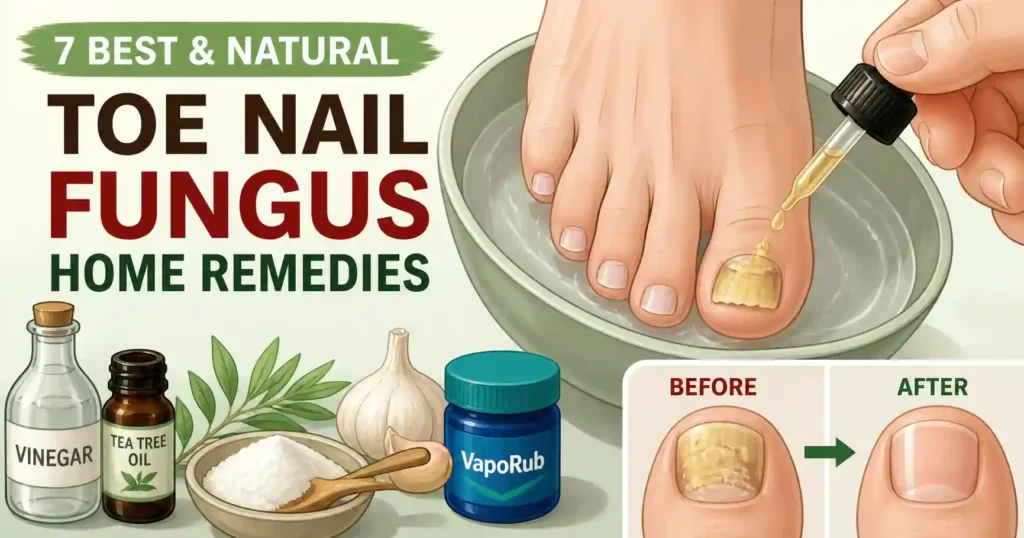
Toe nail fungus home remedies are simple treatments you can use at home to slow fungal growth and improve nail health. These methods focus on reducing moisture, killing surface fungus, and supporting healthy nail regrowth. They work best in early or mild cases and require consistent use over time.
Key Takeaways
- Fungus grows beneath the nail — treating only the surface misses the real source.
- Home remedies mostly slow growth — they rarely eliminate the infection completely.
- Consistency matters more than the method — irregular use is the biggest reason treatments fail.
- No treatment works instantly — visible improvement takes time as the nail grows out.
- Early-stage infections respond faster — delayed treatment makes the fungus harder to control.
- A daily routine beats random attempts — structured care is more effective than switching methods.
Why do most toe nail fungus home remedies fail?
Most home remedies fail because they never reach the fungus living under the nail.
That’s the part most articles skip. Toenail fungus doesn’t sit on the surface. It grows under the nail plate, feeding on keratin. The nail acts like a shield. So anything you apply on top—oil, vinegar, creams—has limited access.
Then there’s time. Toenails grow slowly. About 1–2 mm per month. That means even if the fungus stops growing today, it can take 6–12 months for a clear nail to replace the damaged one.
There’s also consistency. People try remedies for a few weeks, see no visible change, and stop. The fungus doesn’t disappear. It just keeps growing quietly.
A 2013 review in the Journal of the American Academy of Dermatology found that even prescription treatments struggle with full cure rates. That tells you how stubborn this infection is.
What most people misunderstand:
- Killing fungus ≠ fixing the nail
- Visible improvement comes from new nail growth, not instant clearing
Quick Takeaway: Home remedies fail because they can’t penetrate deeply, and people stop too early.
What are the 7 best toe nail fungus home remedies?
The best home remedies target moisture, surface fungus, and the nail environment at the same time.
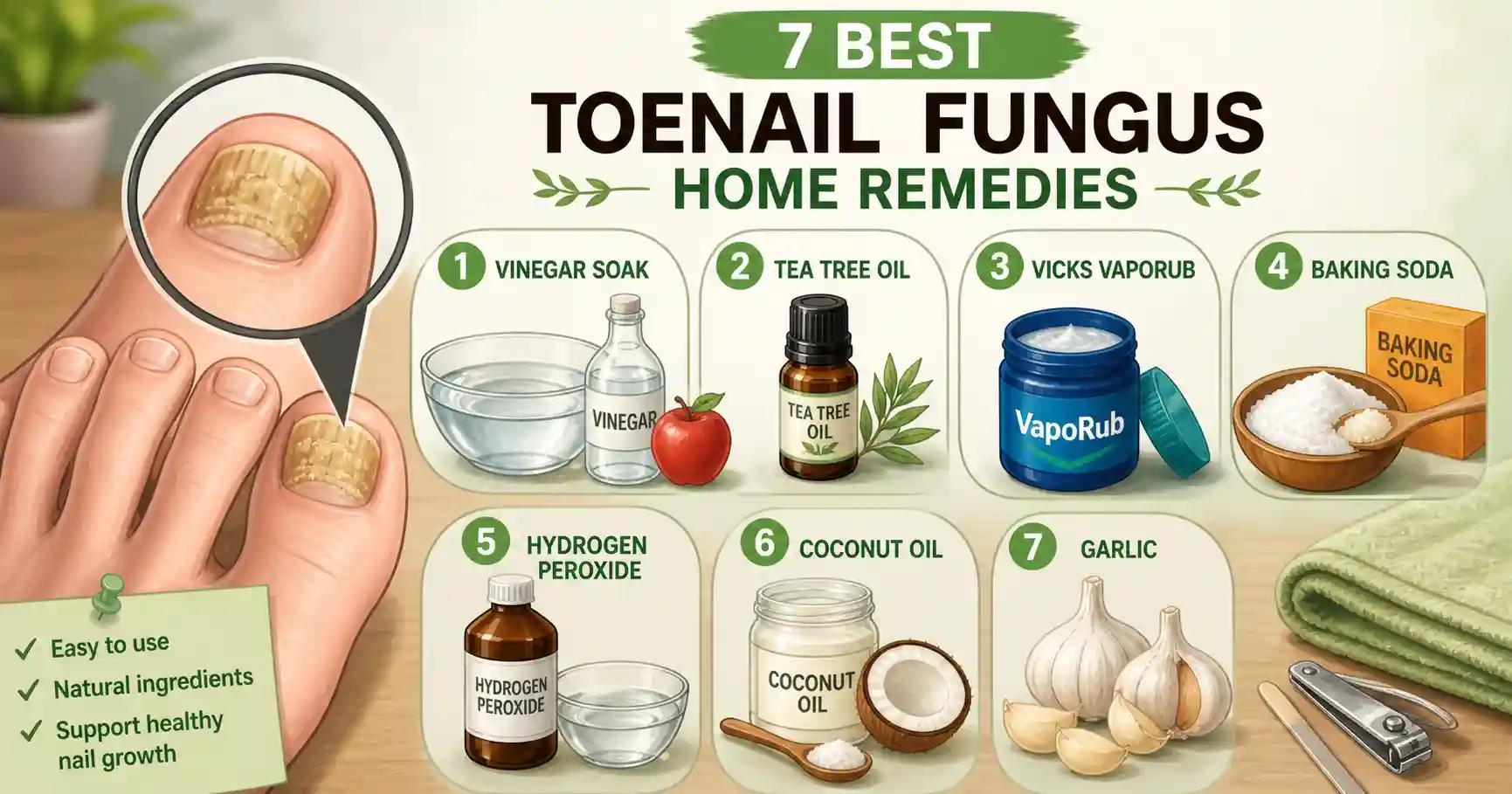
Here are the ones that actually make sense:
1. Vinegar Soaks
- Mix 1 part vinegar with 2 parts warm water
- Soak for 15–20 minutes daily
Vinegar creates an acidic environment. Fungi don’t grow well in low pH conditions. But it doesn’t penetrate deeply, so think of it as a control method, not a cure.
2. Tea Tree Oil
- Apply a few drops directly to the nail twice daily
Tea tree oil has natural antifungal properties. Some small studies suggest it may help reduce fungal load. The problem is penetration. It works better in early infections, not thick nails.
3. Vicks VapoRub
- Apply once daily, preferably at night
This sounds strange, but there’s some logic. Ingredients like menthol and eucalyptus oil may slow fungal growth. A small 2011 study in the Journal of the American Board of Family Medicine showed partial improvement in some patients.
Not a miracle. But not useless either.
4. Baking Soda
- Apply paste or sprinkle inside the shoes
It doesn’t kill fungus directly. It reduces moisture. And fungus thrives in damp environments. This is more about prevention and control.
5. Hydrogen Peroxide (Diluted)
- Soak or dab on the affected nail
It can kill surface microbes. But again, it doesn’t reach deep infection. Use it for cleaning, not treatment.
6. Coconut Oil
- Apply daily
Contains fatty acids like lauric acid, which may have antifungal effects. Mild benefit at best. Works more as a supportive option.
7. Garlic (Crushed or Extract)
- Apply briefly, then rinse
Garlic contains allicin, which has antifungal properties in lab studies. But applying raw garlic can irritate the skin. Use cautiously.
Comparison Table: What Actually Works vs What Doesn’t
| Remedy | Strength Level | Best For | Main Limitation |
|---|---|---|---|
| Vinegar soak | Moderate | Early-stage fungus | Poor penetration |
| Tea tree oil | Moderate | Mild infections | Slow results |
| Vicks VapoRub | Moderate | Nail appearance | Not a deep treatment |
| Baking soda | Low | Moisture control | Doesn’t kill fungus |
| Hydrogen peroxide | Low | Surface cleaning | Temporary effect |
| Coconut oil | Low | Supportive care | Weak antifungal action |
| Garlic | Moderate | Lab-based antifungal | Skin irritation risk |
How to improve toenail fungus at home step-by-step
Always remember that a routine works better than random remedies.
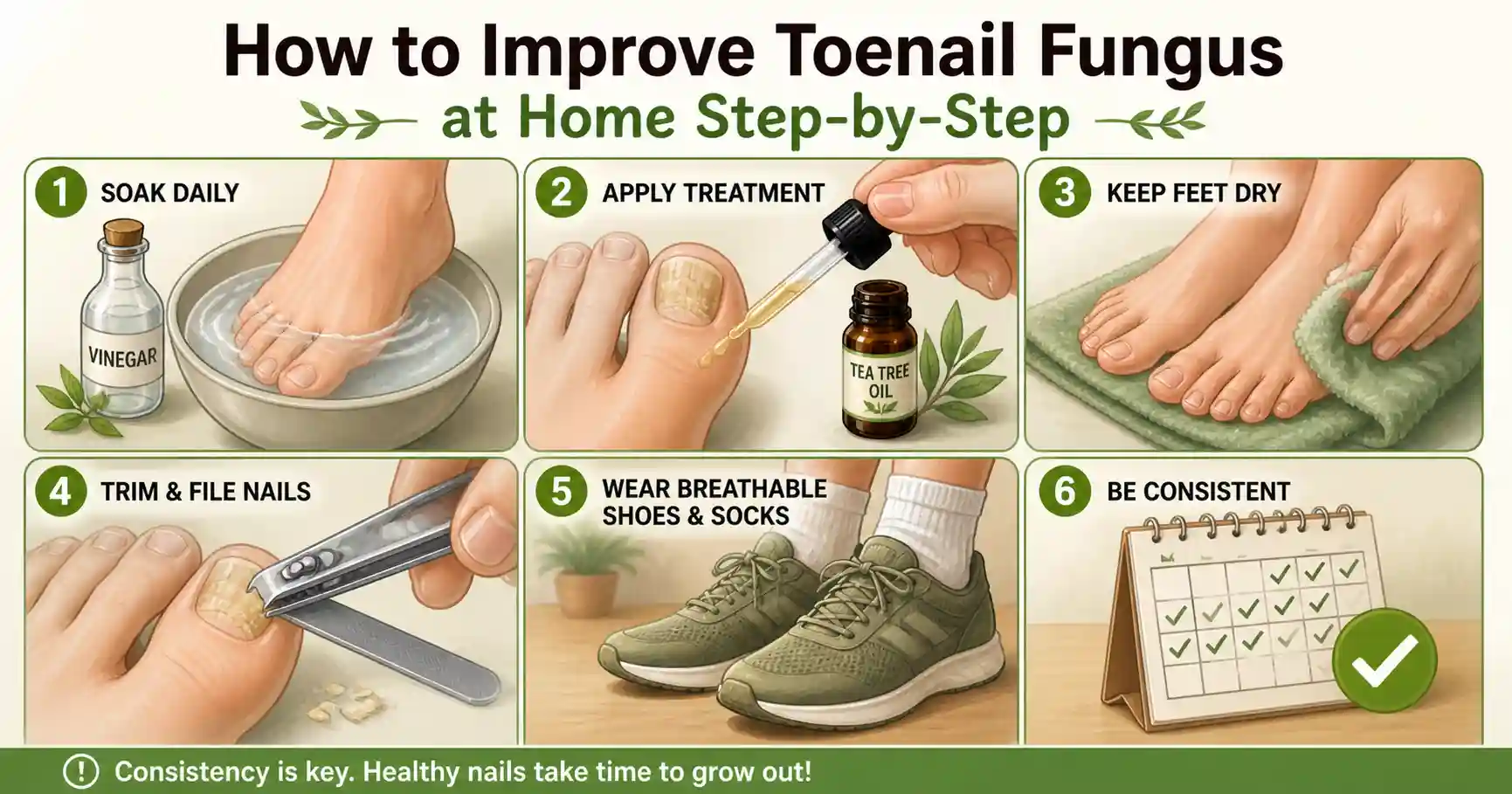
Here’s a simple system:
Daily Routine:
- Morning:
- Wash and dry feet completely
- Apply tea tree oil or Vicks
- Evening:
- Soak in vinegar solution (15–20 minutes)
- Dry thoroughly
- Apply treatment again
Weekly Routine:
- Trim nails straight across
- File down thickened areas (this helps penetration)
- Disinfect nail tools
Hygiene Rules (non-negotiable):
- Keep feet dry
- Change socks daily
- Avoid tight shoes
- Use antifungal powder if needed
This part matters more than the remedies. A 2024 update from the Mayo Clinic notes that recurrence is common when moisture and hygiene are ignored.
What actually makes the difference: Consistency + nail thinning + dry environment
Quick Takeaway: A structured routine beats any single remedy.
What kills toenail fungus instantly, home remedies?
Nothing kills toenail fungus instantly at home. That’s the honest answer.
Fungus grows inside the nail. Even strong treatments take time. If something claims instant results, it’s either:
- Only affecting surface fungus
- Or temporarily improving appearance
Here’s what “fast” actually means:
- Early infection → noticeable change in 4–8 weeks
- Thick, advanced infection → several months
Even prescription drugs don’t work instantly. The CDC (2026) notes that fungal infections are persistent and often require long-term treatment.
So the real question isn’t “instant cure.” It’s:
- How early you start
- How consistent you are
Quick Takeaway: “Instant cure” is a myth. Faster results come from early treatment and consistency.
Do vinegar, Listerine, or bleach actually work?
Vinegar may help. Listerine is inconsistent. Bleach is a bad idea.
Let’s break it down.
Vinegar:
- Creates an acidic environment
- May slow fungal growth
- Safe for regular use
Good as part of a routine. Not enough alone.
Listerine:
- Contains alcohol and antiseptic ingredients
- Some people report improvement
But the evidence is weak. It’s not designed for fungal infections. Effects are inconsistent.
Bleach:
- Strong disinfectant
- Can damage skin and nails
Some online advice suggests diluted bleach soaks. This is risky. It can cause irritation or burns without solving the underlying infection.
What most people miss: Killing fungus on the surface doesn’t fix the infection under the nail.
Quick Takeaway: Vinegar is reasonable. Listerine is questionable. Bleach is not worth the risk.
What is the best foot soak for toenail fungus?
The best foot soak is a vinegar-based soak used consistently.
Simple formula:
- 1 part white vinegar
- 2 parts warm water
- Soak for 15–20 minutes daily
Why it works:
- Lowers pH → fungus struggles to grow
- Softens nail → improves treatment absorption
You can add Epsom salt for comfort, but it doesn’t add antifungal power.
What matters more is what you do after:
- Dry feet completely
- Apply treatment immediately
Skipping this step cancels the benefit.
Quick Takeaway: Vinegar soak works best when combined with drying and topical treatment.
FAQs
How to get rid of toenail fungus fast at home?
Fast improvement depends on how early the infection is. Mild cases may show visible change within a few weeks if you use daily soaks and topical treatments consistently. Thick or long-standing infections take months because the nail must grow out slowly.
What is the best treatment for toenail fungus at home?
The most effective approach combines vinegar soaks, a topical antifungal like tea tree oil or Vicks, and strict foot hygiene. No single remedy works alone. The combination helps control fungal growth and supports healthier nail regrowth over time.
Does Listerine cure toenail fungus?
Listerine may reduce surface bacteria and has mild antiseptic properties, but it is not a reliable antifungal treatment. Some people notice small improvements, but results are inconsistent and usually temporary.
Can toenail fungus go away on its own?
It rarely goes away without treatment. The fungus continues to grow under the nail unless the environment changes or antifungal measures are used. Without action, the nail often becomes thicker, discolored, and harder to treat.
Is vinegar better than antifungal creams?
Vinegar helps control fungal growth by creating an acidic environment, but antifungal creams are designed to target fungi more directly. However, even creams struggle to penetrate thick nails, which is why combining methods often works better.

Recent Posts