
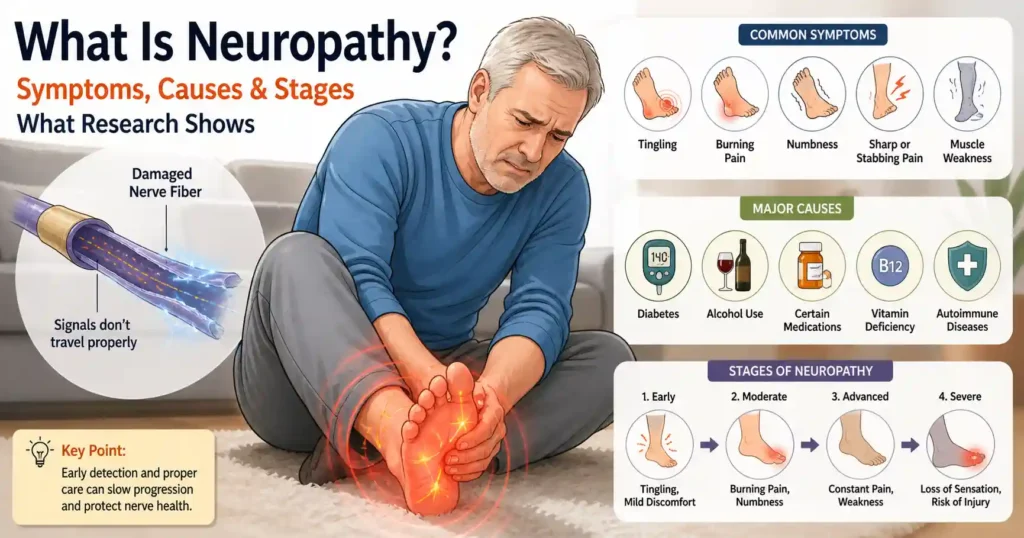
Neuropathy is a condition where nerves are damaged or not working properly. It disrupts how signals travel between the brain, spinal cord, and the rest of the body. This leads to symptoms like numbness, tingling, pain, or weakness—most often starting in the feet and legs.
Key Takeaways
- Neuropathy is a nerve signal problem — it disrupts how messages travel between the brain and body, not just how pain is felt.
- Pain and numbness can occur together — different nerve fibers fail at different rates, creating mixed sensations.
- Symptoms usually start in the feet — longer nerves are more exposed to damage and fail first.
- Diabetes is the leading global cause — long-term blood sugar damage accounts for a large share of cases.
- Neuropathy follows a progression pattern — tingling → pain → numbness → loss of function over time.
- Early action matters more than any treatment — once nerve loss sets in, recovery becomes much harder.
What is neuropathy?
Neuropathy is nerve dysfunction caused by damage to peripheral nerves—the nerves outside the brain and spinal cord. These nerves control sensation, movement, and automatic body functions like heart rate and digestion.
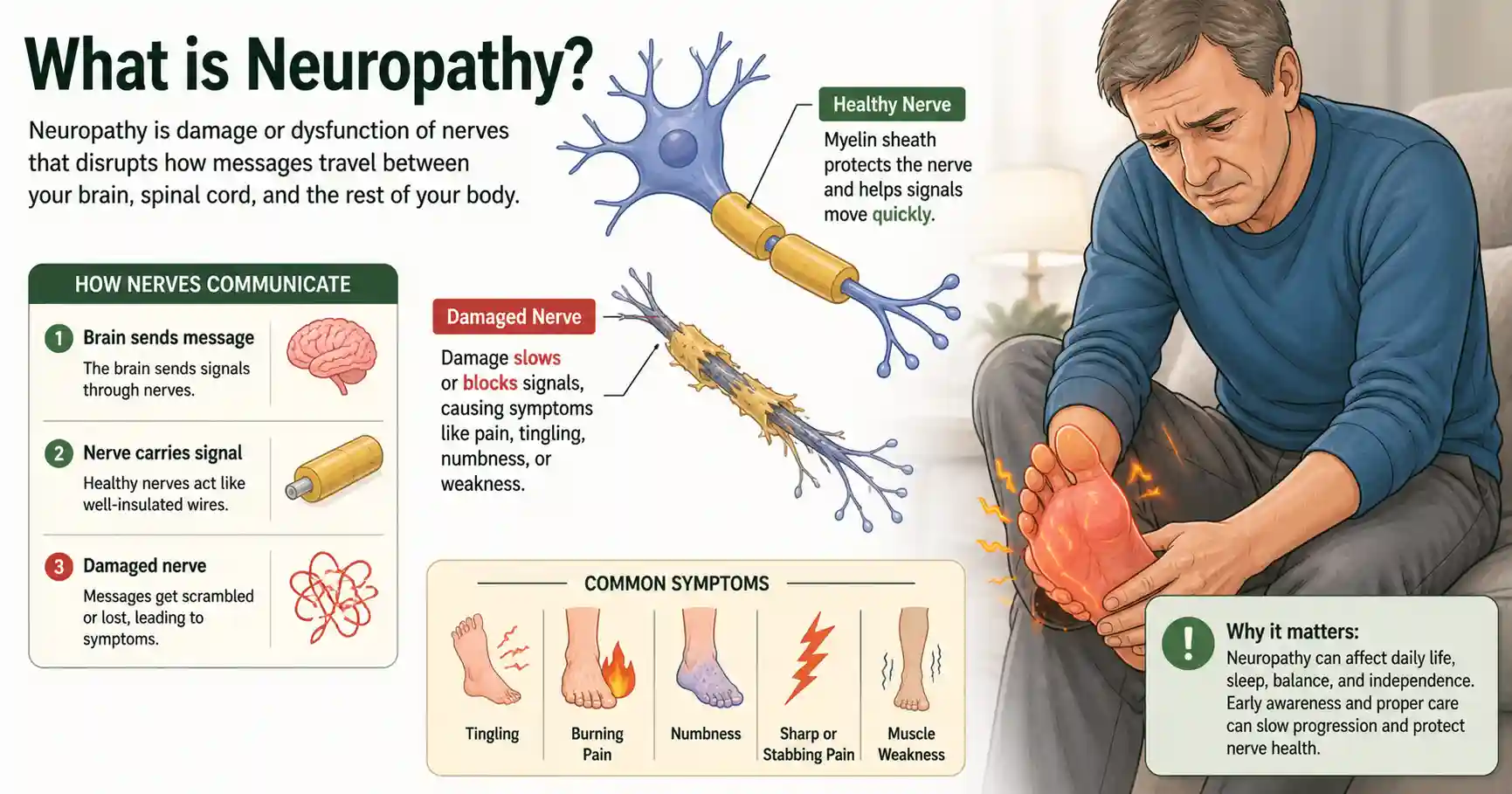
The key point most articles miss: It’s not just “damage.” It’s a communication failure.
Your nerves act like electrical wires. When they’re damaged:
- Signals become weak → numbness
- Signals become distorted → burning or stabbing pain
- Signals stop completely → loss of sensation
That’s why neuropathy can feel confusing. You can have pain and numbness at the same time.
How does neuropathy work?
Neuropathy starts when nerve fibers or their protective covering (myelin) break down. This disrupts how signals move through the body.
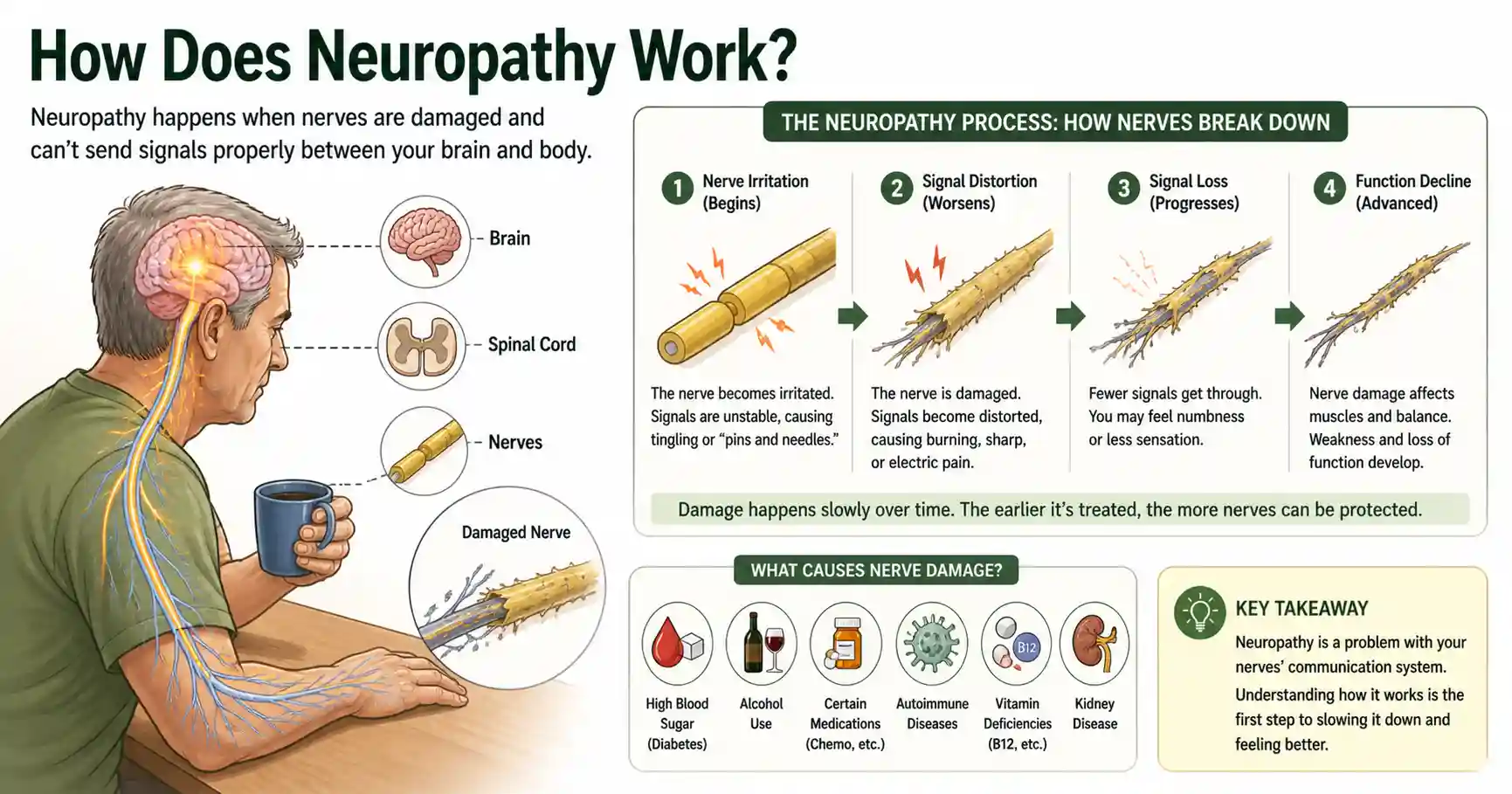
Here’s what actually happens:
- Nerve irritation begins
Early damage causes unstable signals → tingling or “pins and needles.” - Signal distortion increases
The brain receives wrong signals → burning, sharp, or electric pain - Signal loss develops
Nerves stop sending messages → numbness and weakness - Function declines
Muscles weaken, balance worsens, and reflexes slow
Most content skips this progression. That’s a mistake. A 2017 review in The Lancet Neurology explained that small nerve fibers fail first, which is why symptoms begin subtly before becoming constant.
What are the symptoms of neuropathy?
Neuropathy symptoms depend on which nerves are affected, but most people notice a pattern.
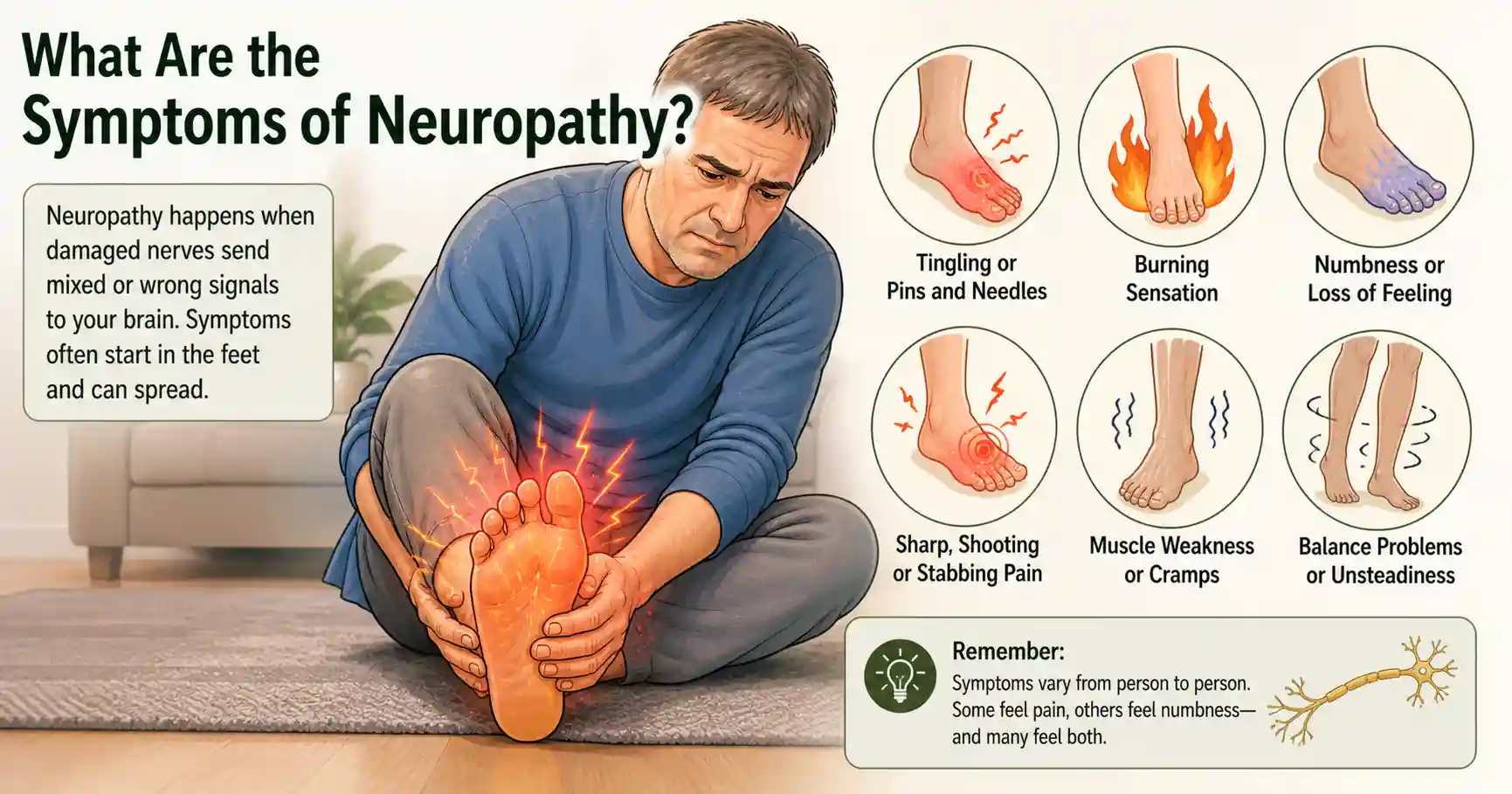
Common symptoms:
- Tingling or “pins and needles.”
- Burning or sharp pain
- Numbness (especially in feet or hands)
- Muscle weakness
- Loss of balance or coordination
- Sensitivity to touch (even light pressure hurts)
What it feels like in real life:
- Walking feels like stepping on cotton or sand
- Nighttime pain becomes worse (very common)
- You may not feel any injuries in your feet
A 2020 study in Diabetes Care found that over 50% of people with diabetic neuropathy experience sleep disruption due to nerve pain.
What is neuropathy in the feet and legs?
Neuropathy usually starts in the feet because the longest nerves in your body are the most vulnerable.
This is called a “length-dependent pattern.”
Why are feet affected first?
- Longer nerves = more exposure to damage
- Blood flow to the extremities is weaker
- Metabolic stress (like high blood sugar) hits these nerves first
Typical progression:
- Starts in the toes
- Moves up the feet
- Spreads to legs
- Eventually affects hands (called “stocking-glove pattern”)
Most articles mention this pattern but don’t explain why. Now you know.
What causes neuropathy?
Neuropathy isn’t one disease. It’s a result of different underlying problems.
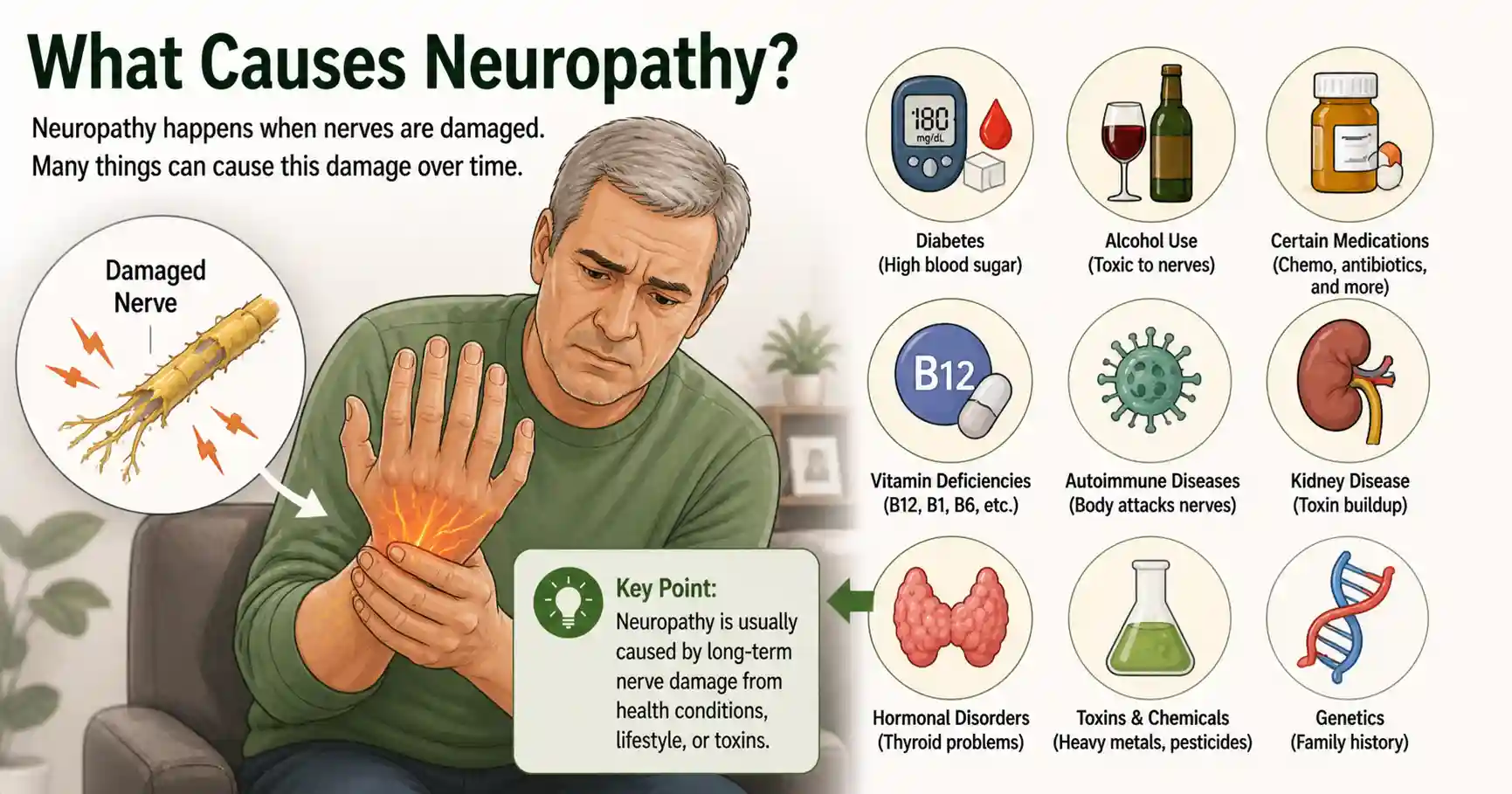
Major causes:
- Diabetes (most common)
- Alcohol abuse
- Vitamin deficiencies (especially B12)
- Infections (like shingles)
- Autoimmune diseases
- Kidney disease
- Certain medications (chemotherapy drugs)
What most people misunderstand:
It’s not just the cause—it’s how long the nerves are exposed to damage.
For example:
- High blood sugar → damages blood vessels → nerves lose oxygen → nerve death
- Alcohol → toxic effect on nerve tissue
- Vitamin deficiency → nerves can’t repair themselves
A 2019 report from the National Institute of Neurological Disorders and Stroke confirmed that diabetes accounts for up to 50% of neuropathy cases worldwide.1Diabetic neuropathy: cutting-edge research and future directions, PubMed Central.
What are the stages of neuropathy?
Most articles either skip this or oversimplify it. Let’s fix that.
Neuropathy progression stages
| Stage | What Happens | Symptoms |
|---|---|---|
| Early Stage | Nerve irritation begins | Tingling, mild numbness, occasional discomfort |
| Middle Stage | Signal distortion increases | Burning pain, sensitivity, frequent numbness |
| Advanced Stage | Nerve loss develops | Constant numbness, muscle weakness, balance issues |
| Severe Stage | Functional damage | Loss of sensation, ulcers, high injury risk |
Critical insight:
You can move between stages slowly over the years. It’s not a fixed timeline.
And here’s the uncomfortable truth: By the time numbness appears, nerve damage is already significant.
What types of neuropathy exist?
Neuropathy isn’t one single condition. It depends on which nerves are affected.
Main types:
1. Peripheral neuropathy
Affects hands and feet. Most common type.
2. Autonomic neuropathy
Affects automatic functions like:
- Heart rate
- Digestion
- Blood pressure
3. Motor neuropathy
Affects muscle movement → weakness, cramps
4. Focal neuropathy
Affects a single nerve (e.g., carpal tunnel syndrome)
Most content mixes these. That creates confusion.
How does neuropathy affect daily life?
This is where most articles fall short.
Neuropathy isn’t just a symptom list—it changes how you function.
Real-life impact:
- Walking becomes unstable
- You may trip more often
- Driving can feel unsafe in advanced stages
- Small injuries go unnoticed
- Sleep gets disrupted due to pain
One overlooked issue: Balance problems are often more dangerous than pain.
Falls are a major risk, especially after age 50.
What is neuropathy treatment?
Neuropathy treatment focuses on slowing damage and managing symptoms, not magically reversing it.
Main approaches:
1. Treat the cause
- Control blood sugar (diabetes)
- Fix vitamin deficiencies
- Reduce alcohol intake
2. Manage symptoms
- Pain medications
- Nerve-targeting drugs (like gabapentin)
- Topical treatments
3. Support nerve health
- Physical therapy
- Lifestyle changes (diet, exercise)
Here’s the honest part: There is no universal cure. Some people improve. Others only manage symptoms.
As of 2026, current research suggests that early intervention is the biggest factor in slowing progression.
FAQs
What is neuropathy pain like?
Neuropathy pain feels different from normal pain. It’s often described as burning, stabbing, or electric. Some people feel extreme sensitivity where even a light touch hurts. Others feel deep aching or sharp jolts, especially at night. The intensity varies depending on nerve damage.
What is peripheral neuropathy?
Peripheral neuropathy is the most common type of neuropathy. It affects nerves outside the brain and spinal cord, mainly in the hands and feet. It often causes numbness, tingling, and pain, and is strongly linked to diabetes, infections, or long-term nerve stress.
What causes neuropathy in the feet?
Neuropathy in the feet is usually caused by damage to the long peripheral nerves. Diabetes is the leading cause, followed by alcohol use, vitamin deficiencies, and poor circulation. These factors reduce nerve function over time, leading to symptoms that start in the toes and spread upward.
Can neuropathy go away?
Neuropathy sometimes improves if the cause is treated early, such as correcting a vitamin deficiency. In many cases, especially in long-term diabetes, nerve damage is not fully reversible. Treatment focuses on slowing progression and reducing symptoms rather than eliminating the condition.
What are the early signs of neuropathy?
Early signs include tingling, mild numbness, or a “pins and needles” feeling, usually in the toes or fingers. Symptoms may come and go at first. Many people ignore these early signals, but this stage is when intervention is most effective in slowing nerve damage.
Scientific References
- 1Diabetic neuropathy: cutting-edge research and future directions, PubMed Central.

Recent Posts