
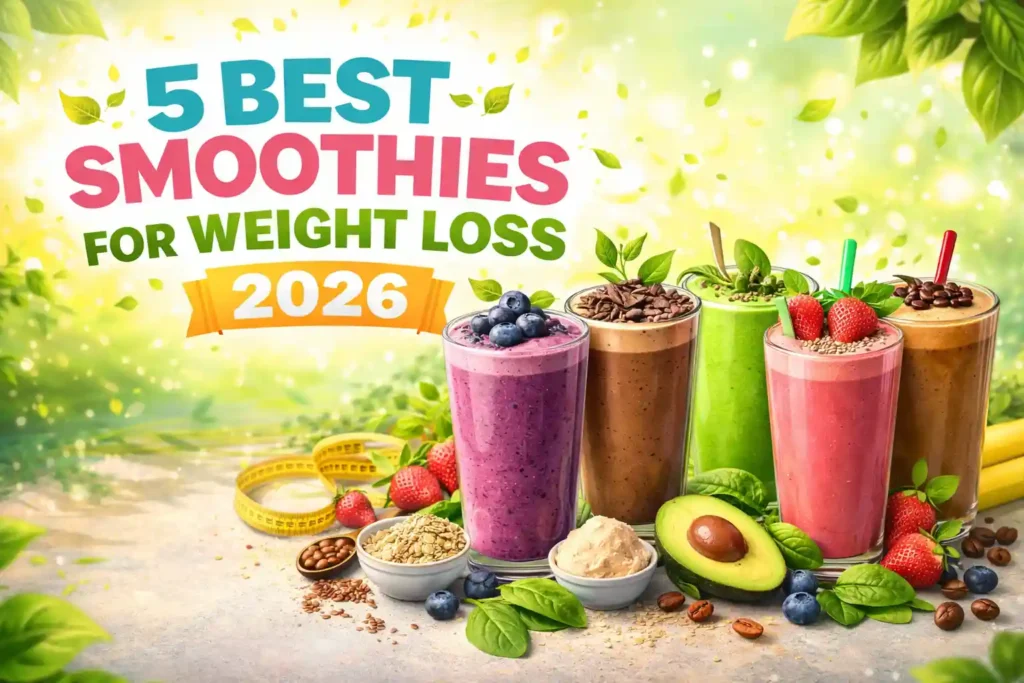
Smoothies for weight loss are the buzz right now. But in reality, most people using them are getting it horribly wrong.
By March of 2026, search trends were showing a noticeable shift. Americans were no longer searching on the internet for just any old smoothie recipe. They were wondering whether smoothies are actually going to help them lose weight, or if they’re just quietly adding to the problem of weight gain.
We took a look at all the research on smoothies and weight loss. And to be honest, the answer is pretty simple.
Smoothies can help with weight loss, but only if they are made with some basic rules in mind: keeping calorie count in check, high protein content, and as little sugar as possible.
Leave it to chance, and they can actually hinder progress – use them right, and dieting just got a whole lot easier.
Do smoothies actually work for weight loss?
Smoothies can help with weight loss – but only if they’re part of a calorie deficit and leave you feeling full.
Here’s the thing that really stood out to us: when you look at research from the NIH, it shows that liquid calories just don’t fill us up the same as solid food. This means you can drink a smoothie and still be hungry a short while afterwards.
That’s the main problem most weight loss advice ignores.
When Smoothies are actually useful:
- Tracking calories is easy. And it’s easy to keep portion sizes under control, too.
- Protein is easy to get in. And high levels of protein will help reduce hunger and keep your muscle mass.
- Convenience wins. Replacing high-calorie breakfasts or snacks with a smoothie can pay off.
When smoothies just don’t cut it:
- Too much fruit is an issue. Adds a lot of sugar in a hurry.
- Hidden calories can sneak up on you. Nut butters and sweeteners can add up fast.
- They don’t keep you full. You might just find yourself getting hungrier later.
And the truth? – It all just comes down to this. Smoothies aren’t a magic bullet for weight loss – they only work when they’re specifically built to help you lose weight.
What is a weight loss smoothie (and what should it contain)?
A weight loss smoothie is a super-low-calorie, high-protein drink designed to help control hunger and replace a meal.
Here’s a quick rundown you can scan:
| What it is | A structured smoothie designed for calorie control |
| Main claim | Helps reduce weight by replacing high-calorie meals |
| What research says | Works only when calories and protein are controlled |
| Key benefit | Easy way to increase protein intake |
| Main limitation | Less filling than solid food |
| Best for | Busy US adults replacing breakfast or snacks |
| Should avoid | People using high-sugar or untracked recipes |
| Bottom line | Smoothies may help with weight loss, but only when built correctly. Most common recipes don’t meet this standard. |
The bottom line is – smoothies may help with weight loss, but most of the smoothie recipes out there just don’t get it right.
Digging deeper into the studies, three key factors really matter:
- Protein (20-30g). Helps control hunger and supports your muscle mass.
- Fiber (has to be there). Slows down digestion and keeps you full longer.
- No (or very little) sugar. Helps stop energy spikes and crashes.
Miss out on one of these, and your smoothie will stop working as a weight loss tool.
5 best smoothies for weight loss in 2026 (tested approach)
These aren’t exactly the kind of ‘healthy-looking’ recipes you’d usually find. Each one has been put together with fat loss in mind.
1. High-Protein Green Smoothie
- Calories: About 220
- Ingredients: Protein powder, a handful of spinach, a green apple, chia seeds, and water to drink
- What makes it work: You get a high dose of protein with very little sugar – that helps keep your hunger under control.
2. Berry Low-Sugar Smoothie
- Calories: Around 200
- Ingredients: Protein powder, mixed berries, a spoonful of flaxseeds, almond milk
- Why it works: This smoothie has a lower glycemic load, which means it won’t cause a huge spike in your blood sugar levels – that in turn helps stop cravings.
3. Coffee Protein Smoothie
- Calories: About 180
- Ingredients: A shot of black coffee, protein powder, half a banana, and a handful of ice
- Why it works: Caffeine in this smoothie helps suppress your appetite and gives you a boost of energy
4. Oats Meal Replacement Smoothie
- Calories: 250
- Ingredients: Protein powder, oats, banana, almond milk
- Why it works: The high fibre content from the oats helps keep you feeling full for longer
5. Chocolate Craving Control Smoothie
- Calories: About 190
- Ingredients: Chocolate protein, cocoa powder, almond milk, ice
- Why it works: This smoothie reduces sugar cravings without adding extra calories – perfect for the sweet-tooths out there
Protein vs fruit smoothies — which is better for fat loss?
Protein smoothies are the way to go for weight loss because they really help you control your hunger and keep your calorie intake in check
Here’s a quick comparison:
| Type | Calories | Satiety | Fat Loss Impact |
|---|---|---|---|
| Protein smoothie | Moderate | High | Supports weight loss |
| Fruit smoothie | High (often) | Low | May slow progress |
Everyone says to go for the fruit smoothies, but the latest nutrition research says that protein intake is actually the key to controlling hunger.
That’s the crucial difference most people seem to get wrong.
Why do smoothies sometimes cause weight gain?
Smoothies cause you to gain weight because they trick you into consuming more calories without you even realizing it.
What’s really common? This:
- Too much fruit is involved. Sugar content adds up fast, even from what you thought was a healthy source
- The peanut butter gets out of hand. A little extra spoonful can easily add 100- 200 calories
- No protein in the mix. You get hangry fast – which means more eating is just around the corner
- You’re drinking calories on top of your meals. That’s probably the biggest mistake of all
Warning: a smoothie can easily turn into a 600-calorie drink without you even knowing
When should you drink smoothies for weight loss results?
Timing is not as important as usage. Smoothies work best when they replace your meals, not when you’re just adding them in.
- Breakfast: Switch out high-carb meals for a smoothie.
- Post-Workout: Add protein efficiently.
- Replace meals: Only if it’s balanced with some protein and fibre.
What we’ve found is that people who just randomly drink smoothies without a plan see no results. Those who make a plan and use it strategically see the benefits
Smoothie diet plan results — do they actually work?
Smoothie diets do work in the short term because they cut calories, but that’s not because of any special fat-burning property of smoothies themselves.
What happens is:
- Initial weight loss comes from cutting calories.
- Hunger comes back if protein is too low.
- Adhering to a smoothie diet long-term is a real challenge.
Is it any wonder that the evidence is a bit mixed? Some studies show improved diet quality, but most don’t show long-term weight loss unless the calorie intake is kept under control.
Free PDF — 5 smoothie recipes for weight loss (how to use them)
If you want results, consistency matters more than variety.
Use this simple system:
- Pick 2–3 smoothies. Rotate them during the week
- Track calories honestly. Guessing leads to errors
- Use as a replacement. Not an addition to meals
That’s what actually makes a difference.
Download Free Smoothies Recipe For Weight Loss PDF
Final verdict: best smoothies for weight loss in 2026
The best smoothies for weight loss in 2026 are high-protein, low-sugar, and calorie-controlled.
We’ve covered a lot of topics like this. Most trends fade quickly. Smoothies don’t — because they solve a real problem: convenience.
But they only work when used correctly.
No ingredient burns fat. No recipe guarantees results. Calorie control still decides everything.
Use smoothies as a tool, not a shortcut.
FAQs
What smoothies are best for weight loss?
The best smoothies for weight loss are high in protein and low in sugar. Recipes with 20–30g protein and under 250 calories work best.
Are smoothies good for weight loss or not?
Yes, but only when they are calorie-controlled and protein-rich. Most common recipes are too high in sugar.
Why am I gaining weight while drinking smoothies?
You are likely consuming more calories than you realize. Ingredients like fruit, nut butter, and sweeteners add up quickly.
Low-calorie smoothies for weight loss recipes?
Low-calorie smoothies usually stay between 180–250 calories and include protein powder, low-sugar fruits, and fiber sources.
Download smoothie recipes PDF for weight loss for free
You can create a simple PDF using structured recipes like the ones above. Focus on consistency rather than adding too many variations. And also, you can download the smoothie recipes PDF we have created; it is free for everyone.

Recent Posts