
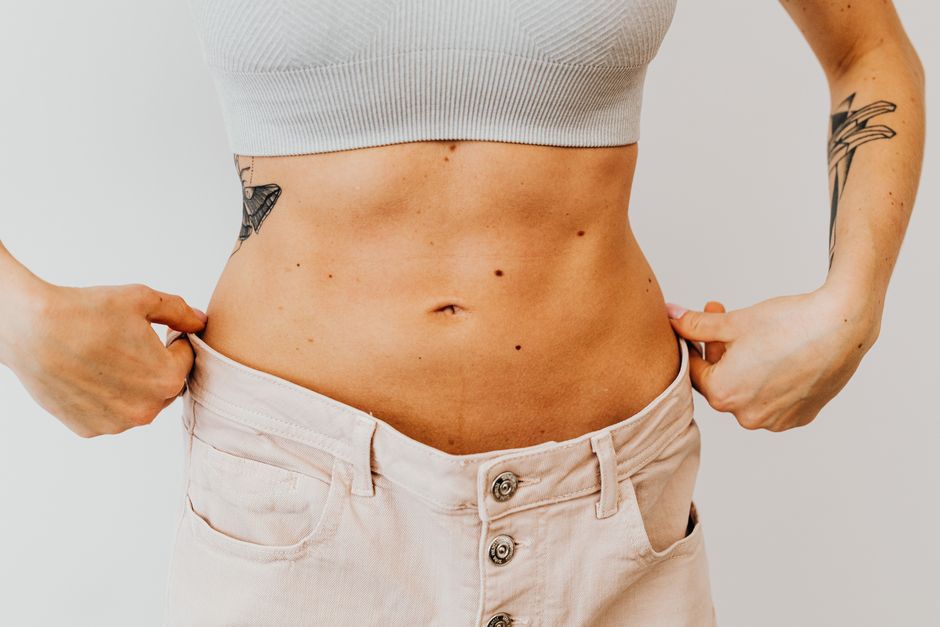
Losing 80 pounds is a major achievement that changes your health and your life. But it also raises a common concern: will loose skin be part of the result? The short answer is that some loose skin is likely after an 80-pound loss, but the amount varies widely from person to person. Your age, genetics, how fast you lost the weight, and where you carried the weight all play a role in how your skin responds.
Why Does Loose Skin Happen After Major Weight Loss?
Your skin is your body’s largest organ, and it is built to stretch. Pregnancy, muscle growth, and weight gain all stretch the skin to accommodate a larger body size. When you gain weight steadily, your skin grows new cells and stretches gradually to cover the larger surface area.
Losing 80 pounds creates the opposite problem. The fat that was pushing against your skin from the inside is gone, but the skin itself has already stretched. Skin does have some natural elasticity, meaning it can snap back to a smaller size. But that elasticity has limits, and an 80-pound loss often exceeds those limits.
The skin is made of collagen and elastin, two proteins that give it structure and stretch. When skin stretches significantly, these proteins can become damaged or lose their ability to recoil. The result is skin that hangs loosely over the areas where fat was lost.
How Much Loose Skin Is Typical After 80 Pounds Lost?
There is no single answer that applies to everyone. Some people lose 80 pounds and have minimal loose skin. Others have significant excess skin that requires surgical removal. Most people fall somewhere in between.
Research on this topic is limited, but clinical experience gives us a general picture. Loose skin after major weight loss most commonly appears on the abdomen, arms, thighs, and breasts. The abdomen tends to show the most noticeable loose skin because it stretches the most during weight gain, especially in people who carried excess weight around their midsection.
The severity depends on several factors that you cannot control. Your age matters because skin elasticity naturally declines as you get older. Collagen production slows with age, making it harder for skin to bounce back. Your genetics also play a significant role, as some people simply have more elastic skin than others.
Does the Speed of Weight Loss Affect Loose Skin?
A common belief is that losing weight slowly prevents loose skin while losing weight quickly makes it worse. The evidence does not clearly support this idea.
Your skin does not have a memory of how fast fat disappeared. What matters more is the total amount of weight lost and how long your skin was stretched. Whether you lost 80 pounds over six months or two years, the total stretch on your skin is roughly the same.
That said, losing weight very rapidly can affect your muscle mass and overall body composition. When weight loss includes significant muscle loss, the skin may appear looser because there is less tissue underneath to fill it out. This is why strength training during weight loss is often recommended, not because it directly tightens skin, but because it helps preserve muscle that keeps your body looking firmer.
Can Exercise and Diet Prevent Loose Skin?
No specific exercise or diet has been proven to prevent loose skin after an 80-pound loss. This is a hard truth that many people do not want to hear, especially when social media is full of products and routines claiming otherwise.
Strength training can improve how your body looks after weight loss. Building muscle in your arms, legs, and core can fill out some of the space left by lost fat, which may reduce the appearance of loose skin. But muscle cannot replace the skin itself. If the skin has stretched beyond its elastic limit, no amount of exercise will tighten it.
Staying hydrated and eating a diet with adequate protein may support skin health, but the evidence that these habits prevent loose skin is weak. Protein provides the building blocks for collagen, but eating more protein does not automatically mean your skin will produce more collagen or tighten up.
How Long Does It Take for Skin to Tighten After Weight Loss?
Skin does continue to tighten for months after weight loss ends. This process is not instant, and it can be frustrating for people who expect to see their final results right away.
Most of the skin tightening that is going to happen occurs within the first 12 to 24 months after reaching your goal weight. During this time, your skin gradually shrinks and adapts to your new body size. If significant loose skin remains after two years at a stable weight, it is unlikely to improve further on its own.
This timeline matters for people considering surgery. Most surgeons recommend waiting until your weight has been stable for at least six to twelve months before considering skin removal procedures. Operating too soon, while your weight is still changing, can lead to poor results.
What Are Your Options If Loose Skin Is Significant?
For people with mild to moderate loose skin, no treatment may be needed. The skin may be a cosmetic concern, but it does not cause health problems. Learning to accept the skin as part of your weight loss journey is a valid option, and many people choose this path.
For people with more significant loose skin, surgery is the only option that physically removes the excess tissue. Procedures like abdominoplasty, commonly called a tummy tuck, remove excess skin from the abdomen. Arm lifts, thigh lifts, and breast lifts address other areas of the body.
These are major surgeries with real risks, including infection, scarring, blood clots, and complications from anesthesia. They are also expensive, and insurance rarely covers them because they are considered cosmetic procedures. Recovery can take weeks, and the results leave permanent scars, though surgeons place them in areas where they can be hidden by clothing.
Before considering surgery, it is important to have realistic expectations. Body contouring surgery improves the shape of your body by removing excess skin, but it leaves scars and requires a significant recovery period. Speaking with a board-certified plastic surgeon is the only way to get an accurate assessment of your specific situation.
Does Age or Smoking Affect Skin Elasticity?
Age is one of the strongest predictors of loose skin after weight loss. A person who loses 80 pounds at age 25 will generally have better skin elasticity than someone who loses the same amount at age 55. This is because collagen production decreases as we age, and the skin’s ability to rebuild its structure slows down.
Smoking also damages skin elasticity. Tobacco smoke breaks down collagen and impairs blood flow to the skin, making it harder for skin to recover from stretching. People who smoke and lose a significant amount of weight are more likely to have loose skin than nonsmokers of the same age.
Sun damage is another factor. Chronic sun exposure breaks down collagen over time, which means areas of skin that have been heavily sun-exposed may have less elasticity when weight loss occurs.
Is Loose Skin a Sign of Unhealthy Weight Loss?
No. Loose skin is a normal consequence of significant weight loss, not a sign that you did something wrong. It does not indicate that you lost weight too quickly, that you did not exercise enough, or that your diet was unhealthy.
Loose skin is simply what happens when skin stretches to accommodate a larger body and then has to adjust to a smaller one. It is a physical reality of major weight change, and it affects many people who successfully lose a large amount of weight.
What matters most is that you lost the weight in a way that was sustainable and healthy. If you did so through balanced eating and regular physical activity, you have improved your health regardless of what your skin looks like. The skin is a cosmetic issue, not a health issue.
Frequently Asked Questions
Will loose skin after losing 80 pounds go away on its own?
Some tightening can happen over 12 to 24 months after weight loss, but skin that remains loose after that time is unlikely to improve significantly without surgery.
What age group has the most loose skin after weight loss?
Older adults tend to have more loose skin because collagen production and skin elasticity naturally decline with age.
Does building muscle reduce the appearance of loose skin?
Building muscle can fill out areas under the skin and improve your overall shape, but it cannot tighten skin that has already stretched beyond its elastic limit.
When should I consider surgery for loose skin?
Most surgeons recommend waiting until your weight has been stable for at least six to twelve months before considering skin removal surgery.
