
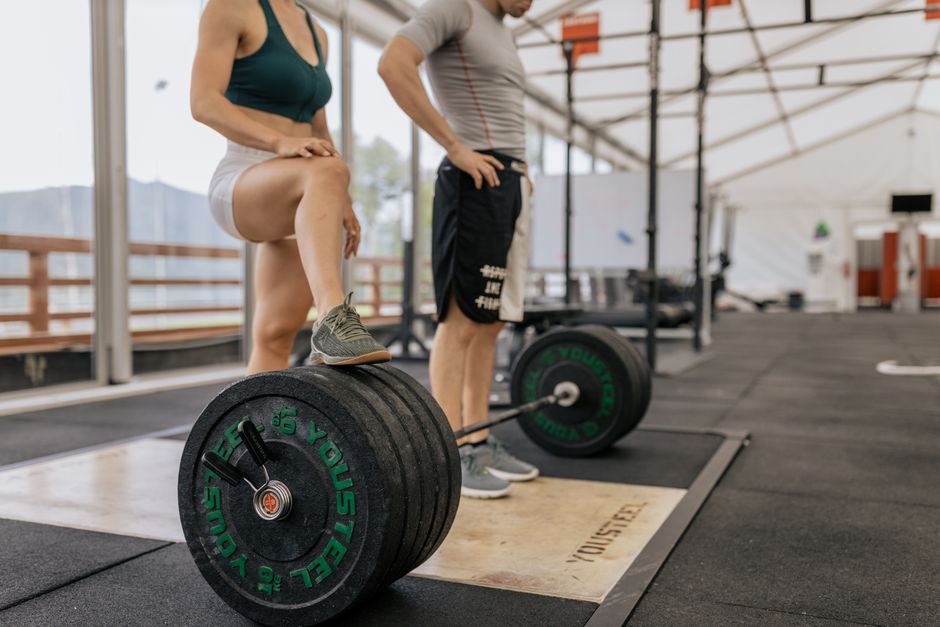
Weight training builds muscle. It also raises your resting metabolism a little, because muscle burns more calories than fat at rest. But it does not specifically target the fat around your midsection. Spot reduction — the idea that working a body part burns the fat sitting over it — has been tested and does not hold up. Weight training helps you lose fat overall when it supports a calorie deficit. Where that fat comes off, and in what order, is largely out of your control.
Will Weight Training Burn Belly Fat?
Indirectly, yes — as part of a plan that creates a calorie deficit. Directly, no. Your body does not burn fat from the muscle group you happen to be working.
Fat is stored as triglycerides inside fat cells distributed across your body. When you need energy, hormones signal those cells to release fatty acids into the bloodstream. Your muscles and organs then take up those fatty acids and oxidize them for fuel. Nothing about that process is local. A bicep curl does not pull fat off your arm, and a crunch does not pull fat off your abdomen.
This has been examined in controlled studies. One well-known trial had participants perform an intensive abdominal exercise program for several weeks. Researchers measured fat in the trained abdominal area and in untrained areas. The trained area did not lose more fat than the untrained areas. The finding matches what the physiology predicts: fat is mobilized systemically, not locally.
So weight training earns its place through a different route. It helps you preserve muscle while you lose fat. It contributes to the calorie deficit. It changes how your body looks at a given weight. It just does not choose where the fat comes from.
Why Belly Fat Is Different From Other Fat
Not all fat behaves the same way. The fat just under your skin — subcutaneous fat — is the soft, pinchable kind. The fat stored deeper inside your abdomen, wrapped around your organs, is visceral fat. Visceral fat is more metabolically active and is more strongly linked to health problems than subcutaneous fat.
This matters because visceral fat responds to overall fat loss, and it often responds relatively early. Some research indicates that visceral fat tends to come off with weight loss somewhat more readily than stubborn subcutaneous fat in areas like the hips and thighs. That is a general pattern, not a guarantee for any individual.
It also matters that belly fat has a strong genetic and hormonal component. Where you store fat first, and where you lose it last, is influenced by genetics, sex, age, and hormones. Men tend to accumulate more visceral and abdominal fat. Women tend to accumulate more in the hips and thighs, though this shifts after menopause. These patterns are not something a training program overrides.
What Weight Training Actually Does for Fat Loss
It supports fat loss in a few concrete ways, and it is worth being precise about each one.
- Muscle preservation. When you eat in a calorie deficit, some of the weight you lose can be muscle. Resistance training signals your body to hold onto muscle while fat comes off. This is one of the better-supported benefits of lifting during a diet.
- Calories burned during the session. A weight-training session burns calories, though the exact amount varies widely with intensity, volume, and body size.
- A modest effect on resting metabolism. Muscle is more metabolically active than fat at rest, so adding muscle raises resting energy expenditure slightly. The size of this effect is often overstated in fitness marketing. It is real but small — typically a minor fraction of daily calorie burn, not a dramatic shift.
- Body composition. Two people can weigh the same and look very different. Weight training shifts the ratio of muscle to fat, which changes appearance even when the scale barely moves.
What weight training does not do is out-burn a poor diet. It is difficult to exercise your way out of a sustained calorie surplus. Fat loss requires that you take in fewer calories than you use, and training is a tool that supports that, not a replacement for it.





Do You Need Cardio to Lose Belly Fat?
No. You can lose fat with weight training plus a calorie deficit and no dedicated cardio at all. But cardio can help, and the reason is straightforward: it adds to the calorie deficit.
Aerobic exercise tends to burn more calories per session than resistance training for most people. That makes it an efficient way to widen the gap between calories in and calories out. It also has independent benefits for heart and lung health that weight training does not fully replace.
The most practical approach for most people is both. Lift to preserve and build muscle. Add cardio to help create the deficit. Keep the diet in a range that produces steady, sustainable loss. None of these pieces has to be extreme.
Why You Cannot Target Belly Fat
The body releases fat from stores across the body in response to a whole-body energy deficit. It does not take fat from the area you are exercising. This is one of the most persistent myths in fitness, and it has been directly tested.
Some studies have looked at whether training one limb changes fat around that limb. The trained side does not lose more fat than the untrained side. The muscle underneath may grow, but the fat layer above it does not shrink preferentially.
This is why endless crunches do not produce visible abs on someone carrying extra fat. The crunches strengthen the abdominal muscles. They do not remove the fat covering them. Visible abs are mostly a function of overall body fat level, which is driven by diet and total energy balance — plus genetics, which determine the shape and insertion points of the muscles themselves.
What Actually Moves the Needle
If your goal is less belly fat, the levers that matter are not complicated, even if they are not easy.
Create a calorie deficit. This is the requirement. A deficit that is moderate and sustainable tends to work better than an aggressive one you cannot maintain. Very large deficits also increase the risk of losing muscle, which is where weight training helps.
Eat enough protein. Protein supports muscle retention during weight loss and tends to be more filling per calorie. Official dietary guidance sets a general reference intake, and higher intakes are commonly used during fat loss, though individual needs vary with body size and activity.
Lift regularly. Two to three sessions per week covering the major muscle groups is a reasonable general starting point for most healthy adults. Progressive overload — gradually increasing weight, reps, or sets over time — is what drives adaptation.
Be patient with the timeline. Fat loss that lasts tends to be gradual. Rapid loss is often followed by regain. There is no reliable way to force belly fat off on a fast schedule, and programs that promise it are usually selling something.
Address sleep and stress. Chronic poor sleep and high stress are associated with higher abdominal fat and make appetite harder to manage. The evidence here is strongest for associations rather than a clean cause-and-effect, but the practical case for protecting sleep is solid.
The Honest Bottom Line on Spot Reduction
Weight training is one of the better things you can do for your body. It builds and preserves muscle, supports a healthy metabolism, and improves how you look at any given weight. It helps with belly fat the same way any effective fat-loss approach does — by contributing to an overall calorie deficit and protecting muscle while you lose.
What it will not do is erase fat from your midsection on command. No exercise does that. The shape of your fat loss is set by your genetics and hormones, and the timing is set by your overall energy balance. Anyone telling you otherwise is either misinformed or selling a product.
Frequently Asked Questions
Can weight training reduce belly fat on its own?
Only if it helps create a calorie deficit. Weight training builds and preserves muscle, but fat loss requires eating fewer calories than you burn.
Do crunches burn belly fat?
No. Crunches strengthen abdominal muscles but do not remove the fat over them, because fat is lost from the whole body rather than the area being trained.
How long does it take to lose belly fat with weight training?
There is no set timeline, since it depends on your calorie deficit, starting body fat, genetics, and consistency. Gradual loss over months is more sustainable than rapid loss.
Is cardio or weight training better for belly fat?
Neither is clearly better for targeting belly fat specifically. Cardio tends to burn more calories per session, while weight training helps preserve muscle, so combining both is often most effective.
