
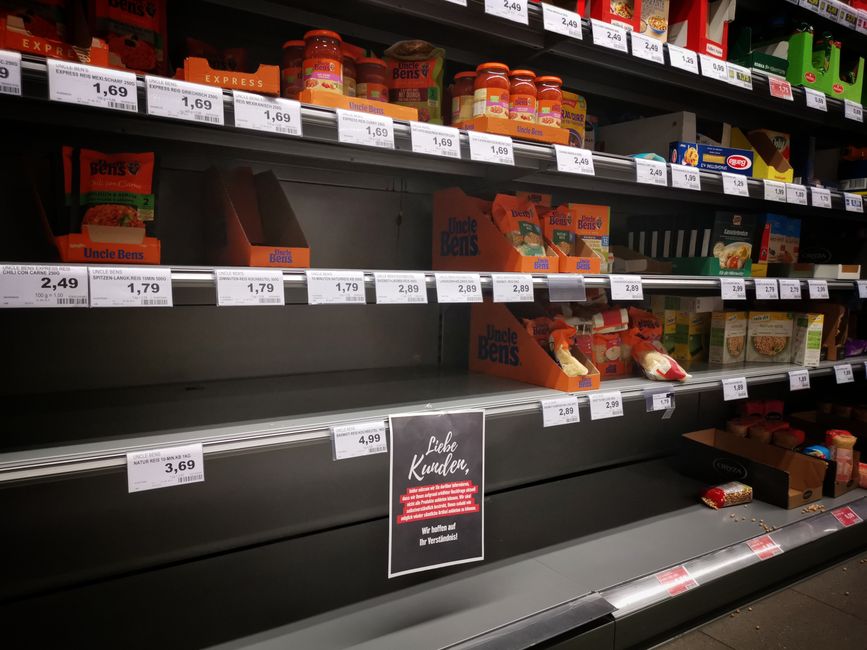
Will there be a food shortage in the future? The answer depends on where you live, what you can afford, and how the next few decades unfold. Globally, farms already produce enough calories to feed the world’s population. The bigger problem is that food is not distributed evenly, and climate change, water scarcity, and conflict are making that gap harder to close. A global shortage of food is not inevitable. Local and regional shortages are already happening and may become more common.
Will There Be A Food Shortage In The Future?
There is no single answer, because “food shortage” means different things in different places. A shortage in a war zone looks nothing like a shortage in a wealthy country with well-stocked grocery stores.
Global food production has risen for decades. The United Nations Food and Agriculture Organization tracks this, and its data show that world agricultural output has generally kept pace with or exceeded population growth. In plain terms, the planet grows enough food. The failure is in getting it to people who need it, and in making it affordable for them.
What is likely to increase is food insecurity — the condition where people cannot reliably access enough safe, nutritious food. That is already a reality for a large share of the global population, and the numbers have worsened in recent years after decades of decline.
The honest position: a worldwide shortage of calories is unlikely in the near term. Regional shortages, price spikes, and worsening hunger in vulnerable areas are likely and in some places are already underway.
What Actually Causes Food Shortages?
Food shortages rarely come from a single cause. They come from several pressures stacking on top of each other.
The most common drivers include:
- Conflict. War disrupts planting, harvesting, transport, and markets. It is one of the strongest and most consistent drivers of acute hunger.
- Climate extremes. Droughts, floods, and heat waves can wipe out a season’s harvest in a region.
- Economic shocks. When food prices rise faster than wages, people who were food secure can quickly become food insecure.
- Poverty and inequality. Even where food exists, people who cannot afford it go hungry.
- Poor infrastructure. Without roads, storage, and refrigeration, a large share of food is lost before it reaches anyone.
Notice that most of these are not about how much food the world grows. They are about whether food can reach people and whether people can pay for it. That distinction matters, because it shapes what solutions actually work.
Is Climate Change Making Food Shortages Worse?
Climate change is already affecting food systems, and the effects are expected to grow. This is one area where the science is fairly consistent.
Higher temperatures, shifting rainfall, and more frequent extreme weather affect crops in several ways. Heat stress can reduce yields of staple crops like wheat, rice, and maize. Drought reduces water available for irrigation. Floods can destroy fields and contaminate water supplies. Warmer conditions can also allow some crop pests and diseases to spread into new regions.
At the same time, higher levels of carbon dioxide in the atmosphere can, in some conditions, increase plant growth. The catch is that this growth does not always translate into better nutrition. Some research indicates that elevated CO2 can lower the concentration of certain nutrients — including some minerals and protein — in staple crops. The full implications are still being studied, and the evidence is not uniform across all crops.
The net effect is not a simple story of “less food everywhere.” It is more like a shifting map. Some regions may see modest gains. Others, especially already hot and dry areas, face real declines in what they can grow.
Which Regions Are Most at Risk?
Risk is not evenly spread. Some regions face much higher exposure to food insecurity than others.
Areas that tend to be most vulnerable include:
- Parts of sub-Saharan Africa, where agriculture often depends on rainfall rather than irrigation
- South Asia, where dense populations and heat exposure combine
- Small island nations, which rely heavily on imported food
- Conflict-affected regions anywhere in the world
Wealthier countries are not immune, but their risk profile is different. They tend to have more diversified supply chains, more storage capacity, and more financial cushion. That does not mean prices stay flat or that every product is always available. It means the risk of outright shortage is lower, while the risk of higher prices and reduced variety is real.
One point that often gets lost: food insecurity in wealthy countries is usually about income, not supply. Food is on the shelves. Some people cannot afford it.
Could Technology and Farming Changes Prevent Shortages?
Improved farming methods can help, though the evidence for any single fix is mixed.
Several approaches are being studied and applied:
- Better seeds and crop varieties bred for drought or heat tolerance
- More efficient irrigation that uses less water per unit of food
- Reduced food waste, since a significant share of food is lost or thrown away
- Improved storage and transport in regions where post-harvest losses are high
- Precision agriculture that targets water, fertilizer, and pesticides more precisely
Reducing food loss and waste is one of the more straightforward opportunities. A large fraction of food produced globally is never eaten — lost on farms, spoiled in transit, or discarded by consumers. Cutting that loss does not require new technology so much as better systems.
That said, no single technology solves the problem. Claims that a specific innovation will “end hunger” are usually overstated. The evidence supports incremental improvement, not a fix-all.
What Does the Evidence Actually Say About the Future?
Projections vary widely, and it is worth being honest about that.
Most modeling studies suggest that global food production can keep up with demand under many scenarios, but with growing regional strain and rising prices. The uncertainty is real. Outcomes depend heavily on how much the climate warms, how quickly populations grow, how much conflict occurs, and how food systems adapt.
What is more certain is the direction of risk. Climate stress, water limits, and conflict are expected to increase pressure on food systems. Whether that becomes a global shortage or a patchwork of regional crises depends on choices made now.
Some projections warn that without significant changes, hunger could rise substantially by mid-century. Others are more optimistic, pointing to slowing population growth and improving yields. Both are plausible depending on assumptions. Anyone who tells you they know exactly what will happen is overstating their certainty.
What Can Individuals Realistically Do?
Individual actions do not prevent global shortages, but some choices reduce pressure on the food system.
- Reduce food waste at home. Plan meals, store food properly, and use leftovers.
- Buy what you will actually eat. Overbuying leads to spoilage.
- Support food recovery programs. Many communities have groups that redirect surplus food.
- Stay informed without panicking. Stockpiling during shortages makes them worse for everyone.
It is worth noting that panic buying is itself a cause of short-term shortages. When large numbers of people buy more than they need, shelves empty even when supply is adequate. This happened in several countries during the early pandemic. The shortage was real on the shelf, but it was driven by demand, not by a lack of food.
The most effective large-scale actions are not individual. They involve policy, infrastructure, conflict resolution, and climate mitigation. Those are collective decisions, not personal ones.
Frequently Asked Questions
Will there be a global food shortage in the future?
A worldwide shortage of calories is unlikely in the near term, since global production generally keeps pace with population. Regional shortages and rising food insecurity are more likely and are already occurring in some areas.
What is the biggest cause of food shortages?
Conflict is one of the strongest and most consistent drivers of acute food shortages. Climate extremes, economic shocks, and poverty also play major roles.
Is climate change going to cause food shortages?
Climate change is expected to increase pressure on food systems, especially in already hot and dry regions. The effects will vary by location, with some areas seeing modest gains and others facing real declines.
Should I stockpile food just in case?
Large-scale stockpiling can make shortages worse by driving up demand and emptying shelves. Keeping a reasonable emergency supply is sensible, but hoarding is not.
