
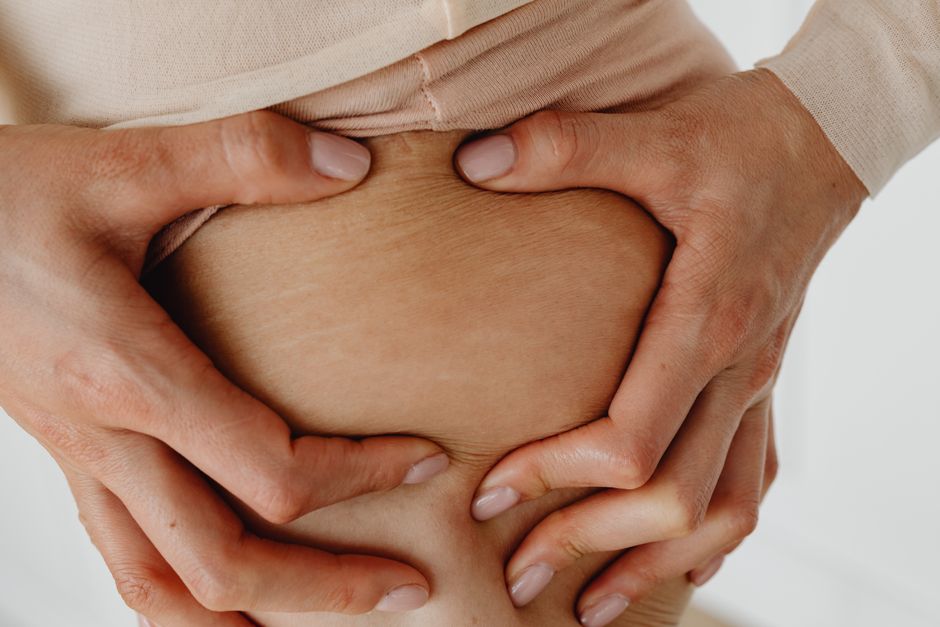
Pregnancy stretch marks are a common concern, and the honest answer is that they do not completely go away on their own, but they almost always fade significantly over time. Most women will see their stretch marks become less noticeable within 6 to 12 months after giving birth, shifting from a red or purple color to a lighter, silvery-white shade. The goal is not total removal, but rather managing their appearance and understanding what is normal during the postpartum period.
What Causes Pregnancy Stretch Marks?
Stretch marks, known medically as striae gravidarum, form when the skin stretches faster than it can naturally produce collagen and elastin. During pregnancy, the abdomen, breasts, hips, and thighs expand rapidly, putting physical tension on the dermis, the middle layer of the skin. This tension causes the collagen fibers to tear, which triggers an inflammatory response that shows up as those characteristic red or purple lines.
Hormones also play a role. Pregnancy increases cortisol levels, which can make the skin more fragile and less elastic. Genetics are the single biggest predictor of whether you will get stretch marks. If your mother or sister had them, you are more likely to develop them too. Weight gain during pregnancy also matters, but genetics and skin type often matter more than total pounds gained.
Will Pregnancy Stretch Marks Go Away Completely?
No, stretch marks do not completely disappear. The tears in the dermis are permanent structural changes to the skin. However, the visible appearance changes dramatically over time. In the early postpartum months, the marks are often red, raised, and highly visible. As the body heals, blood vessels constrict and the inflammation subsides, leaving behind flat, pale, and less noticeable lines.
Most of the color fading happens in the first year after delivery. The marks will not return to perfectly normal skin, but they typically become so faint that they are only noticeable in certain lighting or when the skin is tanned. It is important to set realistic expectations. The goal is fading and flattening, not erasure.
How Long Does It Take for Stretch Marks to Fade?
The fading process is gradual. Within the first three months postpartum, you will likely notice the marks becoming less inflamed. By six months, the color typically shifts from red or purple to a lighter pink. By the one-year mark, most stretch marks have settled into their final appearance, which is usually a pale, silvery-white or pearl color.
The timeline varies from woman to woman. Some see significant fading within a few months, while others take up to two years to reach the final stage. The marks that were darkest during pregnancy tend to fade the most dramatically. The texture also changes. Raised marks flatten out as the skin remodels and produces new collagen over time.





What Treatments Actually Work for Postpartum Stretch Marks?
Treatments for stretch marks fall into two categories: topical products and medical procedures. The evidence for topical creams is limited. Most over-the-counter creams and oils moisturize the skin, which can improve texture and make the marks less noticeable, but they do not repair the underlying collagen damage. Some research suggests that creams containing hyaluronic acid or tretinoin may help improve early-stage stretch marks, but tretinoin is not safe to use while breastfeeding without a doctor’s approval.
Medical procedures have stronger evidence but are more expensive and invasive. Laser therapy and microneedling are the most commonly studied treatments. These procedures stimulate new collagen production in the dermis, which can improve both the color and texture of stretch marks. Results are not immediate and typically require multiple sessions. No treatment completely removes stretch marks, but these procedures can make them significantly less visible.
A consultation with a board-certified dermatologist is the best way to determine if a procedure is right for you. They can assess the age and type of your stretch marks and recommend a realistic treatment plan. Insurance does not cover these procedures because they are considered cosmetic.
What Can You Do at Home to Improve Their Appearance?
While no home remedy will erase stretch marks, daily moisturizing can improve the overall health and appearance of the skin. Well-hydrated skin looks smoother and reflects light more evenly, which makes stretch marks less noticeable. Products containing shea butter, cocoa butter, or vitamin E are popular choices, but the specific ingredient matters less than consistent use.
Gentle exfoliation can also help by removing dead skin cells and improving the skin’s surface texture. Sun protection is critical. Stretch marks that are exposed to UV light can darken and become more prominent. Applying sunscreen to the affected areas is one of the most effective and overlooked ways to keep them looking their best.
Maintaining a stable weight after pregnancy is also beneficial. Rapid weight loss can make stretch marks appear more prominent because the skin loses volume and the marks become more concentrated. Slow, steady weight management gives the skin time to adapt.
Do Stretch Mark Creams Work?
The marketing around stretch mark creams is aggressive, but the clinical evidence is weak. Most products do not penetrate deep enough into the dermis to affect collagen production. They work primarily as moisturizers. That said, moisturizing is not useless. It improves skin elasticity and can reduce itching and discomfort during the stretching phase.
Some research suggests that products containing centella asiatica, an herb used in traditional medicine, may help stimulate collagen production. The evidence is preliminary and more human trials are needed. Be wary of any product that claims to prevent or remove stretch marks completely. No topical product has been proven to do either.
How Do Postpartum Stretch Marks Differ From New Ones?
Treating a stretch mark depends heavily on its age. New stretch marks, those that are still red or purple, have active inflammation and increased blood flow. They respond better to treatment because the skin is still remodeling. Older stretch marks, those that have turned white or silver, are considered mature scars. They are harder to treat because the tissue has already settled.
This is why early intervention matters. If you want to pursue treatment, starting while the marks are still red gives you the best chance of meaningful improvement. Waiting until they turn white does not mean treatment is pointless, but the results will be more modest.
When Should You See a Dermatologist?
You should see a dermatologist if your stretch marks are causing significant distress or if they appear suddenly without an obvious cause. Sudden, widespread stretch marks outside of pregnancy can sometimes signal an underlying hormonal condition, such as Cushing’s syndrome, and deserve a medical evaluation.
If you are simply unhappy with the appearance of postpartum stretch marks, a dermatology consultation is a reasonable step. They can discuss treatment options, realistic outcomes, and costs. There is no medical necessity to treat stretch marks, but they can be a genuine source of body image distress, and that is a valid reason to seek help.
Frequently Asked Questions
Do pregnancy stretch marks ever go away?
No, they do not completely go away, but they fade significantly. Most become flat and pale within 6 to 12 months after giving birth.
What color do stretch marks turn after pregnancy?
They typically fade from red or purple to a lighter pink, and eventually settle into a silvery-white or pearl color. This color change is a sign the skin is healing.
Can I prevent stretch marks during pregnancy?
No method has been proven to fully prevent stretch marks. Genetics play the largest role, but maintaining a steady, healthy weight gain and keeping skin moisturized may reduce their severity.
Are stretch mark creams worth using after pregnancy?
They can improve skin hydration and texture, which makes marks less noticeable, but they cannot remove them. Laser therapy and microneedling have stronger evidence for improving appearance.
