
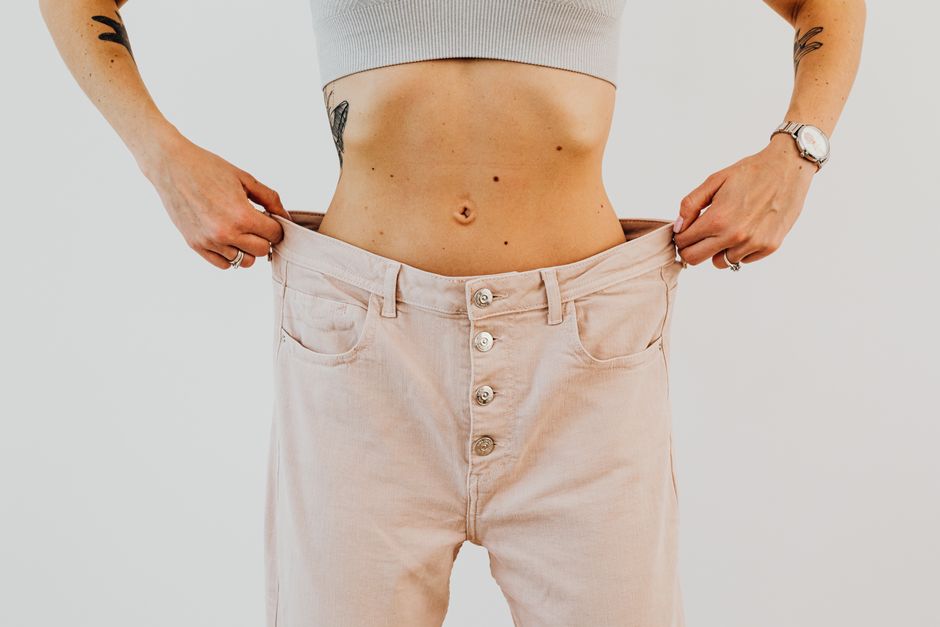
Losing 40 pounds does not automatically cause loose skin. Whether skin tightens or sags after weight loss depends on how fast the weight came off, how old you are, your genetics, how much sun damage your skin has, and how much of the lost weight was fat versus muscle. Some people lose 40 pounds and see minimal looseness. Others see noticeable sagging even after losing less. The difference is skin elasticity — and that varies enormously from person to person.
Skin is not a rubber band that snaps back on command. It is a living tissue with a limited ability to remodel. Understanding what actually drives that remodeling — and what does not — is the most useful thing you can do before, during, and after weight loss.
What Actually Determines Whether Skin Tightens After Weight Loss?
Skin elasticity is the main factor, and it is shaped by four things you cannot fully control: age, genetics, sun exposure, and how long the skin stayed stretched.
Skin gets its spring from two proteins. Elastin allows skin to stretch and recoil. Collagen gives it structure and strength. When skin is stretched for a long period — by weight gain, pregnancy, or rapid growth — these fibers can be damaged or depleted. Once elastin fibers are broken down, the body does not rebuild them the way it rebuilds collagen.
Age matters because collagen production declines steadily through adulthood. Sun exposure matters because ultraviolet radiation breaks down collagen and elastin over decades. Genetics matter because some people simply have more resilient connective tissue than others.
How long the skin was stretched is the factor people underestimate most. Someone who carried 60 extra pounds for two years has a different starting point than someone who carried it for twenty. The skin adapted to the larger body. It does not always adapt back at the same rate.
Will Losing 40 Pounds Always Cause Loose Skin?
No. A 40-pound loss is moderate — substantial enough to matter, but far from the extreme weight loss that makes loose skin nearly universal. Many people in this range see mild looseness in specific areas, and some see none.
The areas most likely to show changes are the abdomen, upper arms, thighs, and neck. These are regions where skin was stretched and where gravity and daily movement put ongoing stress on the tissue. Loose skin tends to be most visible where fat was lost quickly and where the skin was already thinner or more sun-damaged.
Here is the part that surprises people: losing 40 pounds slowly and steadily gives skin more time to remodel than losing it in a few months. That does not guarantee tight skin. It simply removes one of the factors working against you. The evidence for “slow loss equals better skin” is based on how skin remodeling works biologically, but no large trial has directly compared fast versus slow weight loss and measured skin tightening outcomes. Treat it as reasonable reasoning, not proven fact.
Does Age Really Change the Outcome?
Yes, and it is one of the strongest predictors. Younger skin has more collagen density and greater capacity to remodel. Skin in your twenties and thirties generally recovers better than skin in your fifties and sixties.
This is not about vanity. It is about connective tissue biology. Collagen synthesis slows with age, and the skin’s ability to reorganize after being stretched weakens. A 55-year-old who loses 40 pounds is more likely to notice looseness than a 30-year-old who loses the same amount.
The good news is that age is not the only variable. A 60-year-old with healthy, undamaged skin may do better than a 40-year-old with decades of sun exposure and smoking. Smoking is a well-established cause of collagen breakdown in skin, and it affects elasticity independent of age.
Can You Prevent Loose Skin While Losing Weight?
You can reduce some risk factors, but you cannot control the outcome. No method has been shown to reliably prevent loose skin during weight loss.
What the evidence supports:
- Lose weight gradually. Slower loss gives skin more time to adapt. This is biologically plausible and widely recommended by clinicians, though direct trial evidence is limited.
- Preserve muscle. Strength training and adequate protein intake help maintain lean mass during a calorie deficit. This does not tighten skin directly, but it supports the underlying structure that skin sits on.
- Protect skin from the sun. Daily sunscreen use limits further collagen and elastin breakdown. This is well established in dermatology.
- Do not smoke. Smoking accelerates skin aging and collagen loss. This is firmly established.
- Stay hydrated. Hydration supports skin barrier function, though it will not restore lost elastin.
What the evidence does not support: creams, lotions, or supplements marketed to “tighten skin” after weight loss. No study has confirmed that topical products restore elasticity lost from stretching. Some moisturizers improve the appearance of dry, crepey skin temporarily. That is a surface effect, not a structural fix.
Do Creams or Supplements Help Tighten Skin?
No topical cream or oral supplement has been shown to restore skin elasticity lost from weight loss. This is one of the clearest gaps between marketing and evidence in the skin care industry.
Collagen supplements are widely sold for skin. Some small studies have reported modest improvements in skin hydration and elasticity, but results are inconsistent, the studies are generally short, and none have demonstrated reversal of stretched skin after significant weight loss. The evidence is limited and does not support the claims made in advertising.
Firming creams typically contain moisturizers and sometimes retinol or peptides. Retinol has reasonable evidence for improving skin texture and fine lines over time. It has not been shown to tighten loose skin from weight loss. Moisturizers can make skin look temporarily smoother and more plump. That is a cosmetic effect, not a structural one.
If a product claims to “rebuild elastin,” be skeptical. Broken elastin fibers are not rebuilt by applying a cream. There is no established topical treatment that restores lost elastin.
When Does Loose Skin Improve on Its Own?
Some improvement happens naturally in the first year after weight loss, particularly if you are younger and lost weight gradually. Skin continues to remodel slowly, and mild looseness may become less noticeable over time.
After about 12 to 18 months, the skin has generally reached a stable state. Whatever remains at that point is unlikely to change much on its own. This timeline is a general clinical observation, not a precise rule — individual variation is wide.
For people with significant loose skin that causes discomfort, hygiene problems, or persistent distress, surgery (such as abdominoplasty or brachioplasty) is the only intervention with established evidence for removing excess skin. It is a major operation with real risks, recovery time, and cost. It is not a first-line answer for a 40-pound loss, and many people in this range do not need it.
What Should You Realistically Expect?
Most people who lose 40 pounds see some change in skin firmness, especially in the abdomen and arms, but many find it far less dramatic than they feared. The outcome sits on a spectrum shaped by factors largely outside your control.
Focus on what you can influence: the pace of weight loss, muscle preservation, sun protection, and not smoking. Accept that skin is not infinitely adaptable and that some looseness is a normal part of significant weight change for many people.
If loose skin is affecting your quality of life, talk to a dermatologist or a doctor experienced in weight management. They can assess your specific situation and discuss realistic options. Be wary of anyone promising a guaranteed fix — no such thing exists.
Frequently Asked Questions
Will losing 40 pounds always cause loose skin?
No, it does not always cause loose skin. The outcome depends on age, genetics, sun damage, how long the skin was stretched, and how quickly the weight was lost.
How can I tell if I will have loose skin after weight loss?
There is no reliable way to predict it in advance. Younger age, gradual weight loss, and minimal sun damage are associated with better skin recovery, but individual results vary widely.
Does loose skin from weight loss ever tighten on its own?
Some improvement can occur in the first year after weight loss, especially in younger people. After about 12 to 18 months, remaining looseness is unlikely to change much without surgery.
Do collagen supplements help tighten loose skin?
No clinical evidence confirms that collagen supplements reverse loose skin from weight loss. Some small studies suggest modest effects on skin hydration, but results are inconsistent and do not show structural tightening.
