
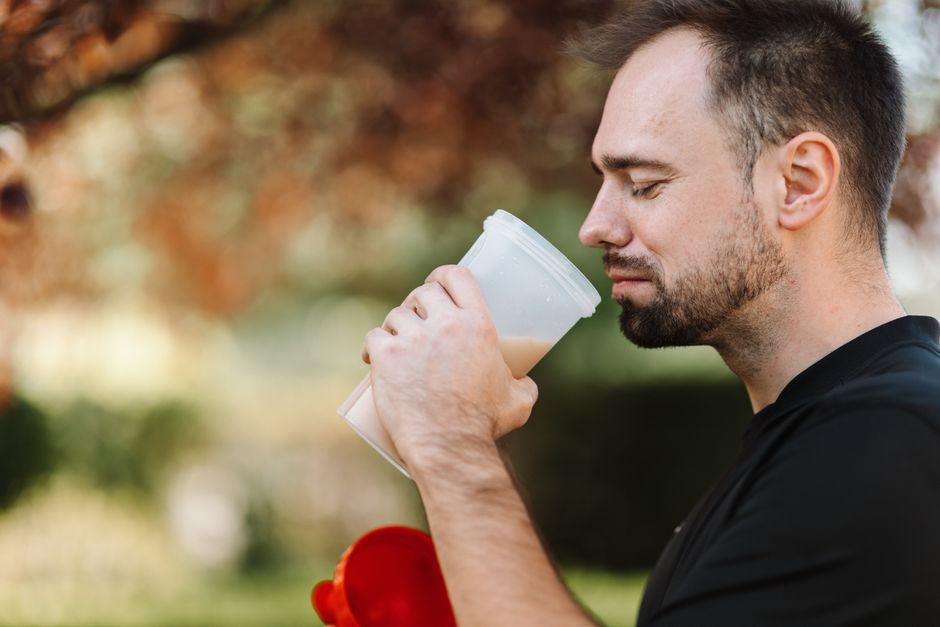
Protein shakes can help you build muscle, but only when they supply protein you were not already eating and your training gives your body a reason to grow. Muscle is built through resistance training plus enough total daily protein and calories. A shake is simply a convenient way to hit that protein target. If you already eat enough protein from food, adding a shake on top does not build extra muscle.
Will Drinking Protein Shakes Really Build Muscle?
Muscle growth requires two things working together: mechanical tension from resistance training and enough amino acids to repair and rebuild muscle tissue. A protein shake provides the second part. It does not provide the first.
When you lift weights, you create small amounts of damage and stress in muscle fibers. Your body responds by repairing those fibers and, over time, making them thicker and stronger. That repair process needs protein. Without enough protein, that process is limited. Without training, extra protein has little to build on.
The key variable is your total daily protein intake, not whether it comes from a shake or from chicken, eggs, or beans. Research consistently shows that total daily protein matters more than timing or source for most people. Shakes are popular because they are fast, portable, and easy to consume after a workout. That convenience is real. But convenience is not the same as necessity.
If you are already eating enough protein from food, a shake adds calories and cost without adding muscle. If you are falling short, a shake can close that gap efficiently.
How Much Protein Do You Actually Need to Build Muscle?
Most people who train with weights need more protein than the standard minimum, but not as much as supplement marketing suggests. The general range supported by research for healthy adults doing resistance training is roughly 1.4 to 2.0 grams of protein per kilogram of body weight per day. For a 70 kg (154 lb) adult, that is about 98 to 140 grams per day.
This is a range, not a precise target. Individual needs vary with training volume, age, and overall health. The upper end of that range may benefit older adults, who tend to lose muscle mass more easily and may respond less efficiently to protein.
Here is the part many people miss. Most Americans already eat a substantial amount of protein. Someone eating eggs at breakfast, a chicken sandwich at lunch, and fish at dinner may already be near or above their target without any shake. The shake only helps if there is a genuine gap.
Protein quality also matters. Animal sources and soy are complete proteins, meaning they contain all nine essential amino acids your body cannot make on its own. Most plant proteins are lower in one or more of these, so people eating mostly plant-based diets often need to combine sources or eat somewhat more total protein.
Does Protein Timing Matter for Muscle Growth?
The idea that you must drink a shake within 30 minutes of training is overstated. That window exists, but it is wider than most people think. Research indicates the anabolic window lasts several hours, not minutes.
What matters more is spreading protein across the day. Eating protein in several meals rather than cramming it all into one sitting appears to support muscle protein synthesis better. Some research suggests roughly 20 to 40 grams of high-quality protein per meal is a reasonable target for stimulating muscle protein synthesis in adults, though this figure varies by body size and age.
A shake after a workout is a practical way to get protein in around training. But if you ate a protein-rich meal an hour before your workout, the post-workout shake is not doing anything special. Your body is still processing that earlier protein.
For most people training regularly and eating protein throughout the day, timing is a minor factor compared to total daily intake and consistent training.




What Happens If You Drink Protein Shakes Without Lifting Weights?
You will not build meaningful muscle. Protein alone does not trigger muscle growth. The training stimulus is what tells your body to add muscle. Without that signal, extra protein is used for energy or stored, and excess calories are stored as fat.
This is one of the most common misunderstandings about protein supplements. The marketing often implies that protein equals muscle. It does not. Protein is the raw material. Training is the instruction. No instruction, no construction.
There is a related point worth making. Resistance training is the primary driver of muscle growth, but it also affects how your body uses protein. Trained muscle becomes more sensitive to the anabolic effects of protein. This is one reason beginners often see faster early gains than experienced lifters, even with similar protein intake.
Are Protein Shakes Better Than Whole Food Protein?
No. Whole foods provide protein along with other nutrients that shakes do not. But shakes are not worse either. For muscle building specifically, the evidence does not show a meaningful difference between protein from shakes and protein from food when total daily intake is matched.
Whey protein, the most common type in shakes, is a complete protein and is digested relatively quickly. Casein, another milk protein, digests more slowly. Some research suggests this difference may matter slightly for timing, but the practical effect on long-term muscle gain is small.
Plant-based protein powders vary in quality. Pea and soy proteins are generally complete or near-complete. Rice protein is lower in one essential amino acid. Blends of plant proteins often compensate for these gaps.
What shakes offer is convenience and a controlled dose. What they lack is the fiber, micronutrients, and satiety that come with whole food. Neither advantage nor disadvantage changes the basic equation: total protein and training drive muscle growth.
Do You Need Protein Shakes to Build Muscle?
No. You can build muscle without ever drinking a shake. Many people do. The requirement is adequate total protein and progressive resistance training. Shakes are one tool among many, and they are optional.
They become useful in specific situations.
- You struggle to eat enough protein from food due to appetite, time, or dietary preferences.
- You train soon after waking or before meals and want a convenient protein source.
- You are traveling or in situations where protein-rich food is hard to find.
- You are older and need more protein but find it difficult to eat enough.
In those cases, a shake fills a gap. In other cases, it adds cost and calories for no clear benefit.
One more thing. Protein shakes are not risk-free for everyone. People with kidney disease should talk to their doctor before increasing protein intake, because damaged kidneys may not handle the extra load well. For healthy kidneys, higher protein intakes within the ranges discussed here have not been shown to cause harm in otherwise healthy adults, though long-term high intake remains an area of ongoing research.
What Actually Builds Muscle?
Progressive resistance training is the primary driver. That means lifting weights or doing other resistance work consistently and gradually increasing the challenge over time. This is what signals your body to build and maintain muscle.
Eating enough total calories matters too. Building muscle requires energy. If you are eating in a large calorie deficit, muscle growth is difficult regardless of protein intake. Some protein intake above baseline helps preserve muscle during weight loss, but gaining muscle while losing significant weight is hard for most people.
Sleep and recovery also play a role. Muscle repair happens largely during rest. Chronic sleep deprivation appears to impair muscle protein synthesis and recovery.
Protein, including from shakes, supports these processes. It does not replace them. The hierarchy is clear: training first, total calories and protein second, timing and source third.
Frequently Asked Questions
Will drinking protein shakes build muscle without exercise?
No. Protein alone does not trigger muscle growth. Without resistance training, extra protein is used for energy or stored, and muscle mass will not increase.
How much protein do I need per day to build muscle?
Research generally supports about 1.4 to 2.0 grams of protein per kilogram of body weight per day for healthy adults doing resistance training. For a 70 kg adult, that is roughly 98 to 140 grams daily.
Are protein shakes better than eating real food for muscle?
No. When total daily protein is matched, shakes and whole foods produce similar muscle-building results. Shakes are convenient, but whole foods provide additional nutrients that shakes do not.
Do I need to drink a protein shake right after my workout?
No. The post-workout window is several hours wide, not minutes. Total daily protein intake matters far more than exact timing around your workout.
