
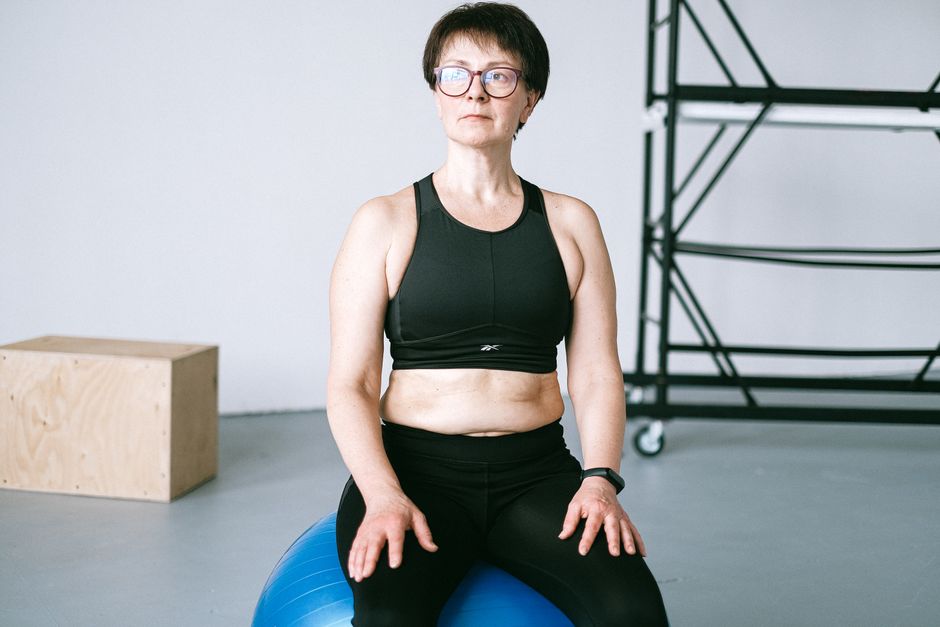
Core exercises build strength in the muscles that support your spine and trunk. They do not flatten your stomach, because spot reduction — losing fat from one specific area by exercising it — does not work. Whether your belly looks flat depends mostly on how much body fat you carry and where your body stores it, and both are shaped by genetics, overall energy balance, hormones, and age rather than by how many crunches you do.
That answer surprises people, and it runs against a lot of fitness marketing. The good news is that core training is still worth doing, just for different reasons than the ones usually advertised. Here is what the evidence actually supports, and what it does not.
Will Core Exercises Flatten Your Stomach?
No. Core exercises strengthen abdominal and trunk muscles, but they cannot target fat loss in the belly area. Fat is released from fat cells throughout the body in response to a whole-body energy deficit, not from the muscle working nearest to it.
The idea that exercising a body part burns fat from that same part is often called spot reduction. Researchers have tested it directly. Studies that had people train one limb or one area heavily generally found no greater fat loss in the trained area compared with the rest of the body. A widely cited small trial had participants perform intense abdominal exercise for several weeks and found no measurable change in abdominal fat. The broader body of research points the same way.
There is a second reason crunches fall short. Abdominal fat sits in two places. Subcutaneous fat lies just under the skin. Visceral fat sits deeper, around the organs. Visceral fat responds to overall energy balance and hormone signals, not to how often you contract your rectus abdominis — the large muscle running down the front of your abdomen.
What core training can do is real but different. It improves trunk stability, supports posture, and helps you move and lift with less strain on the lower back. Those are worthwhile outcomes. A flatter stomach is not one of them, at least not through the mechanism most people assume.
Why Do Crunches Not Burn Belly Fat?
Fat loss is a body-wide process controlled by hormones and energy balance, not by which muscle you happen to be using. When you take in fewer calories than you burn, your body mobilizes stored fat from fat cells across the body. It does not consult the muscle you just trained and decide to empty the fat nearest to it.
Think about how fat is stored and released. Fat cells release fatty acids into the bloodstream, where they travel to whatever tissue needs energy. The location a fat cell sits in does not determine whether it gets tapped. Some areas — the abdomen in many men, the hips and thighs in many women — tend to be more resistant to fat release, largely for genetic and hormonal reasons. That pattern holds regardless of your workout.
Another factor is calorie burn. Crunches and most floor core work burn relatively few calories compared with activities that use large muscle groups, like brisk walking, cycling, or swimming. Even a long set of crunches is a minor energy expenditure. You cannot out-train a diet that keeps you in a calorie surplus, and core exercises are a weak tool for creating a deficit in the first place.
Here is a distinction worth holding onto. You can have a strong core and a visible belly at the same time. Strength and leanness are separate qualities. Many people with genuinely strong abdominal muscles never see them, because a layer of fat covers the muscle. That is normal, and it is not a sign the training failed.
What Actually Reduces Belly Fat?
A sustained calorie deficit is the foundation of fat loss, and it is the only reliable way to reduce belly fat. Where the fat comes off, and in what order, is largely outside your control.
The most effective approach combines a modest calorie deficit with regular physical activity and adequate protein. Aerobic exercise adds to the energy deficit and supports cardiovascular health. Resistance training helps preserve muscle mass while you lose fat, which matters because losing muscle can slow your metabolism over time.
Sleep and stress deserve more attention than they usually get. Chronic short sleep and ongoing stress are associated with higher abdominal fat in observational research, though the mechanisms are complex and the causal picture is not fully settled. Still, the pattern is consistent enough that sleep is a reasonable thing to protect.
Be cautious with anything promising targeted belly fat loss — wraps, creams, sauna belts, or “fat-burning” gadgets aimed at the midsection. No clinical evidence confirms these reduce abdominal fat. Some may cause temporary water loss or a tightening sensation, but that is not fat loss and does not last.
One honest clarification: you cannot choose where you lose fat first. Some people lose from the belly early, others last. Where your body sheds fat is largely genetic.





Do You Need Core Exercises at All?
Yes, but for function rather than appearance. A strong, stable core supports nearly every movement you make, from lifting groceries to climbing stairs. It is also central to protecting your lower back.
Your core is more than your abs. It includes the muscles of the lower back, the sides of your trunk, the diaphragm, and deep stabilizing muscles like the transverse abdominis. These work together to keep your spine steady while your arms and legs move. When they are weak or poorly coordinated, other structures take on the load, and the lower back often pays the price.
Research on core training and low back pain is generally supportive but not uniform. Some studies suggest structured core exercise can reduce pain and improve function in people with chronic low back pain, while results vary across studies and programs. It is reasonable to say core training is commonly recommended and often helpful, without claiming it works for everyone.
Core strength also supports balance and everyday function, which becomes more important with age. The payoff is a body that moves well and a back that tolerates load — not a six-pack.
Which Core Exercises Are Worth Doing?
Exercises that challenge stability and resist unwanted movement tend to be more useful than endless crunches. A well-rounded routine trains the front, sides, and back of your trunk.
- Planks — build endurance in the front and deep stabilizing muscles.
- Side planks — target the obliques and the sides of your trunk.
- Bird-dog — coordinates opposite arm and leg movement while keeping the spine steady.
- Dead bug — teaches bracing while the limbs move, a common rehab and stability exercise.
- Glute bridges — connect the core to the hips and lower back.
Quality beats quantity. A few controlled sets done with steady breathing and a neutral spine will do more than dozens of fast, sloppy reps. If an exercise causes back pain, stop and consider working with a qualified professional, especially if you have a history of back injury.
Crunches are not dangerous for most people, but they are not necessary either. If you enjoy them, they are fine as one part of a varied routine. They simply are not the key to a flat stomach, and for some people with certain back or neck issues, other exercises are a better choice.
Why Does Belly Fat Feel So Stubborn?
Belly fat is often the last to go because of how and where your body stores fat, which is heavily influenced by genetics and hormones. For many people, abdominal fat is simply more resistant to release than fat stored elsewhere.
Hormones play a real role. After menopause, many women notice fat shifting toward the abdomen, a change linked to declining estrogen. In men, abdominal fat tends to increase with age as testosterone gradually declines and body composition changes. Cortisol, a stress hormone, is associated with visceral fat storage, though the relationship is more complicated than the popular “stress belly” narrative suggests.
Age itself matters. Muscle mass tends to decline gradually from midlife onward, and with it resting energy expenditure. That means the same eating and activity habits that once kept you lean may slowly lead to fat gain. Adjusting gradually — more movement, a little more protein, attention to sleep — tends to work better than drastic measures.
Visceral fat, the deeper fat around the organs, is worth taking seriously for health reasons beyond appearance. It is associated with higher risk of cardiovascular disease and type 2 diabetes. The encouraging part is that visceral fat tends to respond to diet and exercise changes, sometimes noticeably, even before the number on the scale moves much.
The Bottom Line
Core exercises will not flatten your stomach, and no amount of crunches changes that. Fat loss happens body-wide and depends on energy balance, not on which muscle you train. What core training does deliver — stability, back support, and better movement — is worth having on its own terms.
If a flatter stomach is your goal, the honest path is a sustained calorie deficit, regular activity that includes both aerobic exercise and strength training, adequate protein, and sleep. It is slower and less glamorous than the promise of a five-minute ab routine. It is also the only approach the evidence supports.
Frequently Asked Questions
Can doing crunches every day give you a flat stomach?
No. Crunches strengthen abdominal muscles but do not remove fat from the belly, because spot reduction does not work. A flat stomach depends mainly on overall body fat, which is shaped by diet, activity, genetics, and hormones.
How long does it take to see results from core exercises?
Strength and stability gains often show up within a few weeks of consistent training, though the timeline varies by person and program. Visible changes in belly fat depend on overall fat loss and typically take much longer, with no reliable fixed timeline.
Do core exercises help with back pain?
Some studies suggest structured core training can reduce pain and improve function in people with chronic low back pain, though results vary. It is commonly recommended, but it is not a guaranteed fix and persistent pain deserves a professional assessment.
Is belly fat different from other fat?
Yes. Visceral fat, which sits deep around the organs, is linked to higher risk of heart disease and type 2 diabetes. It tends to respond to diet and exercise changes, sometimes before overall weight changes much.
