
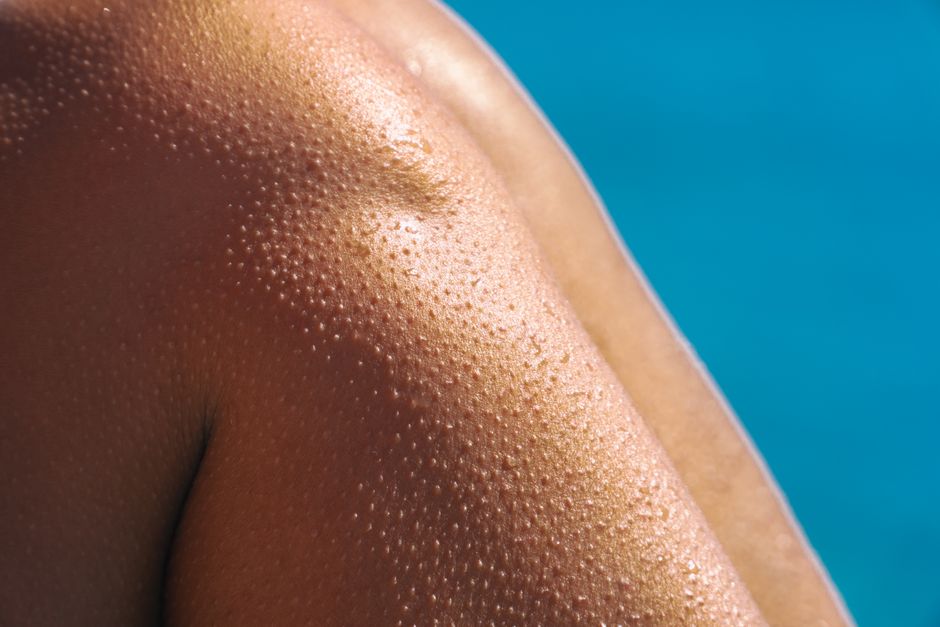
A sunburn will not turn into a tan. A sunburn is skin damage, and a tan is a separate attempt by your skin to protect itself from further damage. When your skin turns red and painful from too much UV exposure, that redness is inflammation, not the beginning of a tan. The tan you might see days later is not the burn healing into a tan; it is your skin producing melanin in response to the initial UV exposure.
What Actually Happens When You Get a Sunburn?
Sunburn is a radiation burn. The ultraviolet (UV) rays from the sun damage the DNA inside your skin cells. When that damage is severe enough, your body triggers an inflammatory response. Blood vessels in the affected area dilate to bring immune cells to the site. That increased blood flow is what makes your skin look red and feel hot and tender.
At the same time, your skin is trying to defend itself. Specialized cells called melanocytes produce more melanin, the pigment that gives skin its color. This melanin is distributed to the upper layers of skin to act as a shield against future UV damage. That pigment is what you see as a tan.
The redness and the tan are happening simultaneously. They are not a sequence where one becomes the other. The visible tan is not the burn healing; it is the skin’s protective response occurring beneath and alongside the inflammation.
Why Does the Burn “Fade” Into a Tan?
Many people believe their sunburn turned into a tan because of how the timeline plays out. Day one, your skin is red and painful. Day three, the redness subsides, and you notice a brownish color. It looks like the burn transformed into a tan.
What actually happened is that the inflammation resolved. The redness and swelling decreased as the immune response calmed down. But the melanin that your skin produced during the initial UV exposure is still there. As the redness clears, the underlying pigment becomes visible.
This is also why peeling happens. If the UV damage was severe enough, your body will shed the damaged skin cells. When you peel, you are removing the dead, damaged layers. The “tan” you see after peeling is often the new skin underneath, which contains some melanin but is not the same as a healthy, gradual tan.
Is a “Tan” From a Burn a Sign of Health?
No. Any color change from sun exposure is a sign of skin damage. There is no such thing as a safe tan. The tan itself is evidence that your skin has been exposed to enough UV radiation to trigger a protective response.
When you get a sunburn, the damage is more significant than just the visible redness. The DNA damage that occurred during the burn can lead to mutations. Over time, these mutations can accumulate and increase your risk of skin cancer, including melanoma. The tan you get after a burn does not erase that damage.
Research consistently shows that a history of sunburns, especially blistering sunburns, increases the lifetime risk of skin cancer. The tan is not a recovery badge. It is a marker that damage occurred.




Can You Prevent the Burn From “Becoming” a Tan?
You cannot prevent a tan from developing after a burn because the melanin production has already started. The decision to produce melanin is made at the moment of UV exposure. By the time you see redness, the pigment process is already underway.
What you can do is limit the damage. If you catch a burn early, get out of the sun immediately. Cool the skin with a damp cloth or a cool bath. Apply a gentle moisturizer or aloe vera to soothe the skin. Drink extra water because a burn can dehydrate you.
Nonsteroidal anti-inflammatory drugs (NSAIDs) like ibuprofen can help reduce the pain and swelling. They do not stop the tan or reverse the DNA damage. They only address the inflammatory symptoms.
If the burn is severe, with blistering over a large area, fever, chills, or dizziness, seek medical attention. These can be signs of sun poisoning, which requires professional care.
Why Does a Tan Fade Anyway?
Your skin is constantly renewing itself. The outer layer, the epidermis, sheds dead cells and replaces them with new ones. The melanin that was produced during sun exposure is in those skin cells. As those cells are shed over the following weeks, the tan fades.
This is why a tan is temporary. It is not stored permanently in the skin. It lasts only as long as the pigmented cells remain in the upper layers. For most people, a tan lasts one to two weeks before it begins to fade noticeably. A deeper tan from repeated exposure can last longer because more layers of skin contain melanin.
People with naturally darker skin produce more melanin and have more active melanocytes. This means they tan more easily and the color lasts longer. People with lighter skin produce less melanin and are more prone to burning. Their “tan” after a burn is often minimal and fades quickly because the primary event was inflammation, not pigment production.
What Is the Difference Between a Tan and a Burn?
The distinction is about damage versus defense. A burn is damage. It is cell death, DNA injury, and inflammation. A tan is defense. It is the production of melanin to block future UV rays.
You can have a tan without a burn. That happens with gradual, repeated sun exposure where the skin produces melanin before the damage threshold is reached. You can also have a burn without a tan. That happens when the UV exposure is so intense that the skin cannot produce enough melanin quickly enough to protect itself.
The confusing middle ground is when both happen at once. Moderate UV exposure triggers both the inflammatory response and melanin production. The result is a burn that, once the redness fades, reveals a tan. But the tan was there all along, hidden beneath the inflammation.
Does a Base Tan Protect You From Burning?
A base tan offers very limited protection. It is roughly equivalent to a sun protection factor (SPF) of about 3. That is far below the SPF 30 or higher recommended by dermatologists. A base tan does not prevent burning. It only delays it slightly.
Relying on a base tan is risky. People who have a base tan often spend more time in the sun because they feel protected. That extended exposure increases their total UV dose and their risk of skin damage.
The safest approach is to use broad-spectrum sunscreen with SPF 30 or higher, reapply it every two hours, and wear protective clothing. A tan, whether from gradual exposure or from a burn, is not a protective strategy. It is a sign that damage has occurred.
When Should You See a Doctor About a Sunburn?
Most sunburns can be managed at home. But some require medical attention. If you have blisters covering a large portion of your body, that is a serious burn. If you have fever, chills, severe headache, confusion, nausea, or fainting, seek care immediately.
These symptoms can indicate sun poisoning, which is a severe form of sunburn that affects the whole body. It can lead to dehydration, electrolyte imbalance, and in rare cases, heatstroke. Do not try to treat this at home.
Also monitor any moles or spots that change after sun exposure. If a mole changes in size, shape, or color, or if a new spot appears, have it checked by a dermatologist. Early detection of skin cancer significantly improves outcomes.
How Can You Prevent Sunburn in the First Place?
Prevention is straightforward. Limit time in the sun during peak hours, typically between 10 a.m. and 4 p.m. when UV rays are strongest. Wear protective clothing, a wide-brimmed hat, and sunglasses. Apply a broad-spectrum sunscreen with SPF 30 or higher to all exposed skin, and reapply every two hours or immediately after swimming or sweating.
Remember that UV rays can penetrate clouds. You can get sunburned on an overcast day. They can also reflect off water, sand, and snow, increasing your exposure. Sunscreen is not optional for outdoor activities; it is a necessary part of skin protection.
There is no way to get a “healthy tan.” Every color change from UV exposure represents damage. The only truly safe skin color is your natural one.
Frequently Asked Questions
How long does it take for a sunburn to turn into a tan?
A sunburn does not turn into a tan. The redness from inflammation typically peaks at 24 to 72 hours and then fades, revealing the melanin that was produced during the initial UV exposure.
Why did my sunburn turn into a tan?
Your skin produced melanin at the same time it became inflamed from the UV damage. The tan was always there, but the redness hid it until the inflammation subsided.
Does peeling after a sunburn ruin the tan?
Peeling removes dead, damaged skin cells, which can take some pigment with them. The tan that remains after peeling is the new skin underneath, and it may be lighter than the color you saw before peeling.
Can I get a tan without burning?
Yes, gradual sun exposure can trigger melanin production without causing a visible burn. However, any tan is still evidence of UV damage, and no tan is considered safe.
