
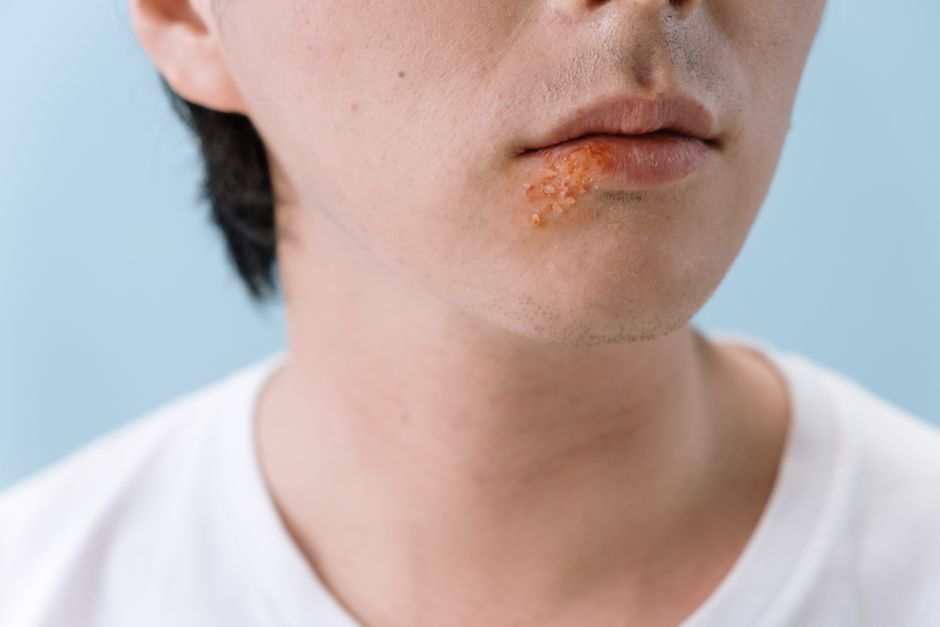
A cold sore will go away on its own. The blister crusts over, the scab falls off, and the skin underneath heals without leaving a scar in most people. The whole process usually takes about one to two weeks from the first tingle to clear skin. What a cold sore does not do is disappear overnight, and it does not leave your body for good.
That last point matters more than most people realize. The virus that causes cold sores stays with you permanently, tucked away in nerve cells. The sore is a flare-up, not a one-time event. Understanding what drives that cycle — and what actually shortens it — is the difference between fighting cold sores and just waiting them out.
What Causes a Cold Sore in the First Place?
Cold sores are caused by herpes simplex virus type 1, usually called HSV-1. This is a different virus from the one that causes most genital herpes, which is HSV-2, though the two can each cause sores in either location. Most cold sores on or around the mouth are HSV-1.
The first infection often happens in childhood. It may cause no symptoms at all, or it may cause a sore throat and several sores inside the mouth. After that first encounter, the virus travels up a nerve and settles into a cluster of nerve cells called a ganglion, where it stays dormant. It never leaves.
When something wakes the virus up, it travels back down the nerve to the skin and starts multiplying. That reactivation is what produces the tingle, the swelling, and eventually the blister. Common triggers include:
- Physical or emotional stress
- Fever or another infection
- Sun exposure and sunburn
- Menstrual hormonal shifts
- Skin injury or irritation around the mouth
- A weakened immune system from illness or certain medications
Many people never identify their trigger. The virus can also reactivate with no obvious cause at all, and it can shed from the skin without producing a visible sore. That silent shedding is one reason HSV-1 spreads so easily between people.
How Long Will a Cold Sore Last?
A cold sore typically runs its course in about one to two weeks. The stages are fairly predictable, though the timing varies from person to person and from one outbreak to the next.
Most people feel a tingle, itch, or burning sensation for a few hours to a day before anything is visible. A small cluster of fluid-filled blisters then appears, usually at the edge of the lip. The blisters break, weep, and form a yellowish crust. The crust can crack and bleed as the lip moves. Finally the scab falls off and the skin heals.
First-ever outbreaks tend to be worse and last longer than later ones. Children having a first infection can have several sores and feel genuinely unwell. Repeat outbreaks are usually milder and shorter, and some people notice they become less frequent over time.
One clarification worth knowing: a cold sore is contagious from the moment the tingle starts until the skin has completely healed. That includes the crusting stage, not just the weeping blister. The virus can spread through direct skin contact, shared utensils, lip balm, or kissing. It is most contagious while fluid is present.
What Helps a Cold Sore Heal Faster?
Nothing makes a cold sore vanish instantly. Some treatments can modestly shorten an outbreak or reduce symptoms, and they work best when started at the very first tingle, before the blister forms.
Antiviral medications are the treatments with the most evidence behind them. Some are available over the counter as a topical cream in the United States, and others are prescription pills. Research generally shows that starting antiviral treatment early can shorten healing time by roughly a day or so and ease pain. The benefit is real but modest — it is not a cure, and it does not remove the virus.
Some clinicians recommend oral antiviral medication for people who get frequent or particularly painful outbreaks. This is common clinical practice, and the evidence for preventing recurrences with daily antiviral therapy is reasonably good, but whether it is right for you is a conversation for a doctor or pharmacist, not a decision to make from an article.
For comfort while a sore heals, general measures help:
- Apply a cool compress to ease pain and swelling
- Keep the area clean and avoid picking at the crust
- Use lip balm with sun protection, since sun exposure can trigger outbreaks
- Avoid touching the sore, and wash hands if you do
- Skip shared cups, utensils, and towels until it has healed
Over-the-counter creams marketed for cold sores vary widely in what evidence supports them. Some contain an antiviral; others rely on ingredients with little or no clinical trial support. It is fair to be skeptical of products that promise fast results without an active antiviral ingredient.
Is a Cold Sore Ever a Reason to See a Doctor?
Most cold sores are harmless and heal on their own. Some situations call for medical attention, and it is worth knowing them.
See a doctor if a sore is large, spreading, or lasts longer than about two weeks without healing. Also seek care if you have a high fever, widespread blisters, or sores near the eyes. A cold sore that spreads to the eye is a genuine concern — herpes infection of the eye can damage vision and needs prompt medical treatment.
People with weakened immune systems, including those receiving certain cancer treatments or living with advanced HIV, can have more severe and longer-lasting outbreaks. Newborns are another group where HSV infection can be serious, so anyone with an active cold sore should avoid kissing or handling a newborn, and wash hands carefully first.
If you get cold sores very often, a doctor can discuss whether daily antiviral therapy makes sense for you. That is a clinical decision based on your history, not something to self-manage.
Can You Prevent Cold Sores From Coming Back?
You cannot eliminate the virus, so you cannot guarantee a cold sore never returns. What you can do is reduce the number of reactivations, and for many people that makes a real difference.
Identifying and avoiding your personal triggers is the most practical step. If sun exposure sets off your outbreaks, consistent lip protection with sunscreen helps. If stress is a trigger, that is easier said than done, but it is a genuine link for many people. Getting enough sleep and managing illness promptly matter too.
For people with frequent outbreaks, preventive antiviral medication taken daily is an option some clinicians recommend. The evidence supports that it reduces the frequency of recurrences for many patients. It does not work for everyone, and it requires a prescription and medical supervision.
No supplement, diet, or home remedy has strong clinical trial evidence showing it prevents cold sores. Some products are marketed on that promise. The evidence is not there to support those claims.
The Bottom Line on Cold Sores
A cold sore is a temporary flare-up of a lifelong virus. It will heal, usually within one to two weeks, and most people need nothing more than time and basic comfort care. Antiviral treatment started early can shorten an outbreak modestly, and daily antiviral therapy can help people who get them often.
The virus stays dormant between outbreaks, and it can reactivate without warning. That is normal and expected, not a sign that something is wrong. Knowing the stages, the contagious window, and the situations that warrant a doctor’s visit is enough for most people to handle cold sores with confidence.
Frequently Asked Questions
Will a cold sore go away without treatment?
Yes, most cold sores heal on their own in about one to two weeks. Treatment can shorten an outbreak somewhat and ease symptoms but is not required for healing.
How long is a cold sore contagious?
A cold sore is contagious from the first tingle until the skin has fully healed. Avoid kissing and sharing utensils or towels during that entire period, not just while the blister is weeping.
Can a cold sore spread to other parts of the body?
Yes, the virus can spread through touch, which is why hand washing matters. It can reach the eyes, where infection is more serious and needs prompt medical care.
Does a cold sore mean I have herpes?
Yes, cold sores are caused by herpes simplex virus, usually type 1. This is extremely common and not the same as the virus that typically causes genital herpes, though both can affect either area.
