
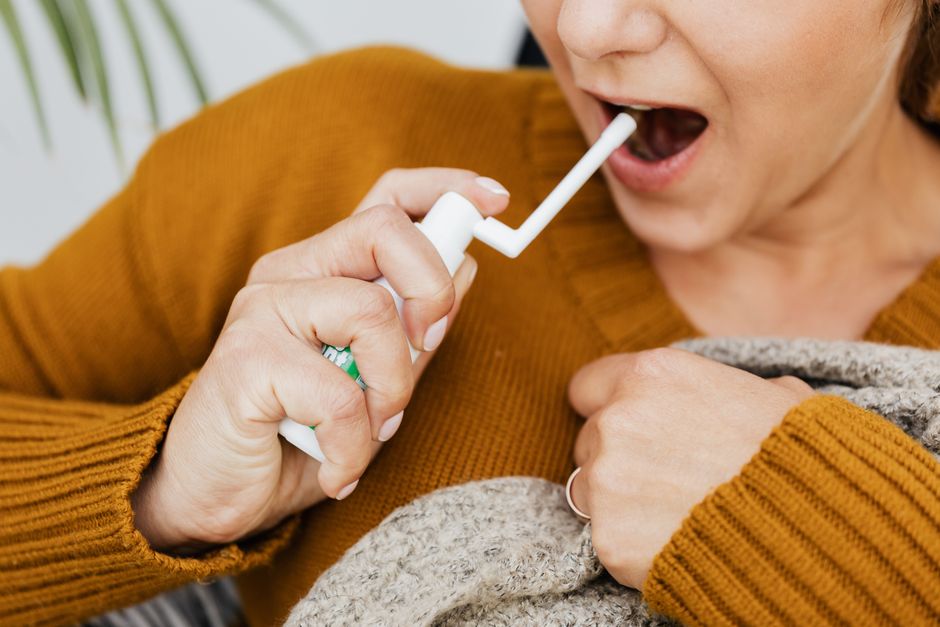
A sore throat that stays on one side is usually caused by something local — a swollen tonsil, a canker sore, a minor injury, or a blocked salivary gland. Because the pain is confined to one spot, it points to a problem in that specific area rather than a whole-body infection. Most of these causes are minor and settle on their own, but a few need a doctor’s attention, so it helps to know what separates them.
Throat pain is one of the most common reasons people see a doctor. When it is one-sided, the list of likely causes narrows in a useful way. Here is how to think through it.
Why Your Throat Hurts On One Side
Your throat is not a single uniform tube. It contains paired structures — two tonsils, two sides of the soft palate, two salivary glands, and a shared nerve supply that can send pain to one side. When only one side hurts, the cause is usually something affecting one of those paired structures.
On both sides of the back of your throat sit the palatine tonsils. Each sits in a pocket called a tonsillar fossa. A stone, a sore, or an infection can affect one tonsil and leave the other alone. The same is true of the salivary glands under the jaw and in front of the ear. A blocked duct on one side causes pain and swelling on that side only.
There is also a nerve-related reason. The glossopharyngeal nerve carries sensation from the back of the throat, the tonsils, and the back of the tongue. Irritation anywhere along that nerve can produce pain that feels like it is in the throat but is actually coming from somewhere else — sometimes the ear or the jaw.
Most one-sided throat pain is not serious. The job is to sort the common, self-limiting causes from the ones that need a clinician.
What Are the Most Common Causes of One-Sided Throat Pain?
In everyday practice, a handful of causes account for most cases. Tonsil problems lead the list, followed by ulcers and minor injury.
Tonsillitis affecting one tonsil. Viral and bacterial tonsil infections can be asymmetric. One tonsil may be noticeably larger and more tender than the other. Strep throat usually affects both sides, but not always. When one tonsil is much more swollen than the other, and especially when it pushes the uvula to one side, that is a signal to get checked.
Tonsil stones. Small calcified deposits can form in the crevices of a tonsil. They cause a scratchy one-sided discomfort, a feeling that something is stuck, and often bad breath. They are common and not dangerous.
Canker sores. A canker sore, or aphthous ulcer, can form on the tonsil, the soft palate, or the side of the throat. These are painful, shallow, and usually heal within one to two weeks. They are not contagious.
Minor injury. A scratch from a sharp piece of food — a chip, a crust, a fish bone — can cause sharp one-sided pain that lasts a few days.
Salivary gland blockage. A stone or narrowing in a salivary duct causes pain and swelling under the jaw or in front of the ear, often worse around mealtimes when saliva flow increases.
Post-nasal drip irritation. Mucus running down one side of the back of the throat can irritate that area and cause localized soreness, especially in people with allergies or a cold.
When Should One-Sided Throat Pain Worry You?
Most cases settle within a week. Some signs mean you should not wait it out.
Get medical attention if you have any of the following:
- Difficulty swallowing saliva, or difficulty breathing
- Muffled or “hot potato” voice
- Drooling or inability to open your mouth fully
- Fever with severe one-sided swelling
- Visible swelling in the neck or jaw that is growing
- Pain that is getting worse rather than better after several days
- A one-sided sore or lump that has not healed after two to three weeks
- Unexplained weight loss, night sweats, or a lump in the neck
Two of these deserve emphasis. A peritonsillar abscess is a collection of pus next to one tonsil. It causes severe one-sided pain, swelling that pushes the tonsil and uvula toward the other side, a muffled voice, and trouble opening the mouth. It needs prompt medical care because it can affect the airway.
The other is a persistent one-sided lump or ulcer that does not heal. Most such lesions are benign, but a non-healing one-sided throat lesion in an adult — particularly someone who smokes or drinks heavily — should be evaluated to rule out something more serious. This is uncommon, but it is the reason persistent one-sided symptoms deserve a look rather than endless waiting.
How Do You Tell the Difference Between the Causes?
The pattern of symptoms is often more useful than the pain itself. Where it hurts, when it hurts, and what comes with it all narrow the list.
Pain that is worse when you swallow and comes with fever and red, swollen tonsils points toward tonsillitis. Pain that feels like something is caught in your throat, with bad breath and occasional small white specks, suggests tonsil stones. Sharp pain after eating something crunchy points to a scratch. Swelling under the jaw that worsens at mealtimes points to a salivary gland issue.
A useful distinction: pain that is constant and deep, with swelling that pushes structures to one side, is more concerning than pain that is sharp and superficial. The first suggests a collection of pus or a mass; the second usually suggests a surface problem like an ulcer or scratch.
No at-home assessment can reliably tell viral from bacterial tonsillitis. That distinction usually requires a clinician, and often a throat swab.
What Helps One-Sided Throat Pain Feel Better?
For minor causes, simple measures ease discomfort while the body heals. These do not treat an underlying infection, but they make the wait more comfortable.
- Drink fluids and keep the throat moist
- Use warm salt-water gargles
- Suck on lozenges or hard candy to increase saliva flow
- Use over-the-counter pain relievers as directed on the label
- Avoid very hot, spicy, or sharp foods that can irritate the area
- Rest your voice if talking aggravates the pain
Antibiotics only help bacterial infections, and most sore throats are viral. Taking antibiotics for a viral infection does not speed recovery and carries risks. Whether antibiotics are appropriate is a decision for a clinician, ideally guided by a test.
Tonsil stones can sometimes be dislodged with gentle gargling or a water flosser on a low setting, though this is not a guaranteed fix. For recurring stones, some clinicians recommend removal of the tonsils, but this is a decision made case by case, not a routine step.
Does One-Sided Throat Pain Always Mean Something Serious?
No. The large majority of one-sided sore throats are caused by minor, self-limiting problems. Common viral infections, small ulcers, tonsil stones, and minor scratches account for most cases.
The reason one-sided pain gets attention is not that it is usually serious. It is that a small number of serious causes — an abscess, a deep infection, or rarely a tumor — also show up this way. The goal is not to worry but to notice the warning signs that separate the common from the uncommon.
If the pain is mild, improving, and without the warning signs listed above, watchful waiting is reasonable. If it is severe, worsening, or comes with any red-flag symptom, get it checked.
Frequently Asked Questions
Why does my throat hurt on one side only?
One-sided pain usually points to a problem in a single structure, such as one tonsil, a salivary gland, or a small ulcer. Because those structures are paired, an issue affecting just one produces pain on that side alone.
Can strep throat affect only one side?
Strep throat usually affects both tonsils, but asymmetric cases do occur. Only a throat swab or rapid test can confirm strep, so see a clinician if you have fever and significant one-sided swelling.
How long should one-sided throat pain last?
Most minor causes improve within a few days to about a week. Pain that is worsening or a one-sided sore that has not healed after two to three weeks should be evaluated by a doctor.
When is one-sided throat pain an emergency?
Trouble breathing, difficulty swallowing saliva, drooling, a muffled voice, or inability to open your mouth fully are emergency signs. These can indicate a peritonsillar abscess or another deep infection that needs prompt care.
