
A monstera that loses all its leaves has almost always suffered root damage from overwatering, cold stress, or a sudden change in light — not a mysterious disease. The plant is not necessarily dead. As long as the stem and root system are still firm, a monstera can regrow leaves from dormant nodes. Your first job is to diagnose the cause before you water, repot, or fertilize anything.
Why Your Monstera Lost All Its Leaves And How To Save It
Monstera deliciosa is a tropical climbing plant native to southern Mexico and Central America. In the wild it grows under a forest canopy, where the roots stay consistently moist but never sit in standing water. That balance is the entire story of monstera health. When the balance tips too far in either direction, the plant drops leaves as a survival response.
Leaf loss is a symptom, not the problem. The plant sheds foliage to reduce the amount of tissue it has to support while its roots are compromised. This is why a monstera can look perfectly healthy one week and be bare the next. The decline was happening underground long before you noticed it above the soil.
There are five common causes, and they produce slightly different patterns:
- Overwatering and root rot — leaves yellow, then turn brown or black and mushy at the base
- Underwatering — leaves dry out, curl, and turn crisp brown at the edges
- Cold damage — leaves blacken suddenly, often after a cold snap or a move near a window
- Light collapse — leaves pale, stretch, and drop slowly over weeks
- Pest infestation — leaves yellow unevenly, with visible webbing, specks, or sticky residue
Identifying which one applies to your plant determines everything that follows. Treating root rot as if it were underwatering will kill the plant faster than doing nothing.
How Do You Know If Your Monstera Is Actually Dead?
A monstera with no leaves is not automatically dead. The plant’s life is in its stem and roots, not its leaves.
Check the stem first. A living monstera stem is firm and green under the surface layer. Scrape a small area with your fingernail. If you see green tissue beneath, the stem is alive. If the tissue is brown, dry, and crumbles, that section is dead.
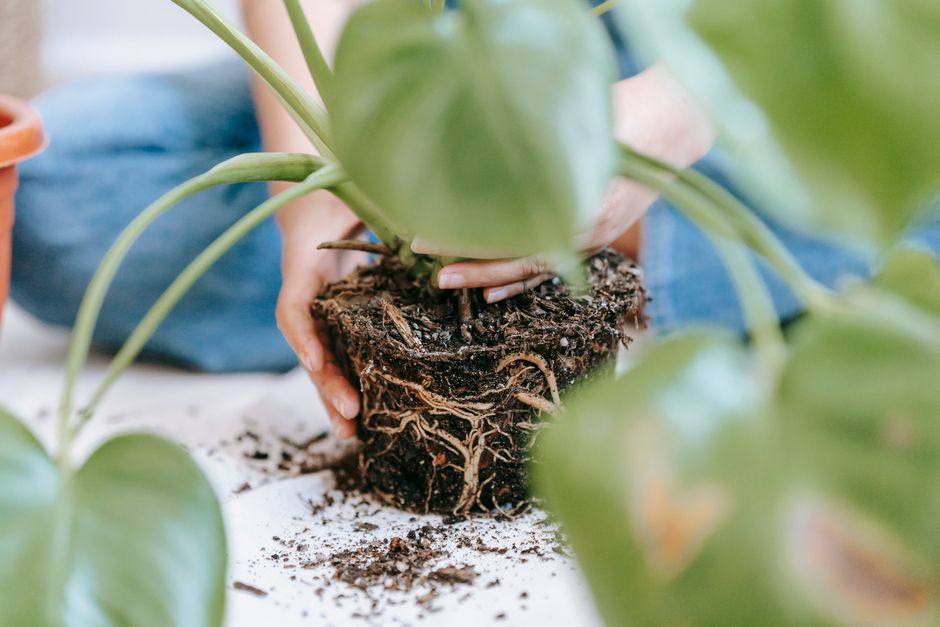
Then check the roots. Slide the plant out of its pot and examine the root ball. Healthy monstera roots are firm and pale, ranging from white to light tan. Rotten roots are dark brown or black, soft, and they fall apart when you pull gently. Healthy roots smell earthy. Rotten roots smell sour or like sewage.
If the stem is green and at least some roots are firm, the plant can recover. If the entire stem is brown and mushy from soil level upward, the plant is beyond saving.
What Does Root Rot Look Like On A Monstera?
Root rot is the single most common reason a monstera loses all its leaves indoors. It is caused by fungi and water molds that thrive in soil that stays wet for extended periods. The pathogens themselves are present in most potting soil. They only cause damage when the roots are deprived of oxygen.
Monstera roots need air. When soil stays saturated, the air pockets collapse. The roots suffocate, die, and begin to decompose. The decomposing tissue becomes food for the pathogens already in the soil. This is why overwatering and root rot are not two separate problems — they are one problem in two stages.
Signs of root rot above the soil:
- Leaves turn yellow starting from the lower part of the plant
- Leaf stems feel soft or mushy near the soil line
- New leaves emerge small, deformed, or blackened
- The soil stays wet for more than a week after watering
- A sour or musty smell comes from the pot
If you catch root rot early, you can save the plant. If the rot has reached the main stem, recovery is unlikely.




How To Save A Monstera With Root Rot
Treatment for root rot is straightforward but requires you to be aggressive. Half-measures do not work because the pathogens spread through any remaining damaged tissue.
- Remove the plant from its pot and shake off as much soil as possible.
- Rinse the roots under room-temperature water so you can see them clearly.
- Use clean, sharp scissors or pruning shears to cut away every brown, black, or mushy root. Cut back to firm, pale tissue. Sterilize your tools with rubbing alcohol between cuts if you are working on multiple plants.
- Inspect the stem. If rot has moved into the stem, cut above the damaged section until you reach firm green tissue.
- Repot in fresh, well-draining potting mix. A blend of potting soil, perlite, and orchid bark works well because it holds moisture without staying saturated.
- Choose a pot with drainage holes. A pot that is too large holds excess water around the roots and invites the problem back.
- Wait several days before watering. The cut roots need time to callus over.
Do not fertilize a recovering monstera. Fertilizer salts can burn damaged roots and slow recovery. Wait until you see new growth before feeding.
What If The Problem Is Not Root Rot?
Cold damage and underwatering can also strip a monstera bare, and they need different responses.
Cold damage usually happens fast. Monstera is tropical and suffers below roughly 50°F (10°C). Leaves blacken and soften within days of exposure. If your plant was near a drafty window, an exterior door, or was transported in cold weather, this is the likely cause. Move it to a spot that stays between 65°F and 85°F (18°C to 29°C). Cut away blackened leaves and stems. Do not water heavily while the plant is recovering — cold-damaged roots absorb water poorly.
Underwatering produces the opposite pattern. Leaves dry out, curl inward, and turn crisp brown at the edges before dropping. If the soil has pulled away from the sides of the pot, this is your answer. Water thoroughly until water runs from the drainage holes, then let the top inch or two of soil dry before watering again.
Light collapse is slower. A monstera kept in dim conditions will gradually produce smaller, paler leaves and drop older ones. It rarely loses every leaf at once. Move the plant to bright, indirect light — near a window that receives filtered sun but not harsh midday direct sun, which can scorch leaves.
How Long Does A Monstera Take To Grow Back?
Recovery is measured in months, not weeks. A monstera that has lost all its leaves has to rebuild its root system before it can push out new foliage. Expect the first signs of new growth in four to eight weeks if conditions are good, and sometimes longer.
New growth emerges from nodes — the points along the stem where leaves and aerial roots once attached. A bare stem with several nodes has several chances to regrow. A stem with no nodes will not produce new leaves, even if the roots are healthy.
During recovery, keep the plant in bright indirect light and water only when the top inch of soil feels dry. Resist the urge to check on the roots frequently. Disturbing a recovering root system sets it back.
If you have a stem section with nodes and no roots, you can propagate it in water or moist sphagnum moss. This is often the fastest route back to a full plant when the original root system is severely damaged.
Can You Prevent This From Happening Again?
Prevention comes down to three habits: watering based on soil moisture rather than a schedule, using a pot with drainage, and keeping the plant warm.
Check the soil with your finger or a moisture meter before watering. If the top inch or two is still damp, wait. Monstera tolerates a brief dry period far better than a prolonged wet one.
Use a potting mix that drains freely. Standard potting soil alone compacts over time and holds too much water. Adding perlite and bark improves airflow around the roots.
Keep the plant away from cold drafts, heating vents, and air conditioning units. Temperature swings stress the plant and make it more vulnerable to every other problem on this list.
Inspect the leaves and stems every couple of weeks for pests. Spider mites, mealybugs, and scale can weaken a monstera over time, and an infestation that goes unnoticed for months can contribute to leaf drop.
Frequently Asked Questions
Can a monstera come back after losing all its leaves?
Yes, if the stem is still firm and green and some healthy roots remain. New leaves grow from nodes along the stem, but recovery typically takes several months.
How do I know if my monstera has root rot?
Rotten roots are dark, soft, and fall apart when pulled, and the soil often smells sour. Healthy monstera roots are firm and pale, ranging from white to light tan.
Should I cut off all the dead leaves on my monstera?
Yes. Dead and dying leaves will not recover and can harbor pests or disease. Cut them back to healthy tissue using clean, sharp scissors.
How often should I water a monstera that is recovering?
Water only when the top inch or two of soil feels dry, which is usually every one to two weeks indoors. Always check the soil first rather than following a fixed schedule.
