
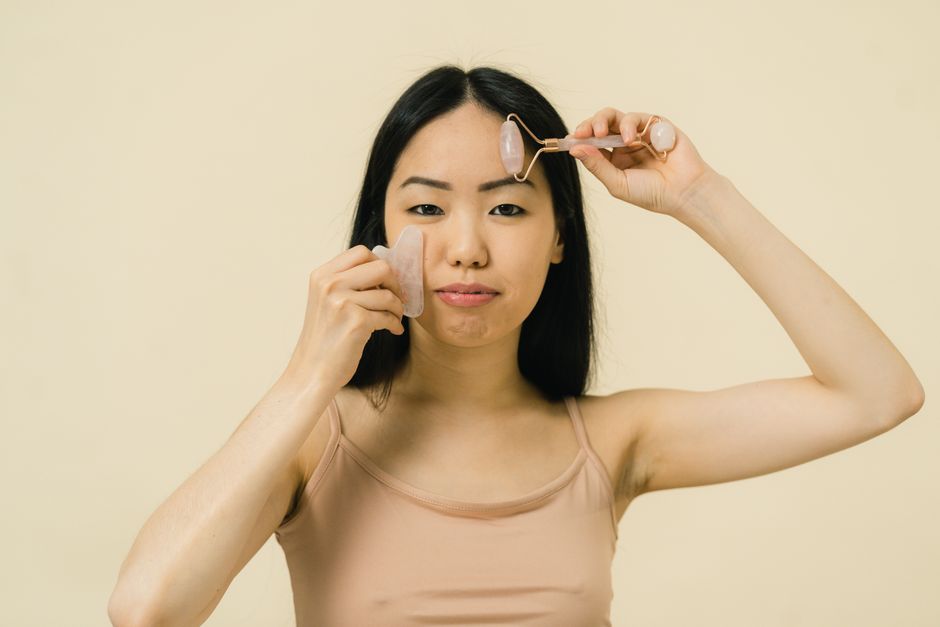
You look in the mirror and see a normal face. Then someone takes your photo, and the person staring back looks wider, rounder, and flatter than the one you know. This is not your imagination, and it is usually not about your actual face shape. Phone cameras use wide-angle lenses at close range, which stretches whatever is nearest to the lens. Your nose and cheeks are closest, so they get exaggerated. Standing closer to the camera makes it worse. The fix is mostly about distance, lens choice, and angle, not about changing your face.
Why does a phone camera make my face look wider?
A camera lens does not see the way your eyes do. It projects a three-dimensional scene onto a flat sensor, and the geometry of that projection changes with how close the lens is to the subject.
Most phone cameras use a wide-angle lens. When you hold a phone at arm’s length for a selfie, the lens sits roughly an arm’s length from your face, which is very close in photographic terms. At that distance, the parts of your face nearest the lens, typically your nose, cheeks, and chin, are magnified relative to your ears and jawline. The result is a face that looks broader and flatter than it does in real life.
This is called perspective distortion. It is a property of optics, not a flaw in your face. The same thing happens to any subject photographed up close with a wide lens. A building shot from two feet away looks distorted too.
Here is the part most people miss. Your brain has spent your whole life looking at your face in a mirror, which is a flat, front-facing reflection at a consistent distance. Photos show your face from angles and distances your brain is not used to. That mismatch between the mirror image and the photograph is a big part of why the photo feels wrong.
Why does a selfie look worse than a photo someone else takes?
Distance is the single biggest factor. A selfie puts the lens close to your face. A photo taken from across a room puts it much farther away, and the distortion drops sharply with that added distance.
When someone else holds the camera a few feet back, the relative distance between your nose and your ears becomes small compared to the total distance to the lens. The magnification effect shrinks. Your face looks more like the proportions you see in the mirror.
Phone makers know this. Many phones now offer a zoom option in the selfie camera, and some default to a slightly tighter crop. Using a modest zoom pulls the effective focal length longer, which reduces the stretch. It is one of the few camera settings that genuinely changes how wide your face appears.
There is also the angle problem. People tend to hold phones slightly below eye level and tilt them up. That low angle foreshortens the forehead and enlarges the lower face and jaw, adding to the wide look. Holding the phone at eye level or slightly above changes the result.
Is my face actually wide, or is it just the camera?
For most people, it is the camera and the angle. But there are real reasons a face can appear wider in any photo, and it helps to know the difference.
Facial width has genuine structural causes. Bone structure, jaw shape, and where fat sits on your face all affect how wide it reads. These are largely genetic. Body weight also plays a role, since fat can accumulate in the cheeks and jaw area. A change in weight can change how wide your face looks in photos and in the mirror.
Water retention is a real but temporary factor. Salt intake, alcohol, sleep, hormones, and some medications can cause fluid to pool in the face, especially in the morning. This puffiness can make a face look wider for a few hours. It is not a permanent change in structure.
If you notice a sudden change in your face, particularly on one side, or swelling that comes with pain, difficulty breathing, or other symptoms, that is a medical issue and not a photography one. See a doctor. Facial swelling can have serious causes, and it should not be dismissed as a bad angle.





How do I fix a wide-looking face in photos?
The most effective fixes are about how the photo is taken, not about your face. These changes work immediately and cost nothing.
- Move the camera farther away. The farther the lens is from your face, the less distortion. Have someone stand a few feet back and use zoom to frame you, rather than holding the phone close.
- Use zoom instead of walking closer. On most phones, a 2x or 3x zoom from a few feet away produces a more natural face than a 1x shot from close up. This is the single biggest improvement for most people.
- Raise the camera to eye level or slightly above. A camera below eye level tilts the view upward and widens the lower face. A camera at or above eye level tends to narrow it.
- Turn slightly to the side. A three-quarter angle, rather than a straight-on shot, shows the depth of your face and reads narrower than a flat frontal view.
- Keep your chin slightly forward and down. Pulling the chin toward the camera and tilting down a touch defines the jawline. Pushing the chin back creates a double-chin effect.
- Watch the light. Flat, even light from the front removes shadows and makes a face look wider. Side light creates shadows that add dimension and can make the face read narrower.
None of these require editing apps or filters. They are basic photography choices that apply to everyone.
Do face exercises or jaw tools actually slim your face?
This is where the honest answer matters. The evidence for face-slimming exercises, jaw trainers, and similar devices is limited.
Facial muscles can be exercised, and some small studies have looked at whether facial exercise changes appearance. But the results are not strong enough to say these routines reliably slim a face. Building muscle in the jaw area could, in theory, make it look larger rather than smaller, which is the opposite of the goal.
Jaw exercise tools and “face yoga” are widely marketed. No large, well-controlled human trials have confirmed that they reduce facial width. If a product claims to slim your face, treat that claim with caution until there is real evidence behind it.
What does change facial width over time is body weight and, for some people, medical or dental treatment for specific conditions. If you have a genuine concern about facial structure, a doctor or dentist is the right place to start, not a social media routine.
Does camera focal length really change how wide my face looks?
Yes, and this is well established in photography and optics. Focal length and shooting distance together determine how much a face is distorted.
A short focal length, which is what wide-angle phone lenses use, requires you to stand close to fill the frame. That closeness causes the distortion. A longer focal length lets you stand farther back and still fill the frame, which flattens the perspective and produces more natural proportions.
Portrait photographers have used this for decades. A classic portrait lens is a moderate telephoto, not a wide lens, precisely because it renders faces the way people expect to see themselves.
| Shooting setup | Effect on face width |
|---|---|
| Phone at arm’s length, 1x | Face looks widest |
| Phone at arm’s length, 2x or 3x zoom | Noticeably narrower |
| Camera a few feet back, zoomed to frame | More natural proportions |
| Camera across a room, moderate telephoto | Closest to how the eye sees you |
The pattern is consistent. More distance between the lens and your face means less distortion. That is the core of the fix.
Frequently Asked Questions
Why does my face look so wide in selfies?
Phone selfie cameras use wide-angle lenses held close to your face, which magnifies whatever is nearest the lens, usually your nose and cheeks. Moving the camera farther away or using zoom reduces this effect.
Can I fix a wide-looking face without editing apps?
Yes. Standing farther from the camera, using zoom, holding the phone at eye level or above, and turning slightly to the side all reduce the wide look. No editing is required.
Do face exercises make your face slimmer?
The evidence is limited. No large, well-controlled human trials have confirmed that facial exercises or jaw tools reliably reduce facial width, and some may build muscle that makes the jaw look larger.
Is my face actually wide or is it just the camera?
For most people it is the camera, the distance, and the angle. Real facial width comes from bone structure, weight, and temporary fluid retention, not from the lens alone.
