
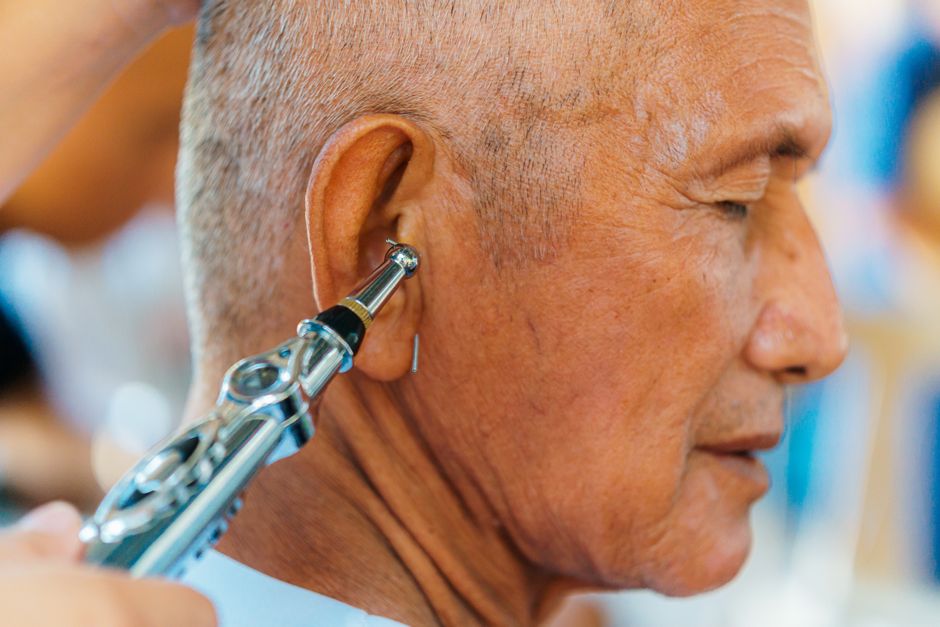
That plugged, muffled feeling in your ear is usually a pressure problem, not a wax problem. The most common cause is a blocked Eustachian tube — the narrow channel connecting your middle ear to the back of your throat. When it can’t equalize pressure on both sides of your eardrum, sound feels distant and your ear feels full. Altitude changes, colds, allergies, and sinus congestion are the usual triggers.
Why Your Ears Clogged? Why It Happens
The Eustachian tube is a small passage lined with mucosa that opens when you swallow, yawn, or chew. That opening lets air move in and out of the middle ear so pressure stays balanced with the outside world. When the tube swells or gets blocked, air can’t move freely. The eardrum gets pulled slightly inward, and that’s the fullness you feel.
Anything that inflames the lining of that tube can cause this. The list is longer than most people expect:
- Viral upper respiratory infections — the most common cause by far
- Allergic rhinitis (hay fever) and year-round allergies
- Sinus infections
- Sudden altitude changes, like flying or driving through mountains
- Scuba diving
- Earwax impaction pressing against the eardrum
- Middle ear fluid (serous otitis media), especially after a cold
- Enlarged adenoids, more common in children
- Barotrauma from a pressure change that the tube couldn’t equalize
Notice that earwax gets mentioned often but is rarely the actual cause of that classic “my ear won’t pop” feeling. Wax causes muffled hearing. It does not usually cause the pressure sensation that comes with swallowing or altitude change.
How Do I Know If It’s a Eustachian Tube Problem or Something Else?
The tell is whether the clogged feeling changes when you swallow or yawn. If it does — even briefly — the Eustachian tube is involved. If it doesn’t change at all and hearing is consistently muffled, wax or fluid may be the issue.
A few other clues help narrow it down:
- Eustachian tube dysfunction: fullness that comes and goes, worse with altitude, often follows a cold or allergy flare
- Earwax impaction: steady muffled hearing, sometimes ringing, no pressure change with swallowing
- Middle ear fluid: persistent muffled hearing after a cold, feels like water in the ear, may last weeks
- Barotrauma: sudden onset during a flight or dive, sometimes with pain
- Sudden sensorineural hearing loss: hearing drops in one ear over hours to a day, often with ringing — this needs urgent medical attention
That last one matters. Sudden hearing loss in one ear is a medical emergency. It is treated differently from a clogged ear and outcomes depend on how quickly it’s addressed. If hearing drops suddenly rather than feeling blocked, get seen the same day.
Why Do Ears Clog on Planes and in Elevators?
Air pressure drops as you go higher. In a plane cabin at cruising altitude, the pressure is lower than at sea level, and your middle ear has to adjust. The Eustachian tube normally handles this automatically. When it’s swollen from a cold or allergy, it can’t keep up.
This is why ears often clog on descent rather than takeoff. As the plane comes down, outside pressure rises. Air needs to move back into the middle ear to equalize. If the tube is blocked, the eardrum gets pushed inward. That’s the pain and pressure people feel landing.
Elevators in tall buildings, driving over mountain passes, and even some weather-related pressure swings can do the same thing on a smaller scale.
What Actually Helps Equalize Ear Pressure?
Swallowing, yawning, and chewing all open the Eustachian tube briefly. That’s why flight attendants hand out gum and why swallowing during descent helps.
Other approaches that some clinicians recommend:
- Valsalva maneuver: pinch your nose, close your mouth, and gently blow as if blowing your nose. Gentle is the key word — forceful blowing can damage the eardrum.
- Toynbee maneuver: pinch your nose and swallow.
- Frenzel maneuver: a technique used by divers, usually taught by a professional.
- Decongestant nasal spray: short-term use before flying may help if allergies or a cold are the cause. Prolonged use can cause rebound congestion, so it is not a long-term solution.
- Oral decongestants: sometimes used, but they have side effects and interact with some medications. Talk to a pharmacist or doctor first.
None of these are guaranteed. The evidence for many equalization techniques is based on how the anatomy works and on clinical experience rather than large trials. What works for one person may not work for another.
When Should I See a Doctor About a Clogged Ear?
Most clogged ears clear on their own within a few days to a couple of weeks, especially when they follow a cold. See a doctor if any of these apply:
- Hearing loss that is sudden rather than gradual — this is urgent
- Symptoms lasting more than two to three weeks
- Pain, fever, or fluid draining from the ear
- Clogged ear after a head injury or diving accident
- One-sided symptoms that don’t improve
- Vertigo or severe dizziness along with the clogged feeling
Some clinicians recommend trying over-the-counter options for a week or two before seeking care if symptoms are mild. That’s reasonable for a typical post-cold clog. It’s not reasonable if hearing dropped suddenly or if there’s pain.
Can Earwax Cause That Clogged Feeling?
Yes, but the sensation is different. Earwax that hardens and presses against the eardrum causes muffled hearing and sometimes ringing. It does not usually cause the pressure feeling that changes when you swallow.
If wax is the issue, don’t dig at it with cotton swabs. That typically pushes wax deeper and can scratch the ear canal. Over-the-counter wax softeners or irrigation kits can help, but if the wax is impacted or you have a history of ear surgery or a perforated eardrum, see a clinician. They can remove it safely.
Ear candling is sometimes marketed for this. There is no evidence it removes wax, and it carries a risk of burns and injury. Skip it.
What About Fluid in the Middle Ear?
After a cold or ear infection, fluid can linger in the middle ear even after the infection clears. This is called serous otitis media or otitis media with effusion. It causes muffled hearing and a full feeling that doesn’t come and go with swallowing.
In adults, this usually resolves on its own within weeks to a few months. In children, it’s more common and can affect speech and language development if it persists. Persistent fluid in one ear in an adult sometimes needs evaluation to rule out other causes.
This is one area where “wait and see” is often the right approach — but not always. If fluid persists beyond a few months or is one-sided in an adult, a doctor should take a look.
What Makes Clogged Ears Worse?
A few things reliably make Eustachian tube problems worse:
- Smoking and secondhand smoke — irritates the tube lining
- Untreated allergies — keeps the tube swollen
- Forceful nose blowing — can push fluid into the middle ear
- Flying or diving while congested
- Cotton swabs — push wax deeper
If you have chronic clogged ears, treating underlying allergies often helps more than anything aimed directly at the ear. That’s a point worth repeating because it’s counterintuitive. The ear is often the messenger, not the source.
Frequently Asked Questions
Why does my ear feel clogged but there’s no wax?
The most common cause is a blocked Eustachian tube, which controls pressure in the middle ear. Wax causes muffled hearing but not the pressure feeling that changes when you swallow.
How long should a clogged ear last?
Most clogged ears from colds or altitude clear within a few days to a couple of weeks. See a doctor if it lasts more than two to three weeks or if hearing drops suddenly.
Can allergies cause clogged ears?
Yes. Allergic rhinitis swells the lining of the Eustachian tube and blocks pressure equalization. Treating the allergy often resolves the ear symptoms.
Is it safe to use cotton swabs in my ear?
No. Cotton swabs push wax deeper and can scratch the ear canal or damage the eardrum. Use over-the-counter wax softeners or see a clinician for safe removal.
