
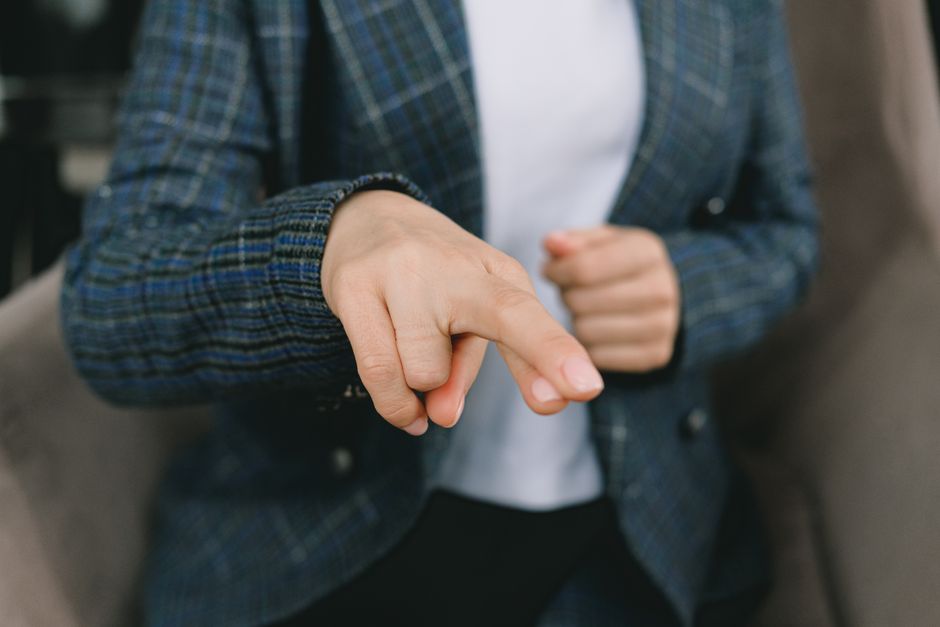
Most human communication happens without words. When someone speaks, their face, posture, hands, and tone carry information that words alone often miss or contradict.
You should observe a person’s nonverbal behavior because it reveals emotional states, intentions, and comfort levels that speech can hide. Research consistently shows that facial expressions, body posture, and vocal tone communicate meaning independently of what a person says. Noticing these signals helps you understand people more accurately and respond better in conversations, relationships, and professional settings.
Why You Should Observe A Persons Nonverbal Behavior?
Words are easy to control. Nonverbal signals are much harder to fake consistently.
When someone says “I’m fine” but their jaw is tight, their shoulders are raised, and their smile doesn’t reach their eyes, the body is telling a different story. This isn’t about catching lies. It’s about understanding that communication operates on two channels at once — the verbal and the nonverbal — and the nonverbal channel often carries more weight.
Research in psychology and communication studies has repeatedly found that people rely heavily on nonverbal cues when forming impressions of others. A classic framework developed by psychologist Albert Mehrabian suggested that for messages involving feelings and attitudes, facial expression and vocal tone matter more than the words themselves. That framework is often oversimplified and misquoted as applying to all communication, which it does not. But the underlying point holds: when words and body language conflict, people tend to trust the body language.
Observing nonverbal behavior helps you in three practical ways:
- Understand emotions that a person may not express verbally or may not even recognize in themselves.
- Detect discomfort or disagreement in situations where someone is reluctant to speak up.
- Build stronger connections by responding to what someone is actually experiencing, not just what they’re saying.
This matters in everyday life. A parent noticing that their teenager’s posture stiffens when a certain topic comes up. A manager seeing that a team member goes quiet and looks down during a meeting. A friend catching the hesitation behind a quick “no, it’s okay.” These observations don’t give you certainty. They give you better questions to ask.
What Are the Main Types of Nonverbal Communication?
Nonverbal communication covers several distinct channels. Each one carries different kinds of information, and they often work together.
Facial expressions. The face is the most expressive part of the body. Research suggests that certain basic emotions — happiness, sadness, fear, anger, surprise, and disgust — produce recognizable facial expressions across cultures. Psychologist Paul Ekman’s cross-cultural research identified these as universal patterns. That doesn’t mean expressions are always easy to read. People learn to mask, modify, and fake facial expressions from an early age.
Body posture and movement. How someone holds their body reveals a lot about their internal state. Open posture — uncrossed arms, relaxed shoulders, facing toward you — tends to signal comfort and engagement. Closed posture — crossed arms, turned away, hunched shoulders — often signals discomfort, defensiveness, or disengagement. But context matters enormously. Someone with crossed arms might simply be cold.
Eye contact and gaze. Eye behavior is complex. In many Western cultures, steady eye contact during conversation is associated with confidence, attention, and honesty. But in some cultures, prolonged eye contact is considered disrespectful, especially with authority figures. People also look away when thinking, recalling information, or feeling uncomfortable. Reduced eye contact does not reliably indicate deception — research on lie detection has repeatedly shown that most people, including professionals, perform near chance level when trying to detect lies from behavior alone.
Gestures. Hand movements serve many purposes. Some gestures replace words (waving, pointing). Others accompany speech to add emphasis or illustrate a point. Still others are self-directed — touching the face, rubbing the neck, fidgeting with objects — and these often increase with anxiety or stress. Again, individual habits vary widely. Some people simply fidget more than others.
Vocal tone and timing. Strictly speaking, tone of voice is not “nonverbal” in the sense of being visual, but it functions the same way. Pitch, volume, speed, and pauses all carry meaning beyond the words spoken. A flat tone can signal disengagement. A rising pitch can signal anxiety. A pause before answering can signal hesitation or careful thought.
Personal space and touch. How close someone stands, whether they lean in or pull back, and whether they initiate physical contact all communicate comfort levels and relational closeness. Cultural norms around personal space vary significantly. What feels appropriate in one setting may feel intrusive in another.
Can You Tell If Someone Is Lying by Their Body Language?
No. This is one of the most persistent myths about nonverbal behavior.
Decades of research on deception detection have found that no specific nonverbal cue reliably indicates lying. Not eye contact. Not fidgeting. Not nervous gestures. A meta-analysis published in Psychological Bulletin found that people’s ability to detect deception from behavior is only slightly better than chance. Even trained professionals — including law enforcement officers and judges — show similar results in controlled studies.
The problem is that many behaviors associated with lying (nervousness, fidgeting, avoiding eye contact) are also associated with being falsely accused, feeling anxious in social situations, or simply being uncomfortable. There is no “Pinocchio’s nose” for deception.
What nonverbal observation can do is help you notice when something seems off — when a person’s behavior changes from their baseline. That’s a signal to ask more questions, not a signal that you’ve caught someone in a lie. The distinction matters. Accusing someone of lying based on body language alone damages trust and is frequently wrong.





How Does Culture Affect Nonverbal Communication?
Culture shapes nonverbal behavior deeply, and misreading cultural differences can lead to serious misunderstandings.
Eye contact is one of the clearest examples. In many Western cultures, avoiding eye contact can seem shifty or disrespectful. In many East Asian, African, and Indigenous cultures, sustained eye contact with an elder or authority figure can be considered rude or aggressive. Neither interpretation is universal.
Personal space norms also vary. Some cultures have relatively close conversational distances. Others maintain more distance. When people from different cultural backgrounds interact, both may feel uncomfortable without understanding why.
Gestures are another area where meaning shifts dramatically. A hand gesture that means “come here” in one country can be an insult in another. A thumbs-up is positive in many places but offensive in some. Smiling carries different social meanings depending on context — in some cultures it signals happiness, while in others it can mask embarrassment or convey politeness rather than joy.
Emotional expressiveness varies too. Some cultures encourage open displays of emotion. Others value restraint and a neutral demeanor. A person from a culture that values emotional control may appear cold or distant to someone from a more expressive culture, when in fact they are simply following different social norms.
The practical takeaway: before drawing conclusions from someone’s body language, consider whether cultural differences might explain what you’re seeing.
What Should You Watch for in a Conversation?
You don’t need to analyze every gesture. A few key areas give you the most useful information.
Changes from baseline. The most meaningful signal is a shift. If someone who has been relaxed and talkative suddenly goes quiet and still, that change matters more than any single posture or gesture. Watch for transitions, not static positions.
Clusters of behavior. One signal alone rarely means much. But when several signals point in the same direction — a person leans back, crosses their arms, tightens their jaw, and shortens their answers — that pattern is more informative than any one cue.
Congruence between words and body. When someone’s words and their nonverbal behavior match, communication feels smooth. When they conflict, pay attention. The person may be unaware of the conflict themselves.
Your own reactions. Your body responds to others’ nonverbal signals automatically. If you feel suddenly tense or uncomfortable in a conversation without knowing why, it may be because you’re picking up on something the other person is communicating nonverbally.
Keep in mind that observation is not diagnosis. You are noticing patterns, not reading minds. The goal is to become a better listener and a more attentive conversation partner — not to become a human lie detector.
Does Nonverbal Behavior Differ Between Men and Women?
Some average differences in nonverbal behavior between men and women have been reported in research, but the overlap is large and individual variation far exceeds group differences.
Studies have suggested that women, on average, may be somewhat more accurate at reading facial expressions and nonverbal cues. Some research also indicates that women tend to smile more in social situations and use more facial expressiveness, while men may use more expansive body postures. These are statistical tendencies, not rules about individuals.
Socialization plays a major role. From childhood, boys and girls often receive different messages about emotional expression. Many boys are taught to suppress sadness and fear. Many girls are encouraged to be emotionally expressive but discouraged from showing anger. These learned patterns carry into adulthood and shape nonverbal behavior.
The practical point is simple: do not assume you know what someone is feeling based on their gender. Pay attention to the individual in front of you.
How Can You Improve Your Ability to Read Nonverbal Cues?
Reading nonverbal behavior is a skill, and like most skills, it improves with practice and feedback.
Pay full attention. You cannot observe nonverbal behavior while distracted. Put the phone down. Stop planning your response. Watch and listen.
Ask, don’t assume. If you notice something that concerns you, ask a gentle question. “You seem quiet today — is everything okay?” This is far more reliable than guessing. It also gives the other person permission to share what they’re actually experiencing.
Consider context. Someone fidgeting in a cold room is not necessarily anxious. Someone avoiding eye contact in a culture where that’s respectful is not necessarily hiding something. Context is not optional — it’s essential.
Get feedback. In close relationships, you can check your perceptions. “I noticed you seemed tense when we talked about that. Was I reading that right?” Over time, this kind of checking sharpens your accuracy.
Be humble about your accuracy. Research on lie detection and emotion recognition shows that most people overestimate their ability to read others. Confidence in your readings should be proportional to actual evidence, which is usually less than you think.
Frequently Asked Questions
Can body language really reveal what someone is feeling?
Body language can provide clues about emotional states, but it does not provide certainty. The most reliable approach is to notice patterns and then ask the person directly rather than assuming you know.
Is it true that avoiding eye contact means someone is lying?
No. Research on deception detection has found that no single nonverbal cue reliably indicates lying. People avoid eye contact for many reasons, including cultural norms, shyness, and thinking.
What is the most important nonverbal signal to watch?
Changes from a person’s normal baseline are more informative than any single gesture or expression. A sudden shift in posture, tone, or expressiveness often signals that something has changed emotionally.
Can you learn to read nonverbal cues better?
Yes, with practice and feedback. Paying full attention, considering context, and checking your perceptions with gentle questions improves accuracy over time.
