
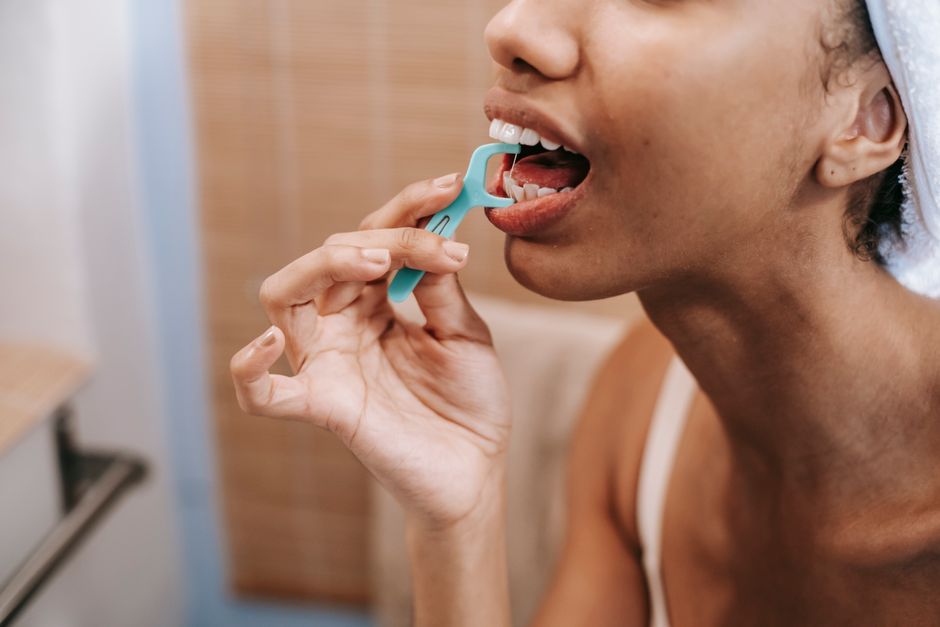
Picking at your gums until they bleed is a habit loop, not a sign that you are cleaning them “better.” The pick — a fingernail, a toothpick, a flosser — irritates gum tissue that is already inflamed, and inflamed tissue bleeds easily. The bleeding then feels like proof that something is stuck or dirty, so you pick again. That cycle can go on for years and, in some cases, cause real damage.
The way out is not willpower alone. It helps to understand why the tissue bleeds, what picking actually does to it, and what genuinely helps the gums heal.
Why You Pick Your Gums Until They Bleed
Two things usually overlap: a physical trigger and a mental habit.
The physical trigger is gum inflammation, called gingivitis. When plaque sits along the gumline, the body’s immune system responds with swelling, redness, and tenderness. That tissue bleeds with very little provocation. A fingernail dragged along an inflamed gum margin will draw blood almost every time. So will a toothbrush, a strand of floss, or a toothpick.
Once you feel that tenderness, your brain registers it as a problem to fix. You pick. The bleeding confirms there was “something there.” Relief follows briefly. Then the tissue is more irritated than before, and the cycle repeats. This is a classic itch-scratch pattern, and it behaves much like other body-focused repetitive habits such as nail biting or skin picking.
Some people also pick because of a rough filling, a sharp edge on a tooth, or a piece of food genuinely lodged between teeth. Those are real triggers and worth having a dentist look at. But in most cases, the bleeding is coming from inflamed tissue, not from debris you are removing.
What Actually Happens to Your Gums When You Pick
Gum tissue is not designed to withstand repeated mechanical trauma. The surface layer is thin, and underneath it sits a rich network of small blood vessels. When plaque triggers inflammation, those vessels widen and become fragile. That is why inflamed gums bleed so readily.
Picking does not remove the cause of the inflammation. The cause is bacterial plaque and, over time, tartar that has hardened below the gumline. A fingernail cannot reach that. What picking does instead is:
- Reopen the fragile tissue again and again, delaying healing
- Push bacteria and debris deeper into the gum pocket
- Introduce bacteria from your hands and nails into the wound
- Cause the gum to recede over time, exposing the tooth root
Receding gums do not grow back. That is the part many people do not realize until it has already happened. Once gum tissue pulls away from a tooth, the root surface is exposed, which can lead to sensitivity, a higher risk of root decay, and a change in how the tooth looks.
There is also a less obvious risk. The bacteria around your gums enter the bloodstream every time you create a wound there. For most healthy people this is not a concern. For people with certain heart conditions, artificial joints, or a weakened immune system, it is worth discussing with a doctor or dentist.
Is It Gingivitis, Periodontitis, or Something Else?
Bleeding gums are most often a sign of gingivitis, which is inflammation limited to the gum tissue. Gingivitis is common, reversible, and responds well to good oral hygiene and professional cleaning.
If gingivitis is not addressed and plaque hardens into tartar, inflammation can spread to the structures that hold teeth in place. That is periodontitis. It is a more serious condition, and the damage it causes to the bone and ligament around teeth is not reversible. It can be managed, but not undone.
Other things can also cause gums to bleed, and they are worth knowing about:
- Medications such as blood thinners, and some blood pressure drugs that cause gum overgrowth
- Hormonal changes, including during pregnancy
- Vitamin deficiencies, particularly vitamin C and vitamin K
- Blood disorders that affect clotting
- Ill-fitting dentures or dental work that rubs the gum
This is why persistent bleeding deserves an actual exam rather than a guess. A dentist can tell the difference between simple gingivitis and something that needs a different approach.





How to Stop Picking Your Gums
The most effective approach combines treating the underlying inflammation with interrupting the habit itself. Doing only one of the two usually fails.
Get the inflammation under control. If your gums are swollen, they will keep sending you the signal to pick. A professional cleaning removes the plaque and tartar you cannot reach at home. After that, brushing twice a day with a soft-bristled brush and cleaning between teeth once a day keeps the gumline clear. Some people find a water flosser easier on tender gums than string floss, though string floss remains the standard for cleaning tight spaces between teeth.
Expect some bleeding during the first week or two of consistent cleaning. That is normal and typically fades as the tissue heals. If bleeding continues past a few weeks of good home care, that is a reason to see a dentist, not a reason to stop.
Interrupt the habit. Habit reversal works by making the behavior harder to do without thinking. Practical steps that help:
- Keep your nails short and filed smooth so they cannot easily catch the gum
- Notice the trigger — stress, boredom, a rough tooth edge, sitting at your desk
- Replace the pick with something incompatible, like pressing your tongue to the roof of your mouth or sipping water
- Keep a sugar-free gum or a small object nearby to occupy your hands
- Track how often you catch yourself, without judging it
If the picking feels compulsive and you cannot stop despite wanting to, that is worth mentioning to a doctor or mental health professional. Body-focused repetitive behaviors often respond to specific therapies, and this is not a character flaw.
When to See a Dentist
Book an appointment if any of the following apply:
- Bleeding that continues after a few weeks of consistent brushing and cleaning between teeth
- Gums that are pulling away from the teeth or teeth that look longer
- Persistent bad breath or a bad taste
- Loose teeth or a change in how your bite feels
- Pain, swelling, or pus around a tooth
- Bleeding that is heavy or hard to stop
Some of these point to periodontitis, which needs professional treatment. Others may point to a medical issue. Either way, guessing wastes time that matters.
What Does Not Help
A few common approaches do more harm than good.
Rinsing with harsh mouthwash does not fix the cause and can sting already irritated tissue. Some antiseptic rinses have a role in specific situations, but they are not a substitute for removing plaque.
Switching to a harder toothbrush or brushing more aggressively does not clean better. It wears down gum tissue and enamel. Soft bristles and gentle technique are what dentists recommend.
Stopping flossing because it makes your gums bleed is a common mistake. The bleeding is coming from the inflammation, and cleaning is what resolves it. Stopping just lets the inflammation continue.
And picking “just to check” keeps the wound open. Each check restarts the healing clock.
Frequently Asked Questions
Why do my gums bleed when I pick them?
Inflamed gum tissue has fragile, widened blood vessels near the surface, so even light pressure makes it bleed. The bleeding is a sign of inflammation, not of debris being removed.
Can picking your gums cause permanent damage?
Yes. Repeated picking can cause the gum to recede, and receded gum tissue does not grow back. It can also push bacteria deeper into the gum pocket.
How long does it take for bleeding gums to heal?
With consistent brushing and daily cleaning between teeth, gingivitis-related bleeding often improves within a couple of weeks. If it continues beyond that, see a dentist.
Does flossing make bleeding gums worse?
No. Flossing may cause bleeding at first because the tissue is already inflamed, but consistent cleaning is what allows the gums to heal.
