
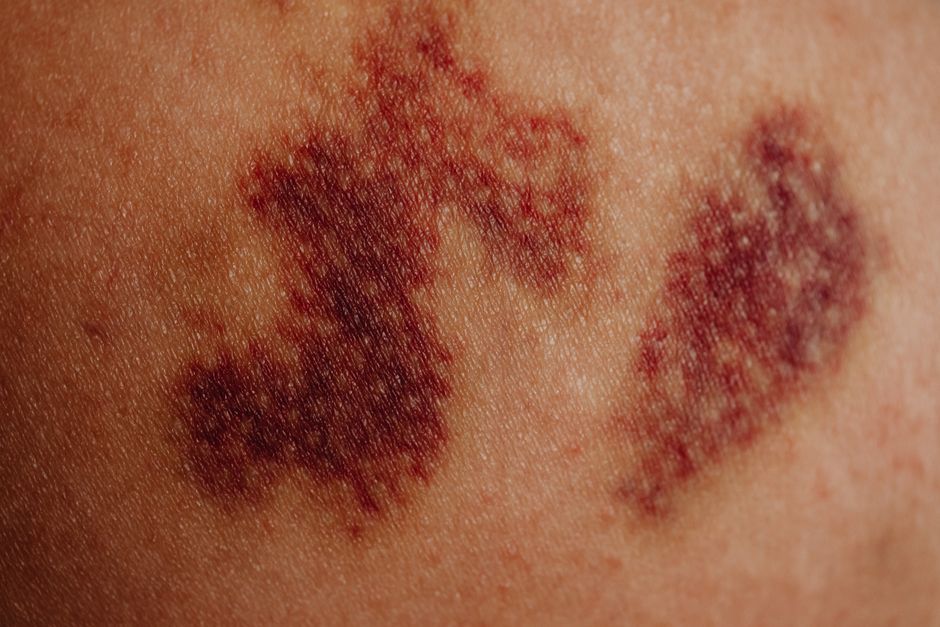
You bump your arm on a doorframe and think nothing of it. Two days later, a purple mark the size of a plum shows up. Or you look down and find a bruise on your thigh with no memory of how it got there. Easy bruising is one of the most common reasons adults ask their doctor a question — and most of the time, the answer is not serious.
Here is the short version. A bruise forms when small blood vessels under the skin break and leak blood into the tissue. You bruise more easily when those vessels get weaker, when your skin and the cushioning tissue under it get thinner, when your platelets or clotting factors do not work as well, or when you take a medication that interferes with clotting. Age, genetics, and some medical conditions all play a role. In most healthy adults, occasional easy bruising is normal and not a sign of disease.
What Actually Happens Under the Skin When You Bruise
A bruise is a collection of blood that has escaped from damaged capillaries — the smallest blood vessels in the body. Capillaries have walls only one cell thick, so they are easy to injure. When they tear, blood leaks into the surrounding tissue and the body breaks that blood down over the following days and weeks.
That breakdown is why bruises change color. Fresh blood under the skin looks red or purple. As hemoglobin breaks down, the bruise shifts to blue, then green, then yellow-brown before fading. This sequence is normal and expected. The color change is not a sign that something is wrong.
Most bruises resolve on their own within about two weeks. Larger or deeper bruises can take longer. If a bruise is not fading at all after two weeks, or is getting bigger, that is worth mentioning to a doctor.
Why Would You Be Bruising Easily? The Most Common Reasons
The single most common reason adults bruise more easily is age. As you get older, the skin thins, the layer of fat that cushions blood vessels shrinks, and capillary walls become more fragile. This combination means less force is needed to break a vessel. This is sometimes called senile purpura or actinic purpura, and it is extremely common on the forearms and backs of the hands of older adults.
Genetics matter too. Some people simply have more fragile capillaries than others, and easy bruising runs in families. If a parent bruised easily, you may as well.
Medications are the next big category. Several common drugs reduce the blood’s ability to clot or make vessels more fragile:
- Antiplatelet drugs such as aspirin and clopidogrel
- Anticoagulants such as warfarin, apixaban, rivaroxaban, and heparin
- NSAIDs such as ibuprofen and naproxen
- Corticosteroids taken by mouth or applied to the skin for long periods
- Some antidepressants, including certain SSRIs
If you take any of these and notice more bruising, that is a known effect — not a reason to stop the medication on your own. Talk to your prescriber before making any change.
When Bruising Is a Sign of Something More
Most easy bruising is harmless. But certain patterns point to an underlying problem that needs medical evaluation.
Bruises that appear without any injury at all, especially in clusters, are different from the occasional bump-related bruise. So are bruises in unusual locations like the back, chest, or abdomen. Bruising along with bleeding from the gums, nosebleeds that are hard to stop, blood in the urine or stool, or unusually heavy menstrual bleeding can point to a platelet or clotting problem.
Platelets are the cell fragments that form the first plug at a site of injury. A low platelet count — from immune conditions, bone marrow problems, certain infections, or some medications — can cause easy bruising and small pinpoint red dots called petechiae. Clotting factor problems, including von Willebrand disease, are another possibility. Von Willebrand disease is actually the most common inherited bleeding disorder, though many people who have it do not know it because symptoms can be mild.
Liver disease can also cause easy bruising, because the liver makes most of the proteins involved in clotting. If bruising comes with yellowing of the skin or eyes, swelling in the abdomen, or unexplained fatigue, that combination deserves prompt medical attention.





Could a Vitamin Deficiency Be the Cause?
Yes, in some cases. Vitamin C is needed to build healthy collagen, which strengthens blood vessel walls. Severe vitamin C deficiency — scurvy — causes easy bruising along with bleeding gums and poor wound healing. True scurvy is rare in the United States, but it does occur in people with very limited diets, heavy alcohol use, or certain eating disorders.
Vitamin K is required for several clotting factors to work. Deficiency is uncommon in healthy adults because gut bacteria produce some vitamin K and it is present in leafy greens and other foods. It is more likely in people with serious liver disease, long-term antibiotic use, or fat malabsorption conditions.
Routine testing for vitamin deficiencies in someone with only mild easy bruising is not usually productive. If a doctor suspects a deficiency based on your history, diet, or other symptoms, targeted testing makes sense.
Medications, Supplements, and Everyday Habits That Increase Bruising
Beyond prescription blood thinners, several everyday items affect bruising.
Alcohol thins the blood in the short term and, with heavy long-term use, can impair liver function and platelet production. Both effects increase bruising.
Some dietary supplements are marketed for circulation or heart health but can also increase bleeding risk. Fish oil, high-dose vitamin E, ginkgo, garlic supplements, ginger, and ginseng have all been associated with increased bleeding in some reports. The evidence for how much each one matters is not strong, and the effect is usually modest, but if you bruise easily and take several of these, it is reasonable to review them with your doctor or pharmacist.
Sun damage is another factor people rarely connect to bruising. Long-term sun exposure damages the skin’s support structure and makes capillaries more fragile, which is part of why easy bruising shows up most on sun-exposed areas like the forearms.
What Helps and What to Watch For
If your bruising is the ordinary age- and genetics-related kind, there is no treatment that makes it go away. Some practical steps reduce how often it happens:
- Keep pathways at home clear to reduce bumps
- Wear long sleeves or light padding if your forearms bruise often
- Use sun protection on your arms and hands
- Review your medication and supplement list with a pharmacist once a year
- Eat a balanced diet that includes vitamin C and vitamin K sources
For an existing bruise, ice in the first day or two can limit how much blood leaks out. After that, gentle warmth and time are the main tools. Do not take aspirin or NSAIDs just for a bruise unless a doctor has told you to.
See a doctor if any of the following apply:
- Bruises appear without any injury
- Bruises are large, spreading, or not fading after two weeks
- You have bleeding from the gums, nose, urine, or stool
- You feel unusually tired, short of breath, or have a fever along with the bruising
- You recently started a new medication and the bruising began soon after
Blood tests can check platelet count, clotting times, and liver function. These are simple and widely available. If everything comes back normal, the bruising is almost certainly benign.
What Does Not Cause Easy Bruising
A few popular ideas do not hold up. Bruising is not caused by “toxins” building up in the blood, and it is not a sign that your body needs a cleanse or detox product. No clinical evidence supports those claims.
Bruising is also not reliably caused by low iron on its own. Iron deficiency anemia can cause fatigue and paleness, but easy bruising is not a typical symptom unless there is another problem going on.
Finally, the idea that a bruise means you are “clumsy” or not paying attention is not useful. Many bruises happen from minor impacts you genuinely do not notice, especially on the legs and arms.
Frequently Asked Questions
Why am I suddenly bruising so easily?
A sudden change in bruising is worth investigating, especially if it started after a new medication or illness. Common causes include blood thinners, NSAIDs, corticosteroids, low platelets, or liver problems.
Can low vitamin C cause easy bruising?
Yes, but only when deficiency is severe enough to cause scurvy, which is uncommon in the United States. Mild low vitamin C levels are not a typical cause of easy bruising.
When should I worry about bruising?
Worry is reasonable if bruises appear without injury, keep spreading, or come with bleeding from the gums, nose, urine, or stool. Fatigue, fever, or bruising on the chest and back also warrant a medical visit.
Do blood thinners always cause bruising?
They commonly increase bruising because they reduce the blood’s ability to clot, but the degree varies by person and drug. Never stop a prescribed blood thinner without talking to your doctor first.
